 MineArchive
Stargate Colliery
| Also known as | Towneley Main Colliery, Stargate Pit |
|---|---|
| Location | Stargate, Ryton, Tyne and Wear — 54.9650, -1.7486 (approximate) |
| Commodity | Coal |
| Type | Coal |
| Worked | 1800 (sinking begun)–29 June 1963 |
| Maximum depth | 83 fathoms (498 feet) |
| Operators | Stella Coal Company (?–1946), George Thomas Dunn and Sons (1800–1833), National Coal Board (1947–1963) |
Overview
A Ryton colliery sunk from 1800 to the Brockwell seam at 83 fathoms, scene of the explosion of 30 May 1826 that killed 38 men and boys; reopened under the Stella Coal Company, it worked until 1963.
History
Stargate Colliery, also called Towneley Main and Dunns' Stargate Pit, stood on the Townley Main Wagonway at Stargate, about six miles west of Newcastle. It was one of the Stella Grand Lease pits: George Silvertop, who held a controlling share of the lease, let the working to George T. Dunn & Sons of Newcastle and Matthias Dunn of Stella Hall. Sinking began in 1800 and the Brockwell seam was reached on 16 June 1803 at 83 fathoms. A steam engine wound coal and men in rope-hung corves, and the pit is described as having the first self-acting plane used underground, replacing some thirty ponies.
Explosions are recorded in 1801 and on 18 December 1815, and at about 3 a.m. on 30 May 1826 a firedamp explosion killed 38 men and boys (see Disasters, below). Water broke into the Five-quarter seam on the night of 1 December 1828, sweeping away the furnaceman William Roddam and fourteen horses; his body was found when the workings were drained in 1880.
The Dunns surrendered the lease in 1833 and the pit closed. The Stella Coal Company reopened it and attached it to its Rector's Glebe and Stella Freehold Collieries; the Tyne and Wear HER dates that to 1840, while an account on the Durham Mining Museum's site says the pit lay disused for some forty years. The company built the houses of Stargate village, and a Wesleyan chapel followed in 1877. In 1894 the pit employed 339 people; employment reached 773 in 1940, and 94,000 tons were raised in 1947, the year the National Coal Board took over. The last seams were abandoned in 1963 and the colliery closed on 29 June 1963, though the Museum's account gives 1961.
Geology
The shaft went through sand and gravel and 'white post' sandstone mixed with whin to the Brockwell Seam, 3 feet 3 inches thick and about 494 feet down, the lowest seam of the coalfield. The ninety fathom dyke, a major fault, barred workings to the south-east. Seams worked over the years include the Five Quarter, Ruler, Stone Coal, Three Quarter, Tilley, Towneley (Harvey), Hodge and Crow.
Workings
In 1826 the Brockwell seam was worked bord-and-pillar east of the shaft, ventilated by a furnace, with coal drawn in corves. After the explosion the Brockwell was abandoned and work moved to the Five-quarter and higher seams. The Hodge seam was abandoned in 1951, the Victoria in 1953, the Tilley in 1961, and all the remaining seams in 1963.
Closure
The colliery closed on 29 June 1963, when its last seams were abandoned. It still employed 400 men in 1961, 330 of them underground.
What remains
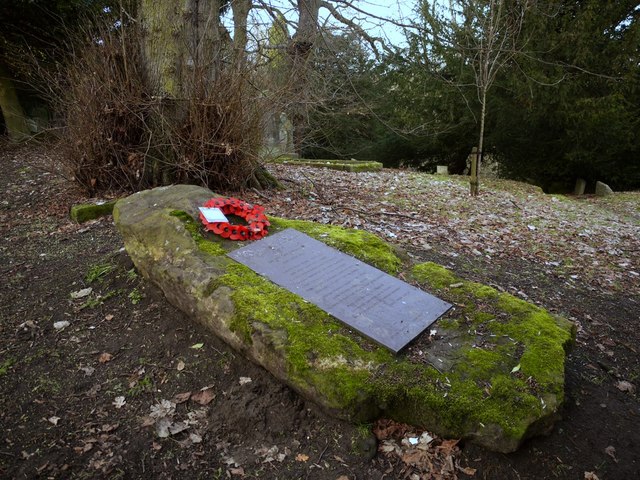
A replica colliery tub carrying the names of the 1826 dead stands near the site of the pit, unveiled in 2018.
Redevelopment
Unknown.
Related mines
- Emma Colliery — Both were Stella Coal Company pits on the Townley Main Wagonway; the name Towneley Main passed from Stargate to the Emma Pit.
Nearby mines
- Blaydon Burn Colliery — 0.7 miles (1.1 km) SE
- Emma Colliery — 1.1 miles (1.8 km) W
- Throckley Colliery — 1.6 miles (2.5 km) N
- Blucher Colliery — 2.1 miles (3.3 km) NE
- Wylam Colliery — 2.5 miles (4.0 km) W, Northumberland
Straight-line distance, within 9 miles (15 km). Show on the map.
Disasters & major incidents
-
Stargate Colliery explosion, 1826
30 May 1826 · Explosion · 38 fatalities
A firedamp explosion at about 3 a.m. killed 38 men and boys, twenty men and eighteen boys, as they went down to the Brockwell seam at Stargate Pit; it left nineteen widows and sixty-two children without fathers.
Culture
- Stargate Pit Disaster Memorials (Art)
The memorials commemorate the men and boys killed in the 1826 explosion at Stargate Pit; the tub stands near the pit's site.
What's uncertain
Points where sources disagree or the record could not be settled; both accounts are kept. All open questions in the archive.
- Whellan's 1894 directory says the colliery was sunk in 1800 to a depth of 64 fathoms. (disputed) 3
- An account on the Durham Mining Museum's site says the pit lay disused for some forty years after 1833. (disputed) 7
- An account on the Durham Mining Museum's site says the pit was finally closed in 1961. (disputed) 7
Recorded claims
Individual factual claims, each attached to the source(s) that support it below. Where sources disagree, both are kept.
- Sinking began in 1800 and reached the Brockwell seam at 83 fathoms on 16 June 1803. 1,2
- Whellan's 1894 directory says the colliery was sunk in 1800 to a depth of 64 fathoms. (disputed) 3
- An explosion on 30 May 1826 killed 38 men and boys. 4,5,6
- The Tyne and Wear HER dates the reopening under the Stella Coal Company to 1840. 5
- An account on the Durham Mining Museum's site says the pit lay disused for some forty years after 1833. (disputed) 7
- The colliery closed on 29 June 1963. 3
- An account on the Durham Mining Museum's site says the pit was finally closed in 1961. (disputed) 7
- Owned by the Stella Coal Company in the 1890s and by the National Coal Board from 1947. 3
- The colliery employed 339 people in 1894 and 773 in 1940; output in 1947 was 94,000 tons. 3
- Water broke into the Five-quarter seam on the night of 1 December 1828; furnaceman William Roddam and fourteen horses were swept away. 7
Photographs & further reading
Owners, output, employment 1894-1961, seams worked, abandonments and a list of those killed, including the 1826 dead.
View sourceFive-part history of the pit and the 1826 disaster on the Durham Mining Museum's site, from its sinking to its closure.
View sourceThe county Historic Environment Record entry for the pit, with its explosions, reopening and village buildings.
View sourceArticle on the community events for the 200th anniversary of the 1826 disaster, with the families involved and the memorials.
View sourceSources
- (primary) Durham Mining Museum - Stargate Colliery Shaft Details — Durham Mining Museum
- (primary) The Stargate Pit Explosion of 1826: Stargate Pit before 1826 (G. Nicholson), Durham Mining Museum — Durham Mining Museum
- (primary) Durham Mining Museum - Stargate Colliery — Durham Mining Museum
- (primary) The Stargate Pit Explosion of 1826: The Explosion (G. Nicholson), Durham Mining Museum — Durham Mining Museum
- (primary) Stargate Colliery (HER 3319) — Tyne and Wear Historic Environment Record (Sitelines)
- (secondary) Heritage group leads 200-year commemoration of mining tragedy (Tony Henderson, 25 April 2026) — Cultured North East
- (primary) The Stargate Pit Explosion of 1826: Subsequent History of Stargate Pit (G. Nicholson), Durham Mining Museum — Durham Mining Museum
- (primary) Durham Mining Museum - Stella Coal Co., Ltd. — Durham Mining Museum
Record created: 29 September 2026 · Last researched: 29 September 2026