 MineArchive
Stargate Colliery explosion, 1826
A firedamp explosion at about 3 a.m. killed 38 men and boys, twenty men and eighteen boys, as they went down to the Brockwell seam at Stargate Pit; it left nineteen widows and sixty-two children without fathers.
| Date | 30 May 1826 |
|---|---|
| Mine | Stargate Colliery |
| Region | Tyne and Wear |
| Type | Explosion |
| Fatalities | 38 (Twenty men and eighteen boys. Thirty-seven were buried between 1 and 3 June 1826; Matthew Newton, who survived the blast but was badly injured, was buried on 7 June.) |
| Injuries | About a dozen were injured, most seriously. Two of the men blown out of the shaft were injured but expected to recover. |
| Context | During active mining |
Cause
Firedamp, thought to have collected behind a roof fall that blocked an airway over the weekend, was ignited by the naked candles the miners carried. The viewer could only say that a roof fall must have blocked an air course.
Contributing factors
The pit had stood idle since the Friday, with only the ventilation furnace kept burning. Although parts of the pit were known to be fiery and Davy lamps had been used before, the recent practice at Stargate was to trust the ventilation and use candles.
What happened
The Stargate men rose in the early hours of Tuesday 30 May 1826 for a three o'clock start. The pit had not worked since the Friday, though the furnace that drew air through the workings had been kept alight. Some fifty men and boys went down by rope, arriving at the bottom one at a time and making their way east into the Brockwell seam workings; the explosion came at three, while the line of men still stretched from the shaft through the main roads.
The blast swept back through the workings and up the shaft, throwing out corves, brattices, ropes and ponies. Three men and a boy who were descending, and one man, John Grey, who had reached the bottom, were blown out of the shaft; Grey, Thomas Stokoe and his fifteen-year-old son Matthew were killed and the other two injured. Of the fifty or so who had gone down, over thirty were dead, about a dozen injured and only four or five unharmed. John and William Browell, at the shaft bottom, survived and crawled out over bodies by an old drainage adit about a mile away.
Newspapers gave the explosion little space and no cause; the Durham Advertiser wrote that all the parties who might throw light on it were dead. Eleven of the dead were named Robson, and the Wheatley and Dowsey families each lost three.
Rescue & recovery
Rescue quickly became recovery, hampered by roof falls. Slow but steady progress was made on the Tuesday and Wednesday, and 27 of the dead were buried in Ryton churchyard on Thursday 1 June, six more on 2 June and four on 3 June.
Investigation & inquiry
The inquest was held on Thursday 1 June at the Stella Staith Inn before the coroner Michael Hall, officially into the death of the miner Thomas Liddle. Witnesses said the pit had been in good order and that candles were in use; viewer James Hall, who had not been down for about a fortnight, said a roof fall must have blocked an air course. As the miners knew of no blame, the jury returned a verdict of accidental death, by implication for all the victims.
Legal & regulatory aftermath
A public meeting at Ryton church vestry on 5 June opened a relief fund for the widows and orphans; by 12 August it had collected £1,103 3s 5d. The owners of Towneley Main Colliery gave £100, about a month's wages per miner killed, and other coal owners also contributed. The curate, the Rev. Henry Wardell, was thanked for his work among the bereaved.
Memorials & commemoration
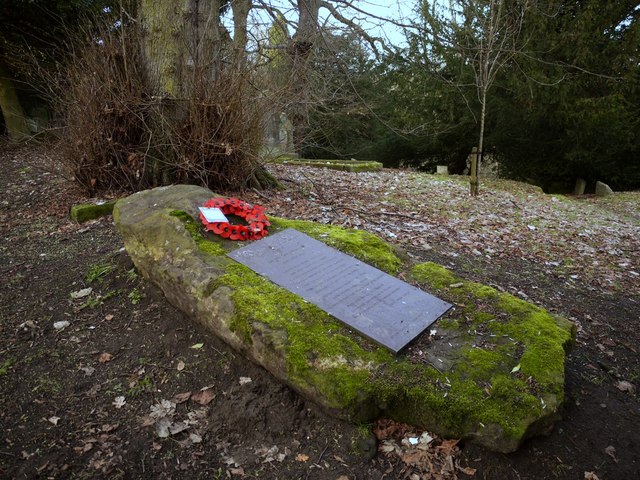
Only two of the victims have their own headstone at Ryton Holy Cross, the brothers John and Thomas Robson; the others lie in unmarked graves. The Ryton Heritage Group set a memorial stone on the communal grave mounds in 1993, and in 2018 a replica colliery tub bearing the names of all the dead was unveiled near the site of the pit. Events were planned for the 200th anniversary on 30 May 2026.
What's uncertain
Points where sources disagree or the record could not be settled; both accounts are kept. All open questions in the archive.
- The explosion is thought to have followed a roof fall blocking an airway, letting firedamp reach naked candles. (uncertain) 1,4
Recorded claims
Individual factual claims, each attached to the source(s) that support it below. Where sources disagree, both are kept.
- An explosion at about 3 a.m. on 30 May 1826 killed 38 men and boys at Stargate Pit, twenty men and eighteen boys. 1,2,3
- The explosion is thought to have followed a roof fall blocking an airway, letting firedamp reach naked candles. (uncertain) 1,4
- The inquest on 1 June 1826 at the Stella Staith Inn returned a verdict of accidental death. 4
- John and William Browell survived at the shaft bottom and escaped through a drainage adit. 4
- The relief fund had raised £1,103 3s 5d by 12 August 1826, including £100 from the owners of Towneley Main Colliery. 2
- A memorial stone was placed at Holy Cross churchyard in 1993 and a replica colliery tub naming all the dead was unveiled in 2018. 3,5
Related terminology
Mining terms this disaster is structurally linked to, with the nature of the relationship.
- Adit (contextual relationship)
Named in this record’s narrative: “…at the shaft bottom, survived and crawled out over bodies by an old drainage adit about a mile away. Newspapers gave the explosion little space and…” - Brattice (contextual relationship)
Named in this record’s narrative: “…back through the workings and up the shaft, throwing out corves, brattices, ropes and ponies. Three men and a boy who were descending, and one…” - Furnace Ventilation (contextual relationship)
Named in this record’s contributing factors: “The pit had stood idle since the Friday, with only the ventilation furnace kept burning. Although parts of the pit were known to be fiery and…” - Roof Fall (contextual relationship)
Named 4 times in this record, first in the cause: “Firedamp, thought to have collected behind a roof fall that blocked an airway over the weekend, was ignited by the naked…” - Viewer (contextual relationship)
Named twice in this record, first in the cause: “…weekend, was ignited by the naked candles the miners carried. The viewer could only say that a roof fall must have blocked an air course.”
Photographs & further reading
This page doesn't try to reproduce everything — these are the best original sources found for this disaster.
Photograph of the memorial in Holy Cross churchyard with the inscription's source.
View sourceFive-part history on the Durham Mining Museum's site covering the pit, the explosion, the inquest, the aftermath and the pit's later history.
View sourceArticle on the 200th anniversary events, the families of the dead and the two memorials.
View sourceSources
- (primary) The Stargate Pit Explosion of 1826: The Explosion (G. Nicholson), Durham Mining Museum — Durham Mining Museum
- (primary) The Stargate Pit Explosion of 1826: The Aftermath (G. Nicholson), Durham Mining Museum — Durham Mining Museum
- (primary) Stargate Colliery (HER 3319) — Tyne and Wear Historic Environment Record (Sitelines)
- (primary) The Stargate Pit Explosion of 1826: The Inquest (G. Nicholson), Durham Mining Museum — Durham Mining Museum
- (secondary) Heritage group leads 200-year commemoration of mining tragedy (Tony Henderson, 25 April 2026) — Cultured North East
Record created: 29 September 2026 · Last researched: 29 September 2026