 MineArchive
Throckley Colliery
| Also known as | Throckley Isabella Colliery, Isabella Pit |
|---|---|
| Location | Throckley, above Newburn, west Newcastle, Tyne and Wear — 54.9867, -1.7589 (approximate) |
| Commodity | Coal |
| Type | Coal |
| Worked | 1867–1954 |
| Maximum depth | Unknown. |
| Operators | Throckley Coal Co. (1867–1947), National Coal Board (1947–1954) |
Overview
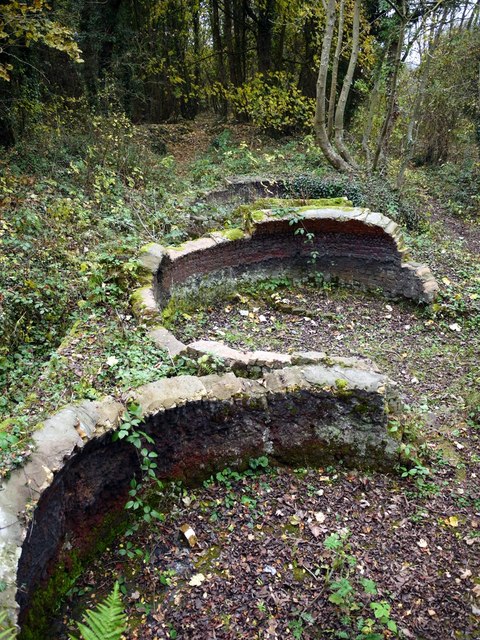
The Throckley Coal Company's Isabella Colliery above Newburn, sunk in 1867 and named after a director's wife, which fed its own beehive coke ovens for Spencer's steelworks; it closed in 1954, and four of the ovens survive in woodland in Newburn Riverside Park.
History
The Throckley Coal Company brought together the Stephensons, firebrick makers, and John Spencer of the Newburn steelworks, with Mr Simpson and Mr Boyd; it is said to have been formed in 1862 by one account and 1867 by another. Sinking of the Isabella Colliery began on 25 April 1867, the main drawing shaft named after the wife of the company director, and coal was produced from 1869. The same year the company began a bank of beehive coke ovens beside the colliery railway — 22 ovens at a cost of £260 — adding 22 more in 1875, a disintegrator for crushing the coal in 1878 and another 20 ovens in 1890, built of bricks from Stephenson's own works; the coke went to Spencer's steelworks at Newburn. A third shaft, the Derwentwater, stood on the site, and the Brockwell was the principal seam. Victoria and Beaumont seams were abandoned in 1933-34, and the Derwentwater winding machinery was salvaged in 1938-40. The colliery was not noted for any mechanisation by 1945, when it employed 365; under the National Coal Board it worked the Brockwell, Hodge, Stone, Three Quarter and Tilley seams, and it closed on 29 January 1954 with 127 men.
Geology
Northumberland Coal Measures: principally the Brockwell, with the Victoria, Beaumont (Engine or Towneley), Main, Hodge, Stone, Three Quarter and Tilley seams.
Workings
The Isabella drawing shaft (1867) and the Derwentwater shaft, with beehive coke ovens (64 by 1890) and a coal disintegrator beside the colliery railway.
Closure
Coal production ceased on 29 January 1954.
What remains
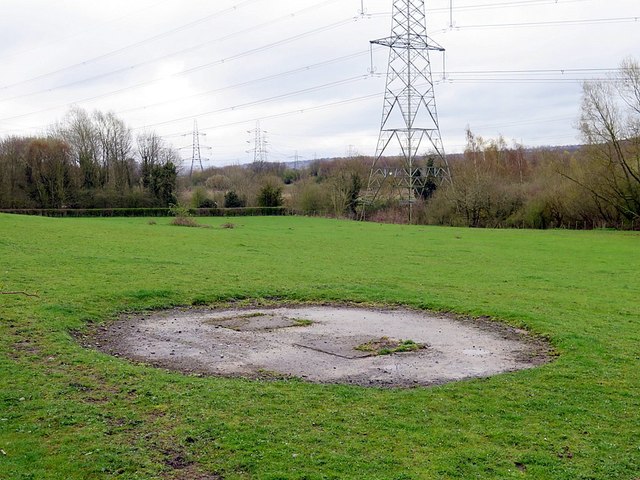
The colliery site is reclaimed land in Tyne Riverside Country Park with a capped shaft in the grass; the ruins of four beehive coke ovens and a brick-lined flue survive in woodland in Newburn Riverside Park.
Four beehive coke ovens and a flue, with the footings of more; a capped shaft.
Redevelopment
Country park.
Nearby mines
- Blaydon Burn Colliery — 3.6 km S
- North Walbottle Colliery — 3.6 km NE
- Wylam Colliery — 3.6 km SW, Northumberland
- Montagu Colliery — 5.0 km E
- Prudhoe Colliery — 7.1 km W, Northumberland
Straight-line distance, within 15 km. Show on the map.
What's uncertain
Points where sources disagree or the record could not be settled; both accounts are kept. All open questions in the archive.
- The Throckley Coal Company was formed in 1862 and included Major Stephenson, John Spencer (Newburn Steelworks), Mr Simpson and Mr Boyd; the Isabella shaft was named after the wife of the company director. (disputed) 3
- The Throckley Coal Company was formed in 1867 by Messrs Stephenson, firebrick manufacturers, and Messrs Spencer, Newburn steel manufacturers. (disputed) 4
Recorded claims
Individual factual claims, each attached to the source(s) that support it below. Where sources disagree, both are kept.
- Sinking of Isabella Colliery started on 25 April 1867 under the Throckley Coal Co.; production began in 1869; closed 29 January 1954. 1,2
- The Throckley Coal Company was formed in 1862 and included Major Stephenson, John Spencer (Newburn Steelworks), Mr Simpson and Mr Boyd; the Isabella shaft was named after the wife of the company director. (disputed) 3
- The Throckley Coal Company was formed in 1867 by Messrs Stephenson, firebrick manufacturers, and Messrs Spencer, Newburn steel manufacturers. (disputed) 4
- 22 ovens were built in 1869 at a cost of £260; 22 more in 1875, a disintegrator in 1878 and 20 more in 1890; four beehive ovens and a flue survive in Newburn Riverside Park. 4
- The Derwentwater was the third shaft; the colliery was not noted for any mechanisation by 1945; Derwentwater winding machinery was salvaged 1938-1940. 3
- Employment was 365 in 1945, 269 in 1950 and 127 in 1954. 1
Photographs & further reading
Record of the surviving beehive coke ovens and their building history.
View sourceSources
- (secondary) Durham Mining Museum - Throckley 'Isabella' Colliery — Durham Mining Museum
- (secondary) Throckley Isabella Colliery (1869 - 1954) — Co-Curate, Newcastle University
- (primary) Throckley Colliery (Isabella) (HER 4224) — Tyne and Wear HER (Sitelines)
- (primary) Throckley Colliery, Isabella Coke Ovens (HER 1035) — Tyne and Wear HER (Sitelines)
Record created: 21 September 2026 · Last researched: 21 September 2026