 MineArchive
Blucher Colliery
| Also known as | Blucher Pit, Throckley Blucher Colliery |
|---|---|
| Location | Blucher, Newcastle upon Tyne, Tyne and Wear — 54.9919, -1.7264 (approximate) |
| Commodity | Coal |
| Type | Coal |
| Worked | 1800–27 January 1956 |
| Maximum depth | At least 400 feet |
| Operators | Throckley Coal Co. (1900–1946), National Coal Board (1947–1956) |
Overview
A Walbottle-area pit named in 1815 for Field Marshal Blücher, closed in 1867, reopened in 1900 by the Throckley Coal Company, which built Blucher village for it, and finally closed on 27 January 1956.
History
Blucher Pit, part of Walbottle Colliery five miles west-north-west of Newcastle, was either sunk or renamed in 1815, when two Walbottle pits were named for the victors of Waterloo, Wellington and Blücher; the Durham Mining Museum gives its opening as 1800. Walbottle Colliery was worked in the 1850s by J. Lamb, Potters and Joblings' Trustees and later by successive partnerships and companies, the last being the Lemington Colliery Company.
Blucher Pit closed in 1867 and was reopened in 1900 by the Throckley Coal Company, which owned pits at Heddon, Throckley and Newburn; it built the village of Blucher north of the pit for its workforce. Employment rose from 342 in 1902 to 548 in 1910 and 631 in 1921. In 1924-25 the pit was closed in favour of workings at the reopened Coronation Pit, and Blucher started up again in 1938. The Hutton seam was abandoned in 1934. The National Coal Board took over in 1947, and with 326 men on the books the pit closed for good on 27 January 1956.
Geology
The Brockwell, Main Coal, Stone Coal, Hutton, Low Main, Tilley, Hodge, Engine and Three Quarter seams were worked at different times; the Hutton seam was abandoned on 8 March 1934.
Workings
The pit worked the Main Coal and Stone Coal seams in the 1900s, adding the Brockwell, Hutton and Tilley after 1925 and, from 1950, the Three Quarter and Tilley. A cage shaft over 400 feet deep served the workings.
Closure
The pit closed on 27 January 1956, when 326 men were employed, 241 of them underground.
What remains
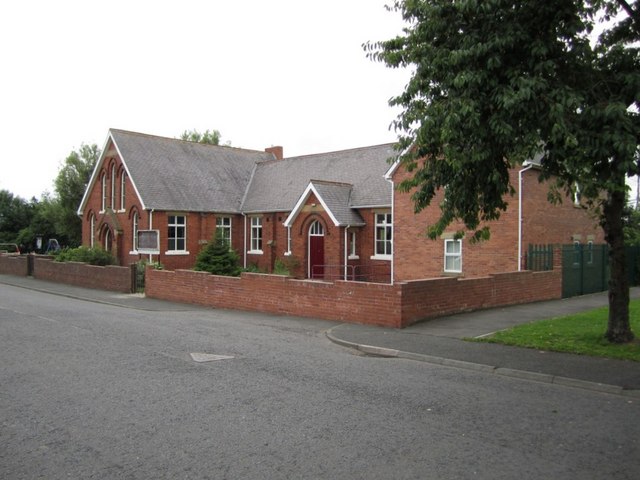
The workers' village of Blucher stands north of the pit site, with its rows of houses, the Stephenson Memorial Methodist church and a recreation ground.
Redevelopment
Unknown.
Related mines
- Coronation Pit, Walbottle — The Throckley Coal Company closed Blucher Pit in 1924-25 in favour of workings at the reopened Coronation site.
- Throckley Colliery — The Throckley Coal Company owned both: it sank Throckley's Isabella pit in 1867 and reopened Blucher in 1900.
Nearby mines
- Coronation Pit, Walbottle — 0.8 miles (1.3 km) N
- North Walbottle Colliery — 1.1 miles (1.8 km) N
- Throckley Colliery — 1.3 miles (2.2 km) W
- Montagu Colliery — 1.8 miles (2.9 km) E
- Stargate Colliery — 2.1 miles (3.3 km) SW
Straight-line distance, within 9 miles (15 km). Show on the map.
What's uncertain
Points where sources disagree or the record could not be settled; both accounts are kept. All open questions in the archive.
- The Durham Mining Museum gives 1800 as the year the colliery opened. (disputed) 3
- The mining village of Blucher was probably built when the Throckley Coal Company reopened the pit in 1900. (uncertain) 4
Recorded claims
Individual factual claims, each attached to the source(s) that support it below. Where sources disagree, both are kept.
- Blucher Pit was either sunk or renamed in 1815, when two Walbottle pits were named for Wellington and Blücher. 1,2
- The Durham Mining Museum gives 1800 as the year the colliery opened. (disputed) 3
- Blucher Pit closed in 1867 and was reopened in 1900 by the Throckley Coal Company. 1,2
- The pit closed for good on 27 January 1956. 3,1,2
- The pit was closed in 1924-25 in favour of the reopened Coronation site and started up again in 1938. 1,2
- Employment was 342 in 1902, 548 in 1910, 631 in 1921 and 326 in 1955 and 1956. 3
- The mining village of Blucher was probably built when the Throckley Coal Company reopened the pit in 1900. (uncertain) 4
- Foreman joiner Edmund Charlton fell over 400 feet down the shaft on 21 October 1950 when a cage he was working beside moved unexpectedly. 3
Photographs & further reading
Owners, output, employment 1900-1956, seams worked and a list of those killed at the pit.
View sourceThe county Historic Environment Record entry with the 1815 naming, the 1867 closure and the 1900 reopening.
View sourceRecord of the mining village built beside the pit, with its terraces, churches and recreation ground.
View sourceShort account of the pit's naming, closures and final closure date.
View sourceSources
- (primary) Walbottle Colliery, Blucher Pit (HER 3939) — Tyne and Wear Historic Environment Record (Sitelines)
- (secondary) Blucher Pit, Walbottle Colliery - Co-Curate — Co-Curate (Newcastle University)
- (primary) Durham Mining Museum - Throckley 'Blucher' Colliery — Durham Mining Museum
- (primary) Blucher (HER 17226) — Tyne and Wear Historic Environment Record (Sitelines)
Record created: 29 September 2026 · Last researched: 29 September 2026