 MineArchive
Heddon Colliery
| Also known as | Margaret Pit, Heddon |
|---|---|
| Location | Heddon-on-the-Wall, west of Newcastle, Northumberland — 54.9888, -1.7804 (approximate) |
| Commodities | Coal, Fireclay |
| Type | Coal |
| Worked | By 1590–1 September 1933 |
| Maximum depth | About 260 feet to the Brockwell (Margaret Pit) |
| Operators | Heddon Coal and Fire Brick Company (?–1902), Throckley Coal Co. (1902–1933), Bell and Brown, Thomas Bates |
Overview
The collieries of Heddon-on-the-Wall, west of Newcastle, mined for some four hundred years: Bell and Brown's partnership in the 18th century, the first mechanical coal screening in the trade in 1784, and lastly the Margaret Pit, which the Throckley Coal Company worked until the early 1930s.
History
Coal was mined around Heddon-on-the-Wall, about seven miles west of Newcastle, for at least four hundred years. The right to dig coal was part of the lease of the Great Tithes to George Mason in 1590, and the small spoil heaps of early pits, most of them probably bell pits, still dot the country south of the village. The mining rights passed from Ralph Carr in 1635 to Henry Widdrington of Black Heddon and in 1654 to Charles Howard of Naworth, and were later leased by Lord Carlisle to a Mr Barkas, whose overman William Brown went into partnership with Mr Bell, a wealthy Newcastle draper, to work the Heddon pits.
In 1764 a boring was made from the thill of the Main Coal in the Richard Pit. In 1784 a Heddon colliery became the first in the coal trade to screen its coal mechanically, separating the round coal from the small. In 1788 a pit on the south side of the Hexham Road was worked to 30 fathoms, its coal taken two and a half miles by waggonway to Lemington staiths, and in 1796 Bell and Brown built the row of houses on the Hexham Road later known as Frenchmen's Row.
The last deep mine was the Margaret Pit, about a kilometre south-east of the village in the valley bottom, both a shaft and a drift into the hillside; it reached the Brockwell seam at about 255 feet. On land of the Bates family, it was owned by Thomas Bates in the 1860s and by the Heddon Coal and Fire Brick Company in the 1880s, supplying the village and sending coal and clay to the Heddon brick works. The Throckley Coal Company bought it in 1902; it employed 264 in 1910 and 334 in 1925, raising gas, manufacturing and household coal. The Engine or Beaumont seam was abandoned on 1 September 1933, and the remaining reserves were worked from Throckley's Isabella Pit. In the Second World War the old colliery workshops became an emergency printing works for the Journal and Evening Chronicle. A slag heap and the overgrown remains of buildings survive.
Geology
The Main Coal, Brockwell, Three Quarter, Stone Coal, Engine or Beaumont and Splint seams, with fireclay.
Workings
Many early pits, among them the Richard Pit of 1764, and the Margaret Pit, a shaft with drifts into the hillside.
Closure
The Engine or Beaumont seam was abandoned on 1 September 1933; the remaining reserves were worked from Throckley's Isabella Pit.
What remains
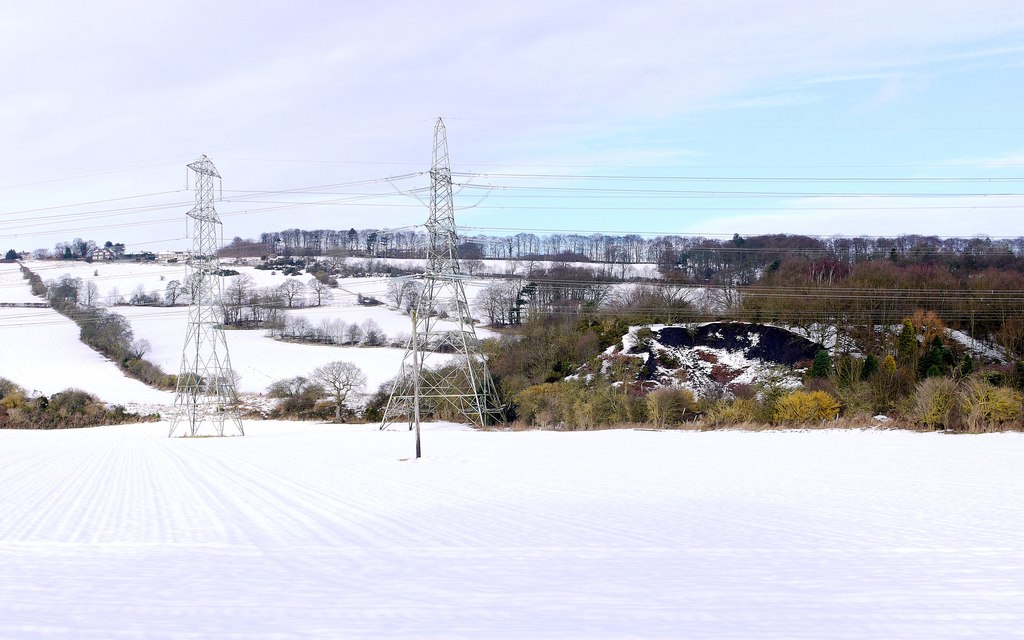
A slag heap and the overgrown remains of buildings mark the Margaret Pit in the valley bottom.
The Margaret Pit slag heap and overgrown building remains.
Related mines
- Throckley Colliery — The Throckley Coal Company bought Heddon in 1902, and Heddon's last reserves were worked from Throckley's Isabella Pit.
Nearby mines
- Clara Vale Colliery — 0.8 miles (1.3 km) SW, Tyne and Wear
- Throckley Colliery — 0.9 miles (1.4 km) E, Tyne and Wear
- Emma Colliery — 1.3 miles (2.2 km) S, Tyne and Wear
- Wylam Colliery — 1.6 miles (2.6 km) SW
- Addison Colliery — 2.0 miles (3.2 km) SE, Tyne and Wear
Straight-line distance, within 9 miles (15 km). Show on the map.
Recorded claims
Individual factual claims, each attached to the source(s) that support it below. Where sources disagree, both are kept.
- The right to dig coal at Heddon was included in the lease of the Great Tithes to George Mason in 1590. 1
- In 1784 a Heddon colliery was the first in the coal trade to screen its coal mechanically, separating round from small coal. 1
- A boring was made from the thill of the Main Coal in Heddon's Richard Pit on 3 April 1764. 2,3
- The Margaret Pit, Heddon's last deep mine, was both a shaft and a drift and reached the Brockwell seam at about 255 feet. 4,1,5
- The Throckley Coal Company bought Heddon Colliery in 1902 and worked it until the early 1930s, later reaching its reserves from Throckley's Isabella Pit. 2,1,6
- The Engine or Beaumont seam at Heddon's Margaret Pit was abandoned on 1 September 1933. 7
- Heddon Colliery employed 334 people in 1925. 2
Photographs & further reading
The village society's history of four centuries of coal mining at Heddon, from the 1590 lease to the Margaret Pit.
View sourceSources
- (secondary) Coal Mining (Heddon-on-the-Wall Local History Society) — Heddon-on-the-Wall Local History Society
- (primary) Heddon Colliery — Durham Mining Museum
- (primary) Heddon Colliery: boring in the Richard Pit, 1764 — Durham Mining Museum
- (primary) Heddon Colliery: strata sunk through in the Margaret Pit — Durham Mining Museum
- (secondary) Heddon Colliery (Margaret Pit) — North East Heritage Library (Coals Archive)
- (observational) Margaret Pit, Heddon on the Wall (Geograph photograph 3311257) — Geograph
- (primary) Heddon Colliery: catalogue of plans of abandoned mines — Durham Mining Museum
Record created: 22 October 2026 · Last researched: 22 October 2026