 MineArchive
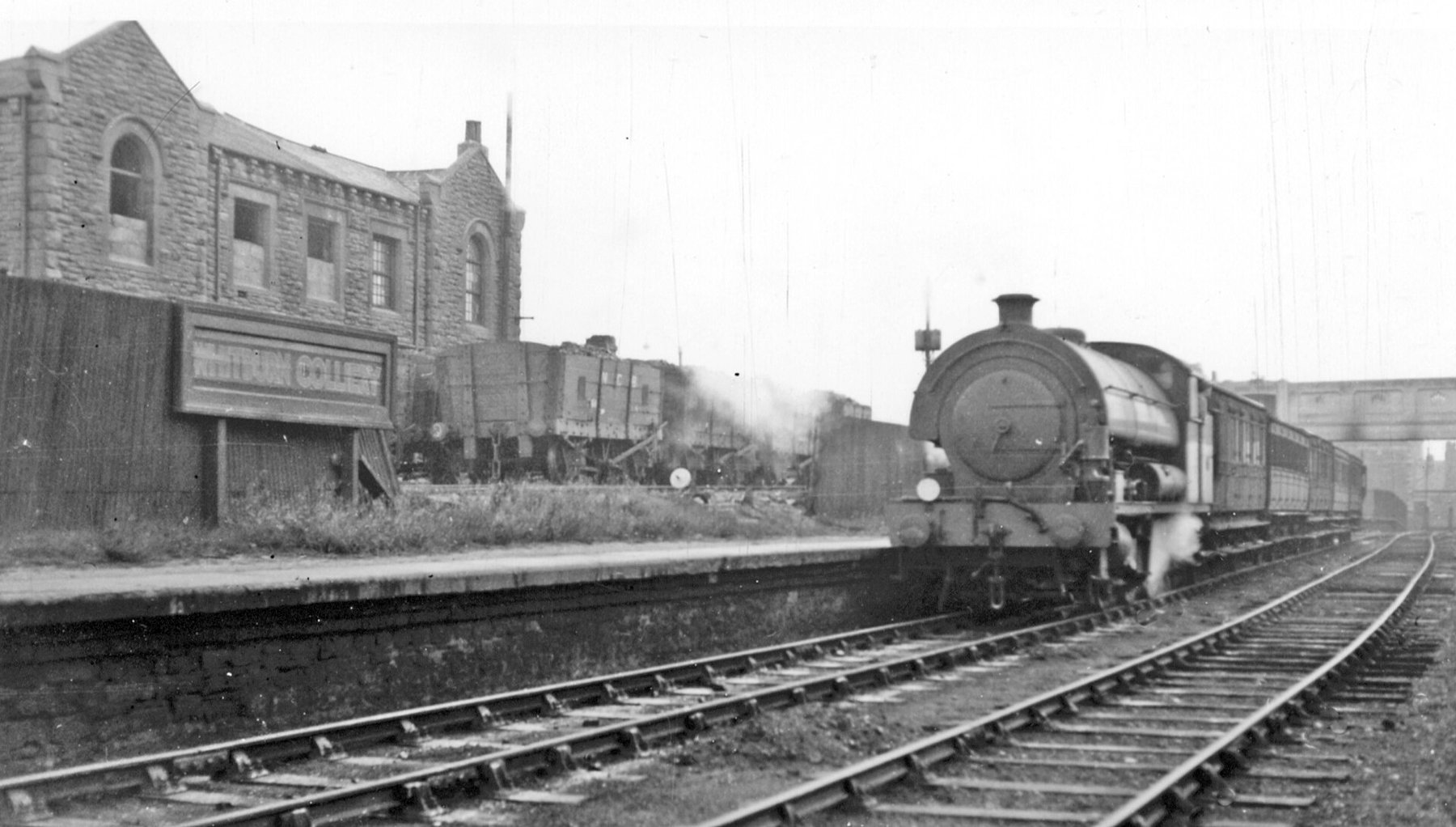
Whitburn Colliery
| Also known as | Marsden Colliery |
|---|---|
| Location | Marsden, between South Shields and Whitburn on the Durham coast, Tyne and Wear — 54.9780, -1.3766 (exact) |
| Commodity | Coal |
| Type | Coal |
| Worked | May 1879–1968 |
| Maximum depth | No. 1 shaft 180 fathoms (about 330 m); No. 2 shaft 115 fathoms (about 210 m). |
| Operators | Whitburn Coal Company (1874–1891), Harton Coal Company (1891–1947), National Coal Board (1947–1968) |
Overview
A cliff-top colliery at Marsden on the North Sea coast between South Shields and Sunderland, whose workings ran out beneath the sea. Its first sinking failed against water pouring in from the North Sea, and the shaft that succeeded was sunk in 1877 by the Kind-Chaudron process — its first use in the British coal industry. Water beat it in the end: rising pumping costs as the workings extended under the sea closed the pit in 1968, and the purpose-built village of Marsden went with it.
History
In the 1870s the Whitburn Coal Company bought five limestone quarries at Marsden, then a hamlet of farms, cottages and Souter lighthouse, developing two of them as the Lighthouse (Marsden) Quarries. On 14 July 1874 the company began sinking the Whitburn winnings, boring below the Brockwell seam. It found no coal, and met heavy water ingress from the North Sea.
In 1877 a new shaft was put down using the Kind-Chaudron process — its first deployment in the British coal industry — with the water-fissured section lined with iron tubing. Even so, electric pumps were needed for the whole life of the mine, lifting some 12,000 imperial gallons a day. The colliery opened in May 1879.
The company built the twin-track South Shields, Marsden and Whitburn Colliery Railway, opened in May 1879 to serve the colliery, the limestone quarry, a paper works and local farms, and opened to the public on 19 March 1888. With the railway in place output rose quickly to around 1,500 tonnes, employing 1,600. The Whitburn Coal Company was bought by the Harton Coal Company in 1891, and by 1921 that group employed over 3,500 men. The Five Quarter seam was abandoned on 16 May 1934. At nationalisation the colliery passed to the National Coal Board with just under 1,500 miners.
As the workings extended further under the sea, water ingress and the cost of pumping and winning the coal rose with them, and closure was decided in the mid-1960s. The last shift came up in 1968.
Geology
The colliery worked Durham Coal Measures seams beneath the Permian Magnesian Limestone of the Durham coast and, further out, beneath the North Sea itself. The Bensham seam, between 4 ft and 6 ft 6 in thick, was the target of the deeper shaft; the Brockwell and Five Quarter seams were also worked. It was the water-bearing, fissured strata above the coal — the same limestone that made the cliffs and the Marsden quarries — that defeated the first sinking.
Geological setting: Sedimentary Beds and Seams (well documented example)
Workings
Two shafts, both 13 ft in diameter: No. 1 at 180 fathoms (330 m) and No. 2 at 115 fathoms (210 m) to reach the Bensham seam. The section through the water-fissured strata was lined with iron tubing after being sunk by the Kind-Chaudron method, and electric pumps ran throughout the colliery's life. Workings extended out under the North Sea. Coal from the pit initially fired the Marsden lime kilns alongside it, which closed when the colliery did.
Closure
Closure was decided in the mid-1960s as water ingress and pumping costs rose with the extension of the workings under the North Sea. The Durham Mining Museum gives the closing date as 31 May 1968; other accounts record the final shift coming up from the shaft bottom on 8 June 1968. Marsden village was then demolished, both because of coastal erosion and because bringing it up to modern sanitary standards would have cost more than it was worth.
What remains
The colliery itself is gone. Of Marsden village there remain five rows of Victorian terraced houses, the small chapel and a primary school, the last now technically in Whitburn. The Marsden lime kilns that the colliery fuelled still stand as a ruin on the coast road opposite Souter Lighthouse, and were the subject of a 2022 exploration report. Stone is still worked in the quarry nearby. The northern section of the colliery railway survived until 1993, when it was lifted after Westoe Colliery closed.
No colliery structures survive. The adjacent Marsden lime kilns, which burned Whitburn coal, remain standing, as do part of Marsden village and the line of the colliery railway.
Redevelopment
The colliery site and most of Marsden village were cleared after 1968; the coast here is now National Trust land around Souter Lighthouse and the Leas.
Related mines
- Harton Colliery — The Harton shaft section is recorded as that of 'Harton and Whitburn Collieries'; both belonged to the Harton Coal Company.
- Marsden Quarry — One operation: the colliery's coal burnt the quarry's limestone in the kilns between them, and the Harton Coal Company's railway served both.
Nearby mines
- Marsden Quarry — 0.6 miles (1.0 km) SE
- Westoe Colliery — 1.9 miles (3.1 km) W, County Durham
- Harton Colliery — 2.4 miles (3.9 km) W
- St Hilda’s Colliery — 2.5 miles (4.1 km) NW
- Burdon Main Colliery — 3.2 miles (5.1 km) NW
Straight-line distance, within 9 miles (15 km). Show on the map.
Culture
- Marsden Colliery Band (Music)
The band took the name of Marsden Colliery, as Whitburn Colliery at Marsden was known, in 1913 and kept it until it disbanded in 1930.
What's uncertain
Points where sources disagree or the record could not be settled; both accounts are kept. All open questions in the archive.
- The Durham Mining Museum gives the closing date as 31 May 1968; other accounts record the final shift coming up from the shaft bottom on 8 June 1968. (disputed) 1,2
Recorded claims
Individual factual claims, each attached to the source(s) that support it below. Where sources disagree, both are kept.
- Sinking began on 14 July 1874 with a bore below the Brockwell seam; no coal was found and the workings met heavy water ingress from the North Sea. 1,2
- The shaft sunk in 1877 used the Kind-Chaudron process, its first deployment in the British coal industry, with the water-fissured section lined with iron tubing. 2
- Electric pumps were required throughout the colliery's life to lift about 12,000 imperial gallons (55,000 litres) a day. 2
- Both shafts were 13 feet in diameter; No. 1 reached 180 fathoms (330 m) and No. 2 115 fathoms (210 m), giving access to the Bensham seam of 4 ft to 6 ft 6 in. 2
- The Whitburn Coal Company was bought by the Harton Coal Company in 1891; by 1921 that group employed over 3,500 men. 1,2
- The Durham Mining Museum gives the closing date as 31 May 1968; other accounts record the final shift coming up from the shaft bottom on 8 June 1968. (disputed) 1,2
- Marsden village was built for 700-plus people with 135 houses in nine streets, a church, Methodist chapel, co-op store, post office, school and miners' institute; five terraces, the chapel and the school survive. 2
- Located at about 54.978 N, 1.377 W. 2
Photographs & further reading
Owners from 1874 to 1968, year-by-year employment and output, and a list of 147 named deaths at the colliery with the circumstances recorded for each.
View sourcePhotographic report on the surviving lime kilns beside the colliery site, which burned Whitburn coal and closed when the pit did.
View sourceSources
- (primary) Whitburn Colliery — Durham Mining Museum
- (secondary) Whitburn Colliery — Wikipedia
- (observational) Marsden Lime Kilns, Whitburn, Tyneside, March 2022 — 28DaysLater
Record created: 3 September 2026 · Last researched: 3 September 2026