 MineArchive
Tylorstown Colliery
| Location | Tylorstown, Rhondda Fach, Rhondda Cynon Taf — 51.6487, -3.4323 (exact) |
|---|---|
| Commodity | Coal |
| Type | Coal |
| Worked | 1858–1936 |
| Maximum depth | No.8 (Cynllwyn Du): 606 yards after 1892 deepening; No.9: 550 yards |
| Operators | Thomas Wayne (1858–?), A. Tylor and Company (1873–1894), David Davis and Sons (1892–1935), Powell Duffryn (1935–1947), National Coal Board (1947–1960) |
Overview
A group of pits a mile down-valley from Ferndale, originally sunk by a separate company and given their own village's name, later linked underground and in ownership with the Ferndale complex — and struck, in January 1896, by an explosion that killed 57 men and boys.
History
Thomas Wayne sank the first shaft here, Cynllwyn Du — known locally as Pwll Waynes and later as the Pontygwaith Colliery — in 1858. Alfred Tylor's company, after whom Tylorstown is named, sank the original Pendyrys pits, Nos. 6 and 7, between 1873 and 1876, about a mile down the Rhondda Fach from Ferndale's own pits. David Davis and Sons Ltd, the Ferndale colliery company, took over and deepened Cynllwyn Du as its No.8 Pit in 1892, to 606 yards — then the deepest shaft in the Rhondda Valleys — and in January 1894 acquired Nos. 6 and 7 from A. Tylor and Company, linking the previously separate workings into a single operational unit with Ferndale itself; the combined pits were also known as Ferndale Nos. 6, 7, 8 and 9. (Heneb's historic landscape account dates the purchase of the Pontygwaith pit to 1896.) Once linked, the pits employed over 1,700 men producing 1,800 tons of high-grade steam coal a day; the workforce grew to 2,912 by 1908 and 3,800 by 1918.
Three men were killed in a roof fall at Tylor's pit in July 1892. An explosion swept through Nos. 6, 7 and 8 pits between the night and day shifts in January 1896, killing 57 men and boys (see Disasters, below); the sources differ on whether it was the 27th or the 28th. Two men died in a shaft explosion in 1905, and on 8 April 1913 a fall of stone in No.8 Pit buried five men, four of whom died (see Disasters, below). No.9 Pit was added in 1907, sunk to the Yard seam at 550 yards, and in 1908 the company built its own power station beside Nos. 8 and 9 to electrify the winding, fans, haulage and pumping. In 1923 No.6 employed 567 men, No.8 1,164 and No.9 765. The colliery continued working for decades afterward, passing with the rest of the Ferndale complex to Powell Duffryn and then, on the 1947 nationalisation of the coal industry, to the National Coal Board. Nos. 6, 7 and 8 closed in 1936; No.9, raising between about 144,000 and 206,000 tons a year from 1954 to 1958, continued until October 1960. The site was cleared under a £1.2 million reclamation scheme in 1981.
Geology
Tylorstown's pits worked the Five Feet, Gellideg, Two Feet Nine, Four Feet, Six Feet and Bute seams, alongside ironstone deposits; No.8 (Cynllwyn Du) was deepened to 606 yards in 1892, then the deepest shaft in the Rhondda Valleys, a record it shared with the wider linked Ferndale complex it had become part of.
Workings
No.6 and No.7 (Pendyrys) were sunk 1873-76; No.8 (Cynllwyn Du), originally sunk in 1858, was deepened to 606 yards in 1892 by David Davis and Sons, who linked the Tylorstown pits underground with Ferndale's own workings; No.9, added in 1907, reached the Yard seam at 550 yards. In 1896 No.6 reached the Five Feet seam and was the upcast for all three older pits, ventilated by a 21-foot Schiele fan, while Nos. 7 and 8 were downcasts; the pits employed 1,480 men (156 at No.6, 894 at No.7 and 430 at No.8), and 183 horses did most of the underground haulage. Three further ventilation shafts, the Lower, Middle and Upper Fan pits, served the combined workings.
Closure
Nos. 6, 7 and 8 ceased production in 1936 (Nos. 6 and 7 were recorded as temporarily closed in 1938); No.9, the last of Tylorstown's shafts, closed in October 1960. Heneb attributes the closures to geological problems, despite a brief upturn in production.
What remains
The colliery site was reclaimed under a £1.2 million scheme in 1981. Colliery spoil remains on the valley side: in February 2020, during Storm Dennis, a tip on the Llanwonno hillside to which spoil conveyors had run from the Tylorstown pits failed, sending about 60,000 tonnes of debris into the Rhondda Fach (see Disasters, below).
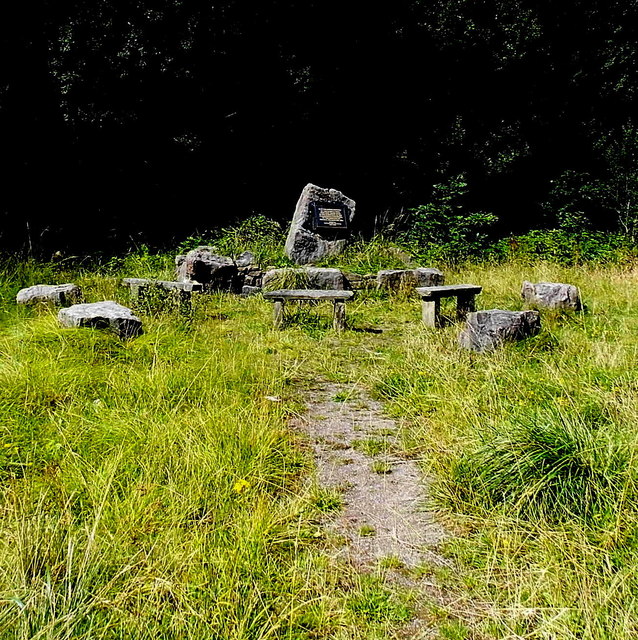
No colliery buildings are recorded as surviving. A memorial to the 57 men and boys killed in 1896, a carved stone with a plaque set among stone benches, was erected on the bank of the Rhondda Fach by the Mid Fach River Care Group in June 2005.
Related mines
- Ferndale Collieries — David Davis and Sons, owners of Ferndale, bought the Tylorstown pits in 1892–94, linked them underground with Ferndale's workings (the Five Feet seam at No.6 connected to Ferndale No.5) and numbered them Ferndale Nos. 6–9.
Nearby mines
- Ferndale Collieries — 1.1 miles (1.7 km) NW
- National Colliery — 1.1 miles (1.8 km) SE
- Ynyshir Colliery — 1.6 miles (2.6 km) SE
- Gelli Colliery — 1.7 miles (2.7 km) W
- Glamorgan Colliery — 1.7 miles (2.7 km) SW
Straight-line distance, within 9 miles (15 km). Show on the map.
Disasters & major incidents
-
Tylorstown Colliery roof fall, 1892
25 July 1892 · Collapse / Roof Fall · 3 fatalities
On 25 July 1892 three men were killed at Tylor's pit, Tylorstown, in the Rhondda Fach, when a tram they were pushing left the rails and dislodged the timber props, bringing down the roof. -
Tylorstown Colliery explosion, 1896
28 January 1896 · Explosion · 57 fatalities
An explosion swept Tylorstown's Nos. 6, 7 and 8 pits as the day shift descended on 28 January 1896, killing 57 men and boys, after a delayed shot fired into a gas-charged road ignited firedamp and coal dust through the dry workings. -
Tylorstown Colliery shaft explosion, 1905
30 October 1905 · Explosion · 2 fatalities
On 30 October 1905 an explosion caused by a blower of gas killed two sinkers and injured five in a shaft being sunk at Tylorstown Colliery, in the Rhondda Fach. -
Tylorstown No.8 Pit roof fall, 1913
8 April 1913 · Collapse / Roof Fall · 4 fatalities
At about 2 a.m. on 8 April 1913 a massive fall at a ripping lip in No. 8 Pit, Tylorstown, where double timbers were being set after an earlier fall, buried five men. Four died, two of them brothers; the rescue took about eleven hours through further falls, and one man survived with broken legs. -
Tylorstown landslip, 2020
16 February 2020 · Surface / Tip Failure · 0 fatalities
On 16 February 2020, during Storm Dennis, the upper of two former colliery spoil heaps on the Llanwonno hillside above Tylorstown, in the Rhondda Fach, failed and flowed into the valley below; no one was hurt.
What's uncertain
Points where sources disagree or the record could not be settled; both accounts are kept. All open questions in the archive.
- Durham Mining Museum and Welsh Coal Mines date the explosion 28 January 1896; NMRS, Heneb and the 2005 memorial give Monday 27 January 1896. (disputed) 1,2,4,3,5
- NMRS gives No.8 bought and deepened by David Davis and Sons in 1892 and Nos. 6 and 7 bought in 1894; Heneb gives Penrhys (Nos. 6 and 7) bought in 1894 and Pontygwaith (No.8) in 1896. (disputed) 4,6,3
- Welsh Coal Mines and NMRS date No.9 Pit to 1907; Heneb says an additional pit was sunk in 1901. (disputed) 1,6,3
Recorded claims
Individual factual claims, each attached to the source(s) that support it below. Where sources disagree, both are kept.
- Alfred Tylor's company sank Tylorstown's No.6 and No.7 pits between 1873 and 1876, with a separate shaft, No.8 (Cynllwyn Du), sunk in 1858; David Davis and Sons Ltd, owners of Ferndale, acquired the pits in January 1894 and deepened No.8 to 606 yards in 1892, linking the workings underground with Ferndale's own. 1
- By 1892 the linked pits employed over 1,700 men producing 1,800 tons of steam coal a day, growing to 2,912 men by 1908 and 3,800 by 1918; the combined complex was also known as Ferndale Nos. 6, 7, 8 and 9. 1
- No.9 shaft, added in 1907, reached the Yard seam at 550 yards; Nos. 6, 7 and 8 closed in 1936, with No.9 continuing until 1960. 1
- An explosion swept Nos. 6, 7 and 8 pits between shifts in January 1896, killing 57 men and boys. 1,2,3
- Durham Mining Museum and Welsh Coal Mines date the explosion 28 January 1896; NMRS, Heneb and the 2005 memorial give Monday 27 January 1896. (disputed) 1,2,4,3,5
- Thomas Wayne sank the Cynllwyn Du shaft (Pwll Waynes, later Pontygwaith Colliery, and Tylorstown No.8) in 1858. 1,6,3
- NMRS gives No.8 bought and deepened by David Davis and Sons in 1892 and Nos. 6 and 7 bought in 1894; Heneb gives Penrhys (Nos. 6 and 7) bought in 1894 and Pontygwaith (No.8) in 1896. (disputed) 4,6,3
- Welsh Coal Mines and NMRS date No.9 Pit to 1907; Heneb says an additional pit was sunk in 1901. (disputed) 1,6,3
- In 1896 Nos. 6, 7 and 8 employed 1,480 men, and 183 horses worked the underground haulage, 82 of which died in the explosion. 4
- In 1923 No.6 employed 567 men, No.8 1,164 and No.9 765. 1
- No.9 Pit closed in October 1960, after raising between 144,078 and 205,553 tons a year from 1954 to 1958. 6
- The colliery site was subject to a £1.2 million reclamation scheme in 1981. 3
- Historic OS maps show spoil conveyors running from Tylorstown (Pendyrys) Colliery to the tip that failed in February 2020, sending over 60,000 tonnes of debris into the Rhondda Fach. 7,8
- A memorial to the 57 killed in 1896 was erected on the bank of the Rhondda Fach by the Mid Fach River Care Group in June 2005. 5
- The BGS / Mining Remediation Authority catalogue holds combined plans for Ferndale/Tylorstown Nos. 1, 2, 4, 5, 6, 7, 8 and 9 and the Upper, Middle and Lower Fan pits. 9
Photographs & further reading
The linked Ferndale and Tylorstown pits: sinkings, owners, managers, output figures and accidents to 1960.
View sourceHistoric landscape account of the three settlements that grew up around the Tylorstown and Pontygwaith pits.
View sourceA landslide specialist's analysis of the February 2020 tip failure, tracing the spoil to Tylorstown Colliery on historic maps.
View sourceSources
- (secondary) Tylorstown Colliery — welshcoalmines.co.uk
- (primary) Tylorstown Colliery Disaster, 28th January 1896 — Durham Mining Museum
- (primary) Pontygwaith, Tylorstown and Stanleytown – Historic Landscape Character Area — Heneb – The Trust for Welsh Archaeology
- (secondary) Ferndale Colliery Tylorstown Pit Explosion - Rhondda Fach - 1896 — Northern Mine Research Society
- (observational) Tylorstown 1896 mining disaster memorial (Geograph photo 3623531, 2013) — Geograph Britain and Ireland
- (secondary) Ferndale Collieries — Northern Mine Research Society
- (secondary) Did South Wales suffer a coal waste landslide yesterday? (17 February 2020) — The Landslide Blog, AGU (Dave Petley)
- (primary) Disused Mine and Quarry Tips (Wales) Act 2025 – Explanatory Notes: Summary and Policy Background — legislation.gov.uk
- (primary) BGS / Mining Remediation Authority mine plans catalogue: Ferndale/Tylorstown Nos 2, 4, 5, 1, 6, 7, 8, 9, Upper, Middle and Lower Fan — British Geological Survey
- (secondary) Further information about the Tylorstown landslide (18 February 2020) — The Landslide Blog, AGU (Dave Petley)
- (secondary) Tylorstown Landslide Remediation Phase 3A (case study) — Griffiths Geotechnical Division
Record created: 27 August 2026 · Last researched: 16 September 2026