 MineArchive
Tresavean Mine
| Location | Lanner, Cornwall — 50.2100, -5.2000 (approximate) |
|---|---|
| Commodities | Copper, Arsenic, Tin |
| Type | Metal |
| Worked | 1737–1928 |
| Maximum depth | 443 fathoms (about 810m) |
| Operators | Michael Loam (1842–1843), Tresavean Mining Company (1881–1886), Tresavean Mines Limited (1908–1928) |
Overview
Tresavean, at Lanner near Redruth, was one of Cornwall's largest copper mines through its 19th-century heyday, and the site of a genuine world first: the earliest working man engine in Britain, installed in 1842 to carry miners up and down the shaft in place of fixed ladders.
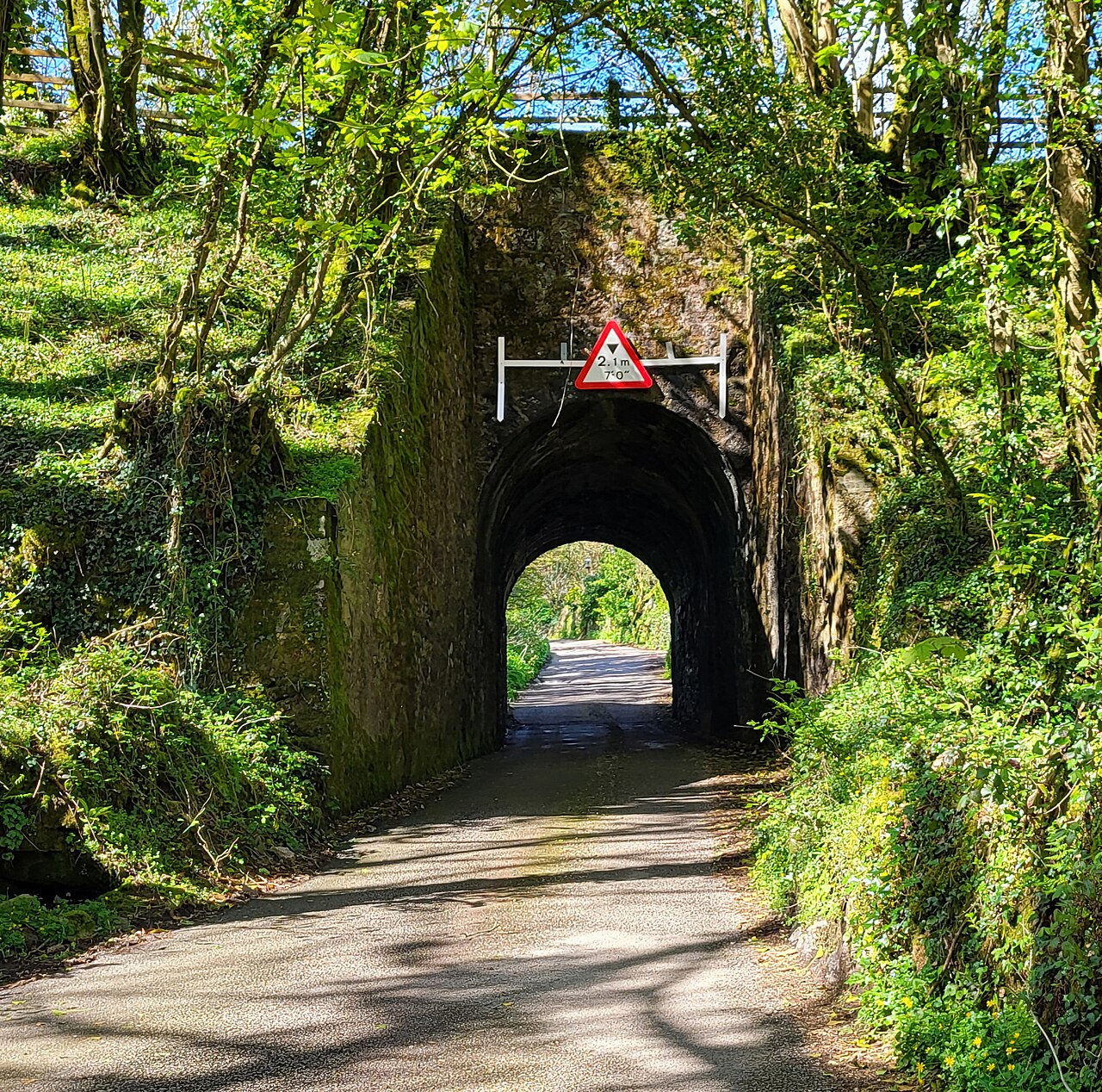
History
Copper working at Tresavean is recorded from 1737, though the mine's most productive period came in the 19th century: between 1815 and 1856 it raised 163,260 tons of ore averaging 9.5% copper, and its output made it for a time one of Cornwall's leading copper producers. Mining engineer Michael Loam installed Cornwall's, and Britain's, first working man engine at Tresavean in January 1842, initially reaching only 25 fathoms; converted to steam power that October it reached 140 fathoms, and by June 1843 had been extended to the full 290-fathom depth of the mine, sparing miners the exhausting and dangerous climb by ladder that had been the only alternative until then. The mine closed in 1858 as copper prices fell, but was reworked in several later phases: as Tresavean and Tretharrup from 1860 to 1872, under the Tresavean Mining Company from 1881 to 1886 (a venture that, despite investment, raised only 54 tons of tin and no copper at all), and finally as Tresavean Mines Limited from 1908 to 1928, working the ground chiefly for tin and arsenic by then rather than copper. Reduced tin prices and heavy debts forced the workforce to be cut back sharply in 1921, and the mine finally closed for good in 1928.
Geology
The mine worked copper- and tin-bearing lodes of the Camborne-Redruth orefield, part of the Cornubian granite-related mineralisation responsible for the district's wider tin and copper wealth; by the time of its closure, Tresavean's workings reached 443 fathoms, making it the second-deepest mine in Cornwall.
Geological setting: Hydrothermal Deposits (well documented example), Veins and Lodes (well documented example)
Workings
Michael Loam's 1842 man engine used two rods, initially worked by a waterwheel and later converted to steam power, moving alternately with a six-foot stroke and platforms spaced twelve feet apart, on which miners stepped on and off in turn as the rods rose and fell, riding to and from work far more quickly and with far less physical exhaustion than the ladders it replaced. A 32-inch stamps engine house, built in 1882 during the mine's second working phase, and Harvey's 90-inch Cornish engine both survive among the mine's later 19th-century infrastructure.
Closure
The mine's final closure came in 1928, after a 1921 workforce reduction failed to save the venture from unsustainable debt amid collapsed tin prices.
What remains
The surviving 1882 stamps engine house remains the most prominent structure on the surface; Harvey's overgrown 90-inch engine house also survives but is not accessible for safety reasons.
Most of the wider mine site has been capped and sealed, with a single commemorative stone marking the former mineral tramway's end; some shafts on the site's outskirts remain on private land.
Related mines
- Balleswidden Mine — Balleswidden's 1856–57 gas-lighting plant had come from Tresavean.
Nearby mines
- United Mines — 0.7 miles (1.1 km) E
- Wheal Unity Wood — 1.3 miles (2.2 km) NE
- Ting Tang Mine — 1.6 miles (2.6 km) NE
- Ale and Cakes Mine — 1.8 miles (2.8 km) NE
- Poldory Mine — 1.8 miles (2.8 km) NE
Straight-line distance, within 9 miles (15 km). Show on the map.
Recorded claims
Individual factual claims, each attached to the source(s) that support it below. Where sources disagree, both are kept.
- Between 1815 and 1856 the mine raised 163,260 tons of ore averaging 9.5% copper. 1
- Michael Loam's man engine, installed in January 1842, was Britain's first working example, reaching the mine's full 290-fathom depth by June 1843. 1,2
- The first engine came in 1758, a 30-inch Boulton and Watt in 1779 and a 30/60-inch compound in 1793; by 1834 the mine had 60- and 63-inch pumping engines and three whims; the 1882 stamps engine house, built for a 32-inch engine driving 48 heads, stands above a playing field, and in the working of 1908 to 1928 the shaft was deepened to 443 fathoms. 1
- The British Geological Survey holds a section of the South Tresavean mine (MP24955), a transverse section on the Tresavean main lode (MP24960) and a plan of Tresavean South dated 1860, associated with a report on uranium at Roskrow United (MP25504), all viewable online; the Mining Remediation Authority holds the abandonment plans OM9461, Tresavean with Bell, Blandford's, Boyes and a dozen other setts, and OMR12, Tresavean with Wheal Boys and Wheal Comford. 3,4,5
Photographs & further reading
The scanned section, viewable online.
View sourceSources
- (secondary) Tresavean — Explore Cornwall
- (secondary) The Man Engine — Tredynas Days
- (primary) Tresavean Mine Plan (BGS Mine Plans Catalogue) — British Geological Survey
- (primary) Section on Tresavean main lode, MP24960 (BGS mine plans catalogue) — British Geological Survey
- (primary) Tresavean and other setts: abandonment plans OM9461 (BGS mine plans catalogue) — British Geological Survey / Mining Remediation Authority
Record created: 22 August 2026 · Last researched: 24 September 2026