 MineArchive
Trelogan Mine
| Also known as | Trelogan Lead Mine |
|---|---|
| Location | Trelogan, near Holywell, Flintshire — 53.3171, -3.3130 (exact) |
| Commodities | Lead, Silver, Zinc |
| Type | Metal |
| Worked | c. 1694–1911 |
Overview
A lead, silver and zinc mine on the Halkyn-Holywell orefield worked from the late 17th century to 1911, notable for having housed the first Newcomen atmospheric engine in Flintshire in 1732 and for a final phase of working, from 1897, under the chemical firm Brunner Mond.
History
The Governor and Company for Smelting down Lead with Sea Coal — the 'Quaker Company', later reorganised as the London Lead Company — began working the mines at Trelogan around 1694, prosperously enough that by the 1730s the site justified serious investment in pumping technology: a windmill-powered pump was installed in the 1730s, and in 1732 Trelogan received the first Newcomen atmospheric engine erected anywhere in Flintshire, a major step up from windmill or horse-powered drainage for a mine of this date.
Through the 19th century the Trelogan Mining Company worked the Afongoch Vein, upgrading pumping capacity as workings deepened: 30-and 40-inch pumping engines were installed in 1847, and later an 80-inch Cornish beam condensing and pumping engine supplied by Bracewell and Griffiths. Two of these 80-inch engines were later sold on to mines in Cornwall shortly before the First World War. The mine's final phase of working began in 1897, when the chemical manufacturer Brunner Mond reopened it, continuing production until final closure in 1911.
Geology
The Afongoch Vein on the Halkyn-Holywell orefield, carrying lead, silver and zinc, the workings deepening as pumping capacity was upgraded.
Workings
Lead, silver and zinc worked chiefly along the Afongoch Vein in Carboniferous Limestone. Drainage technology progressed markedly over the mine's life: a 1730s windmill pump, Flintshire's first Newcomen atmospheric engine in 1732, 30-inch and 40-inch pumping engines added in 1847, and finally an 80-inch Cornish beam condensing and pumping engine by Bracewell and Griffiths.
Closure
The final phase of working began in 1897, when the chemical manufacturer Brunner Mond reopened the mine.
What remains
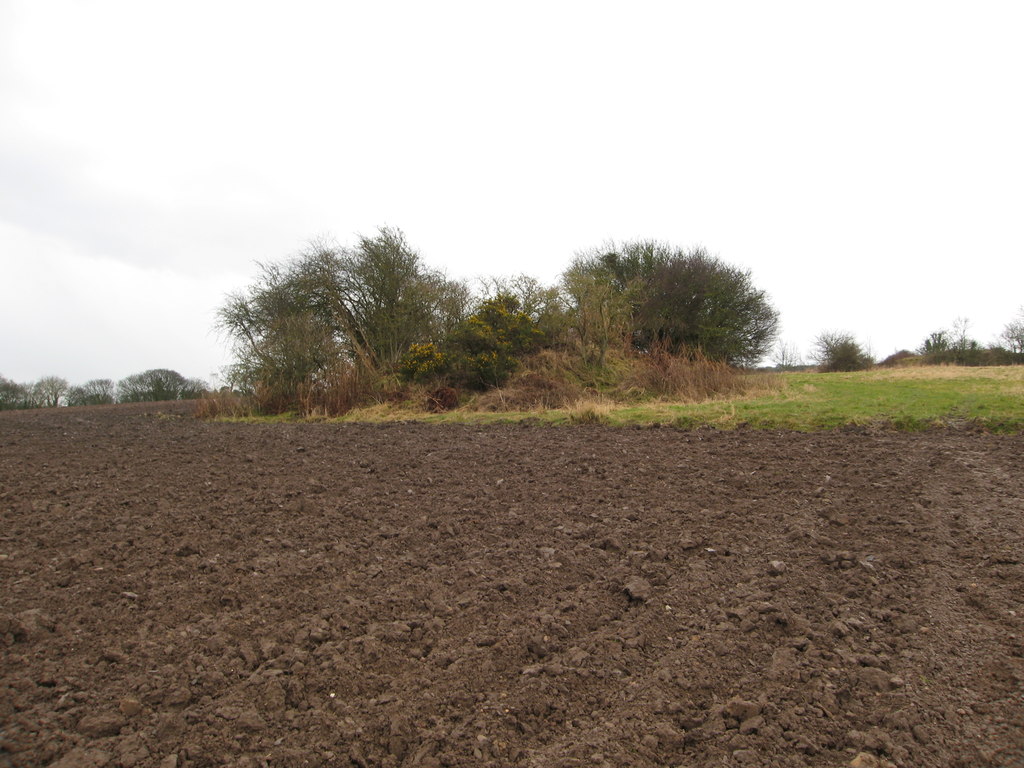
Surviving remains include converted former mine offices, shaft mounds, whim circles, concrete processing platforms and extensive waste tips northwest of Perth-y-maen, along with stone foundations and revetment walls, though most above-ground infrastructure has deteriorated. A disused mineshaft photographed at Llanasa, the community in which Trelogan lies, gives some sense of the surviving surface remains typical of the site.
Nearby mines
- Point of Ayr Colliery — 1.8 miles (2.9 km) N
- Mostyn Colliery — 2.1 miles (3.3 km) E
- Talargoch Mine — 4.1 miles (6.6 km) W
- Meliden Lead Mines — 4.9 miles (7.9 km) W, Denbighshire
- Bettisfield Colliery — 6.4 miles (10.2 km) SE
Straight-line distance, within 9 miles (15 km). Show on the map.
Recorded claims
Individual factual claims, each attached to the source(s) that support it below. Where sources disagree, both are kept.
- The Governor and Company for Smelting down Lead with Sea Coal (the 'Quaker Company', later the London Lead Company) worked the mines at Trelogan from around 1694. 1
- Trelogan received a windmill-powered pump in the 1730s and, in 1732, the first Newcomen atmospheric engine erected anywhere in Flintshire. 1,2
- The Trelogan Mining Company worked the Afongoch Vein through the 19th century, installing 30-inch and 40-inch pumping engines in 1847 and later an 80-inch Cornish beam condensing and pumping engine by Bracewell and Griffiths; two 80-inch engines were later sold on to Cornwall shortly before the First World War. 1,2
- Brunner Mond reopened the mine in 1897 and worked it until final closure in 1911. 1,3
- The National Library of Wales holds a Midsummer Quarter account, dated 1845, for Trelogan lead mine among the Margaret Mostyn Jones manuscripts. 4,2
Sources
- (primary) Trelogan Mine (CPAT metal mines survey, site 102786) — Clwyd-Powys Archaeological Trust
- (secondary) Remembering the Mawstone Mine Disaster — Great British Life (Andrew McCloy)
- (primary) Newspaper Articles: The Lead Mine Tragedy, Inquest Story Of The Rescue Efforts (Northern Daily Mail, 31 May 1932) — Durham Mining Museum (newspaper archive)
- (primary) Trelogan Lead Mine (Wales) - Margaret Mostyn Jones MSS, NLW MS 23521D — National Library of Wales
Record created: 26 August 2026 · Last researched: 26 August 2026