 MineArchive
Meliden Lead Mines
| Location | Meliden and Dyserth, Denbighshire — 53.2980, -3.4270 (approximate) |
|---|---|
| Commodities | Lead, Zinc |
| Type | Metal |
| Worked | Worked from at least the 1630s–1905 |
| Operators | London Lead Company (1736–?) |
Overview
The lead mines of Talargoch, on the hillside above Meliden and Dyserth, worked on and off since the 1630s and one of North Wales's most productive lead mines at its peak — drained for over two centuries by a remarkable sequence of increasingly powerful pumping engines.
History
Lead was worked at Talargoch, on Graig Fawr above Meliden, from at least the 1630s, when Eubie Hughes of Llewerllyd secured legal possession of the hill and leased mining rights to operators from Derbyshire, Chester and Northop. Early working scratched at ore near the surface, drained at first by natural drainage levels and waterwheel-powered pumps; by the end of the 17th century the easily won near-surface ore was largely exhausted. The Welsh Copper Company drove a drainage sough in 1699, later reused to discharge water pumped by the mine's own steam engine.
In August 1714, William Probert of Hanmer and Richard and Thomas Beech of Meaford leased the Bishop of St Asaph's land at Talargoch, having just built a successful Newcomen atmospheric engine nearby at Ewloe; by 1736 a Newcomen 'Fire Engine' had been erected at Talargoch itself, appearing on a map attached to a lease the London Lead Company took out on the site that year. The London Lead Company went on to run the mine using this and later engines, powering three waterwheels from a leat built in the 1750s; the engine was still working when it appeared in Thomas Pennant's illustrated Journey to Snowdon in 1781.
Steam power expanded through the 19th century as deeper, wetter ground was worked: the Clive Shaft was sunk between 1842 and 1845 and initially fitted with a hydraulic engine, replaced in 1860 by a 100-inch Cornish pumping engine. By 1874 the mine was running as many as fifteen steam engines of varying sizes across its workings — a 100-inch, an 80-inch, a 36-inch, two 24-inch and two 18-inch and two 12-inch engines, plus fifteen smaller 'donkey' engines and two waterwheels — and had produced nearly 60,000 tons of lead ore and 50,000 tons of zinc ore in its final 40 years alone. Strikes over pay and hours hit the mine in 1852, 1856, 1877 and 1884, one 1856 letter from the miners describing four months without wages. By June 1882 most of the southern workings had closed, with activity concentrated around the Mostyn Shaft at the mine's northern end; falling lead prices finally stopped the pumps in May 1884. A handful of men continued underground until 1899, and the last 29 surface workers, reprocessing waste tips, were laid off in 1905; an attempt to refinance the mine in 1903 by Captain Matthew Francis came to nothing.
Geology
Talargoch's lead veins run through limestone, sandstone and chert, buried beneath up to 200ft of saturated glacial gravel and other drift deposits — ground that made sinking new shafts difficult and kept the mine persistently wet, driving its long history of ever more powerful pumping engines.
Workings
Worked through a succession of shafts over two and a half centuries, from early scratch workings and natural drainage levels through Newcomen-engine pumping from the 1710s-30s, to 19th-century deep shafts including Clive Shaft (1842-45), the Mostyn Shaft and the Engine Shaft, the latter served by an 80-inch pumping engine and six egg-ended boilers by 1874.
Closure
Falling lead prices stopped the pumps in May 1884; a handful of men stayed on underground until 1899, and the last surface workers, reprocessing waste tips, were laid off in 1905.
What remains
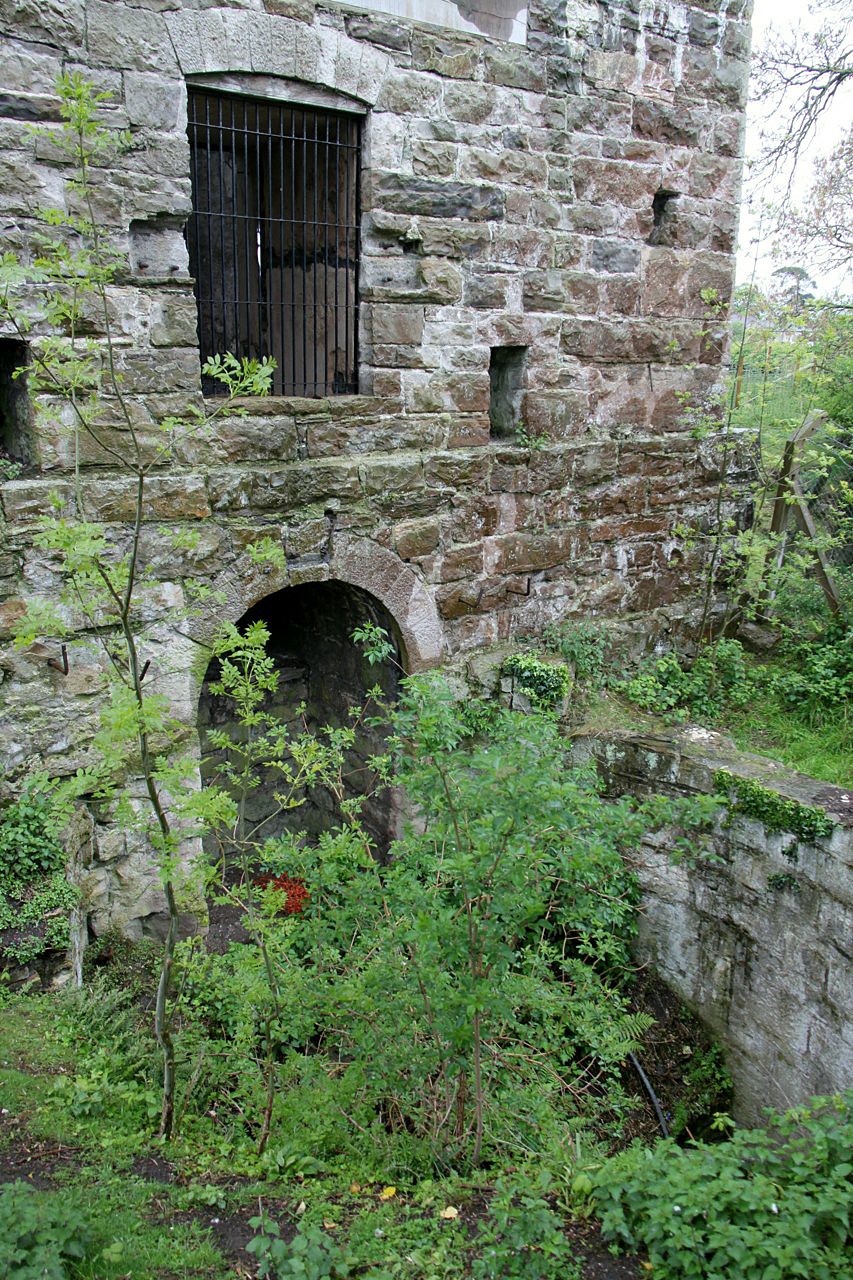
Most of Talargoch's surface remains were cleared in the 1960s, leaving spoil mounds around the site of the former Talargoch shaft and some former mine buildings absorbed into later housing; the Clive Shaft engine house survives as a Grade II listed building and scheduled monument.
The Clive Shaft engine house, a Grade II listed building and scheduled monument, is the mine's most substantial surviving structure.
Nearby mines
- Talargoch Mine — 1.0 miles (1.7 km) NE, Flintshire
- Trelogan Mine — 4.9 miles (7.9 km) E, Flintshire
- Point of Ayr Colliery — 5.6 miles (9.1 km) NE, Flintshire
- Mostyn Colliery — 6.9 miles (11.2 km) E, Flintshire
Straight-line distance, within 9 miles (15 km). Show on the map.
Recorded claims
Individual factual claims, each attached to the source(s) that support it below. Where sources disagree, both are kept.
- Lead was worked at Talargoch from at least the 1630s, under a lease Eubie Hughes of Llewerllyd granted to operators from Derbyshire, Chester and Northop. 1
- A Newcomen atmospheric 'Fire Engine' had been erected at Talargoch by 1736, when it appeared on a map attached to the London Lead Company's lease of the site; it was still working in 1781. 1
- The Clive Shaft was sunk 1842-45 and fitted with a 100-inch Cornish engine from 1860; by 1874 the mine ran as many as fifteen steam engines and had produced nearly 60,000 tons of lead ore and 50,000 tons of zinc ore in its final 40 years. 2,3
- Falling lead prices stopped the pumps in May 1884; a handful of men worked on underground until 1899, and the last surface workers were laid off in 1905 after reprocessing waste tips. 3
Sources
- (secondary) Dyserth - Talargoch Newcomen Engine — Dyserth.com
- (primary) Talargoch Central Area — Clwyd-Powys Archaeological Trust
- (secondary) Dyserth - The Mines — Dyserth.com
Record created: 27 August 2026 · Last researched: 27 August 2026