 MineArchive
Thorncliffe Colliery
| Location | Thorncliffe, Chapeltown, north of Sheffield, South Yorkshire — 53.4735, -1.4734 (approximate) |
|---|---|
| Commodity | Coal |
| Type | Coal |
| Worked | 1793 (lease)–2 April 1955 |
| Maximum depth | 305 yards (Silkstone seam) |
| Operators | Newton, Chambers and Co. Ltd (1793–1947), National Coal Board (1947–1955) |
Overview
The drift colliery of Newton, Chambers and Co. inside its Thorncliffe Ironworks at Chapeltown, worked from 1854 as Thorncliffe Main in the Parkgate seam and later the Fenton, Silkstone and Whinmoor, until 1955.
History
Thorncliffe Colliery lay about five and a half miles north of Sheffield, inside the boundary of the Thorncliffe Ironworks at Chapeltown. In December 1793 George Newton, Thomas Chambers and Henry Longden took a 21-year lease from Earl Fitzwilliam to work coal and ironstone in the Thorncliffe valley, and built their ironworks beside the Blackburn Brook above the wooded slopes where the mining was done. The early pits were reached by drifts and later by shafts, joined underground for ventilation and pumping. From 18 December 1839 Newton, Chambers and Earl Fitzwilliam drove the Thorncliffe/Elsecar drift, a sough of 600 yards from Skiers Spring, to drain their adjoining workings.
In 1854 a new surface drift at 1 in 10 was begun into the Parkgate seam from the edge of the woods. It was called Thorncliffe Main because it was meant to become the main source of coal for the ironworks. By 1896 the drift was 1,100 yards long, coal was hauled out by a steam-driven endless rope, and the colliery employed 664 and raised 700 tons a day.
In 1914 the Barley Hall Shaft, 12 feet across, became the upcast and replaced the Guibal fan in the main drift, and it wound men and materials to the Silkstone seam. Two more drifts followed in 1924, and the Fenton and Silkstone seams were fully mechanised. Employment peaked at 1,227 in 1933. Pit-head baths for 750 men opened at Barley Hall in 1939.
The colliery passed to the National Coal Board in 1947 with 684 men. The last coal came up the Thorncliffe Drift on 2 April 1955, and the workforce moved to the Barley Hall shaft, which became Barley Hall Colliery.
Geology
Coal Measures seams of the Yorkshire coalfield: the Parkgate, worked by drift from 1842; the Fenton, 36 inches thick at 248 yards; the Silkstone, 27 inches at 305 yards; and the Whinmoor, 26 inches, under development in 1946. The company's lease also covered ironstone, and plans of ironstone workings at Thorncliffe, Parkin Wood, White Lane and Smithy Wood record abandonment in 1897.
Workings
Drifts driven from the ironworks: the Parkgate drift of 1842, the Thorncliffe Main drift of 1854 at 1 in 10, 1,100 yards long by 1896, and the New Silkstone drift of 1924, with a 305-yard intake drift at 1 in 4 near Barley Hall. The Barley Hall Shaft was the upcast from 1914, deepened to a 270-yard sump, and the colliery kept three pumping shafts, at Tankersley, Barley Hall and Skiers Spring. Coal was hauled by over-tub endless rope.
Closure
The colliery closed in 1955. The last run of coal was hauled from the Thorncliffe Drift on 2 April 1955, and the men transferred to the Barley Hall shaft, which carried on as Barley Hall Colliery.
What remains
Unknown.
Redevelopment
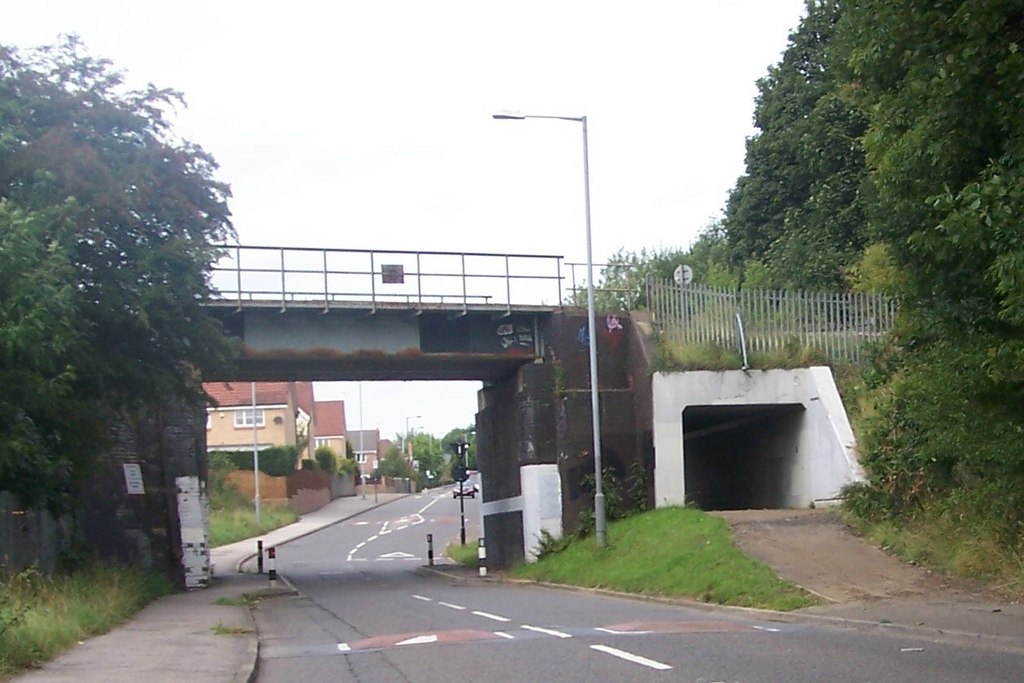
Thorncliffe Road, built as the access road to the colliery, now carries general traffic through a developed area under the Sheffield to Barnsley railway.
Related mines
- Smithy Wood Colliery — Both Newton, Chambers and Co. collieries serving the Thorncliffe Ironworks; Smithy Wood is also named on the Thorncliffe ironstone plans.
Nearby mines
- Smithy Wood Colliery — 1.6 miles (2.6 km) SE
- Wharncliffe Silkstone Colliery — 1.6 miles (2.6 km) NW
- Wharncliffe Wood Ganister Mines — 2.2 miles (3.6 km) SW
- Elsecar Colliery — 2.6 miles (4.2 km) NE
- Hemingfield Colliery — 3.4 miles (5.4 km) NE
Straight-line distance, within 9 miles (15 km). Show on the map.
Recorded claims
Individual factual claims, each attached to the source(s) that support it below. Where sources disagree, both are kept.
- In December 1793 George Newton, Thomas Chambers and Henry Longden signed a 21-year lease from Earl Fitzwilliam to work coal and ironstone in the Thorncliffe valley. 1
- Work on the Thorncliffe/Elsecar drift, a 600-yard sough from Skiers Spring to the Parkgate seam, began on 18 December 1839. 2
- In 1854 a new 1 in 10 surface drift into the Parkgate seam was begun within the ironworks boundary and named Thorncliffe Main. 2
- In 1896 Thorncliffe Main employed 495 underground and 169 on the surface and produced 700 tons of coal a day. 3,2
- Employment peaked at 1,227 in 1933, 900 below ground and 327 on the surface. 3,2
- In 1946 the colliery raised 4,000 tons a week from the Fenton seam at 248 yards and the Silkstone seam at 305 yards. 2
- The colliery was owned by Newton, Chambers and Co. until it passed to the National Coal Board in 1947. 3,2
- The last run of coal was hauled from the Thorncliffe Drift on 2 April 1955, and the workforce transferred to Barley Hall. 2
- On 26 August 1870 two colliers, E. Arthur and Ira Shires, were killed by an explosion of gas after going with candles where they had no business to go. 3
- Plans of ironstone workings at Thorncliffe Gallery Bottom, Parkin Wood, White Lane and Smithy Wood record abandonment in 1897. 4
- Thorncliffe Road was originally an access road to Thorncliffe Colliery. 5
Photographs & further reading
An aerial photograph of 4 May 1926 showing the ironworks and colliery at Chapeltown.
View sourceThe society's account of the drifts, shafts, seams and manpower from 1839 to closure in 1955, with a photograph of the last run of coal.
View sourceOwners, output and employment returns from 1894 to 1954, seams worked and the names of those killed at the colliery.
View sourceSources
- (secondary) Newton, Chambers & Co. — Wikipedia
- (secondary) Thorncliffe Colliery - Northern Mine Research Society — Northern Mine Research Society
- (primary) Durham Mining Museum - Thorncliffe Colliery (UK) — Durham Mining Museum
- (primary) BGS mine plans: Thorncliffe Gallery Bottom, Parkin Wood, White Lane, Smithy Wood (ironstone, abandoned 1897) — British Geological Survey / Mining Remediation Authority
- (observational) Railway Bridge, Thorncliffe Road, Chapeltown (Geograph, Terry Robinson, 2010) — Geograph
- (secondary) Thorncliffe and Chapeltown Iron and Coal Co - Graces Guide — Grace's Guide
Record created: 1 October 2026 · Last researched: 1 October 2026