 MineArchive
Smithy Wood Colliery
| Also known as | Smithywood Colliery |
|---|---|
| Location | Chapeltown, north of Sheffield, South Yorkshire — 53.4528, -1.4556 (exact) |
| Commodity | Coal |
| Type | Coal |
| Worked | 1890–1986 |
| Operators | Newton, Chambers and Co. Ltd (1890–1947, owner) National Coal Board (1947–1986) |
Overview
Newton, Chambers and Company's colliery at Chapeltown, sunk in 1890 to feed the Thorncliffe ironworks and its coke ovens. Its coal came out on a cable belt in an incline nearly a mile and a half long, and the site is a business park now.
History
Newton, Chambers and Company had been at Thorncliffe near Chapeltown since the end of the eighteenth century, an ironworks that grew into engineering, collieries and — from the by-products of its coking — chemicals. It began sinking Smithy Wood in 1890 and held the colliery until nationalisation, latterly through N. C. Thorncliffe Collieries.
The pit worked with two shafts and a drift, the Thorpe, used for ventilation, men and supplies, and its main coal transport was a cable belt in an incline two thousand seven hundred and seventy yards long from the surface. A battery of fifty-nine coke ovens stood on the site, and until the 1960s an aerial ropeway brought much of the coal from Smithy Wood, Rockingham and Thorncliffe collieries together. By the mid-1940s the company's four pits — Rockingham, Thorncliffe, Smithy Wood and Grange — were producing a million tons of coal a year between them.
The National Coal Board took the collieries in 1947. Employment at Smithy Wood ran from 678 in 1923, including the Norfolk pit, to 1,162 in 1954, working the Fenton, Parkgate, Silkstone and Thorncliffe seams; the Board's own leaflet of 1967 has 590 men producing 210,000 tons from the Lidgett with all output from mechanised faces. The pit closed in 1986 and was demolished the following year.
Geology
The South Yorkshire coalfield north of Sheffield, worked here through the Fenton, Parkgate, Silkstone and Thorncliffe seams and, by the 1960s, the Lidgett.
Workings
Two shafts and a drift, the Thorpe, which carried ventilation, men and supplies. The coal itself came out on a cable belt in an incline two thousand seven hundred and seventy yards long from the surface. Fifty-nine coke ovens stood on the site, and until the 1960s an aerial ropeway carried much of the output of Smithy Wood, Rockingham and Thorncliffe together.
Closure
Smithy Wood closed in 1986 and was demolished the following year.
What remains
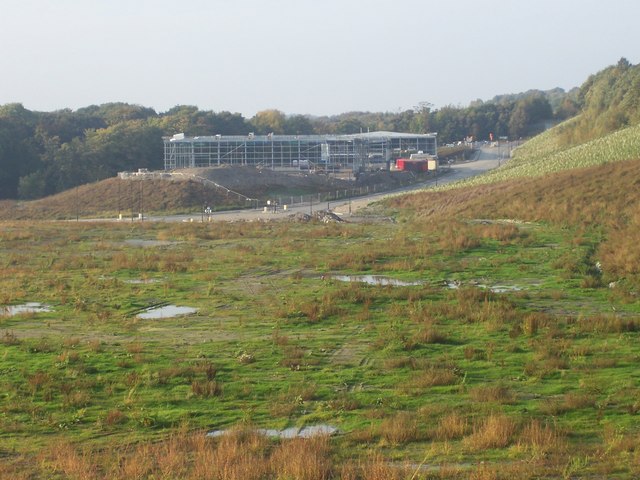
The site has been landscaped and redeveloped as a business park.
None; the colliery was demolished in 1987 and the ground built over.
Redevelopment
A business park on the colliery site.
Related mines
- Barley Hall Colliery — Barley Hall was Smithy Wood's upcast shaft from 1890, and from 1963 its coal went underground to the Smithy Wood surface.
- Norfolk Colliery — Returned together in 1923 and 1933; both ventilated through Barley Hall.
- Rockingham Colliery — Both Newton, Chambers and Co. collieries, grouped together by the Coal Board in 1962; Skiers Spring passed coal on to the processing plant at Smithy Wood after 1972.
- Thorncliffe Colliery — Both Newton, Chambers and Co. collieries serving the Thorncliffe Ironworks; Smithy Wood is also named on the Thorncliffe ironstone plans.
Nearby mines
- Norfolk Colliery — 1.4 miles (2.3 km) N
- Thorncliffe Colliery — 1.6 miles (2.6 km) NW
- Wharncliffe Wood Ganister Mines — 2.3 miles (3.7 km) W
- Lidgett Colliery — 2.4 miles (3.8 km) N
- Tankersley Colliery — 2.7 miles (4.3 km) NW
Straight-line distance, within 9 miles (15 km). Show on the map.
Recorded claims
Individual factual claims, each attached to the source(s) that support it below. Where sources disagree, both are kept.
- The National Coal Board's leaflet 'Coal in Barnsley Area' of 1967 records Smithy Wood as established in 1890, with two shafts and a drift, the Thorpe, used for ventilation, men and supplies, and its main transport a cable belt in an incline two thousand seven hundred and seventy yards long from the surface. All output came from mechanised faces, and 590 men produced 210,000 tons from the Lidgett. 1
- Newton, Chambers and Company, based at Thorncliffe near Chapeltown, grew from late eighteenth-century partnerships into ironworks, engineering, collieries and chemicals made from coking by-products. By the mid-1940s it worked four collieries — Rockingham, Thorncliffe, Smithy Wood and Grange — with a combined output of a million tons a year. 2
- The Durham Mining Museum's transcription of the Lists of Mines gives the sinking as started in 1890 under Newton, Chambers and Co. Ltd and the colliery under the National Coal Board from 1947, working the Fenton, Parkgate, Silkstone and Thorncliffe seams. Employment was 678 in 1923 including the Norfolk pit, 1,010 in 1933, and 1,162 by 1954; the 1947 output was 193,000 tons of coking, gas and household coal. 1
- George Newton and Thomas Chambers formed their iron business in December 1792, backed by the London tea merchant Miles Maskew, and began casting at the Phoenix Foundry in Sheffield in March 1793. In December 1793 they approached Earl Fitzwilliam's agent Charles Bowns for land at Thorncliffe and for the ironstone and coal to feed a blast furnace. The terms were £70 an acre for the two-foot-six bed of coal, £90 for the five-foot seam and £140 for the ironstone; Joseph Hague, until then steward of Westwood Colliery near Tankersley, was engaged as foreman; work began on New Year's Day 1794 and the first furnace went into blast on 27 April 1795. 3
- Newton, Chambers employed thousands in South Yorkshire for more than a hundred and seventy years. Its scale declined after the Second World War as coal and steel were nationalised, though the chemical and engineering departments stayed profitable; the loss-making iron business closed in the 1970s. The company was taken over by Central and Sheerwood, itself taken over by Transfer Technology Group, which broke up its interests in the 1980s and early 1990s. Descendant brands still trading include Ronseal, Trianco heating products and NCK cranes, and the Thorncliffe headquarters is now Thorncliffe Business Park. 3
Photographs & further reading
The official returns, the National Coal Board's own 1967 description of the cable belt and the drift, and the roll of those killed at the colliery.
View sourceThe Thorncliffe company that sank the pit — ironworks, engineering, collieries and the chemicals it made from its own coking by-products.
View sourceThe company behind the colliery, from the 1792 partnership and the Thorncliffe lease from Earl Fitzwilliam to the break-up of its successors and the brands that survive it.
View sourceSources
- (primary) Smithy Wood Colliery — Durham Mining Museum
- (secondary) Newton, Chambers & Co. — Wikipedia
- (secondary) Spotlight: Newton, Chambers and Company — Friends of Hemingfield Colliery
Record created: 11 September 2026 · Last researched: 11 September 2026