 MineArchive
Southrigg Colliery
| Also known as | Richmond Pit, Morgan Pit, Southrigg No. 3 Pit, Netherton Pit, Harthill |
|---|---|
| Location | Between Blackridge, Harthill and Greenrigg, on the West Lothian and Lanarkshire border, West Lothian — 55.8535, -3.7135 (approximate) |
| Commodity | Coal |
| Type | Coal |
| Worked | 1883–1939 |
| Operators | George Moir (1883–1885), Alexander M. Graham (1885–1898), James Nimmo and Company (1898–?), United Collieries Limited (?–1939) |
Overview
A string of pits on the boggy tongue of Lanarkshire between Blackridge and Harthill, begun in 1883 by a Glasgow coal merchant whom it bankrupted, sold to James Nimmo and Son in 1898 and worked by United Collieries. No. 3 pit east of Harthill, sunk about 1900, employed over four hundred and was the nucleus of Greenrigg village; Nos. 7 and 8 at Netherton drowned within six years; the undulating seams and thirty pumps in one pit ended the colliery in 1939.
History
The Armadale coals ran deep under the western edge of West Lothian and were untouched until 1883, when George Moir, a Glasgow coal merchant with no experience of mines, began Southrigg No. 1 three-quarters of a mile south of the Bathgate and Airdrie railway, joined to it by a new mineral line. It bankrupted him within a couple of years and passed to Alexander M. Graham, a practical engineer, who agreed to sell to James Nimmo and Son in 1898 and died of apoplexy in the lawyers' office within the hour of signing, aged 47. Nimmo's became part of United Collieries Ltd a few years later. Workers trekked across fields and moors to the remote pit, the company once paying a farmer for the damage of hundreds of pit boots, and special trains brought miners from Coatbridge. About 1900 the company took over the mineral railway, built a shed for its pugs and extended the line a mile south to a new No. 3 pit east of Harthill, which became the most successful of the group, employing over four hundred and forming the nucleus of Greenrigg village; in 1924 it had 406 underground and 88 on the surface under William Brown. Nos. 7 and 8, the Richmond and Morgan pits, had their sods cut at Netherton farm in February 1903 by Sir David Richmond and Mr Morgan's representative, followed by a banquet at Fauldhouse; they met bad ground and a great influx of water, stopped in May 1909 with 150 thrown idle, and in May 1910 lightning wrecked their 130-foot chimney, which steeplejacks blew down. The pit was kept pumping into the 1930s, its water piped to the public reservoirs in the drought of 1911. No. 1 closed in 1914. Nos. 3 and 4 were joined underground to Greenrigg, and in May 1924 three Harthill lads sent a platelayers' bogie down the long hill from No. 1 to No. 3 and were fined sixpence each. The pits were plagued by water from the undulating seams, one needing nearly thirty pumps, and in 1939 United Collieries stopped Southrigg, with 320 underground in 1938, and began a new Netherton mine to the west for 150 men.
Geology
The Armadale coals of the Limestone Coal Group, lying much deeper here than at Armadale and much folded, so that the pits were plagued by water and pumping.
Geological setting: Sedimentary Beds and Seams (historical documentary reference)
Workings
Nos. 1 and 2 (1883 to 1914, Whitburn parish), Nos. 3 and 4 (about 1900 to 1939, east of Harthill, joined underground to Greenrigg), Nos. 7 and 8 (Netherton, Shotts parish, 1903 to 1909, pumping to the 1930s). Employment at Nos. 3 and 4: 494 in 1924, 395 in 1938, 8 surface hands in 1944. Shaft depths are not given in the sources read. Served by a mineral railway from the Bathgate and Airdrie line worked by United Collieries' own engines.
Closure
Stopped in 1939 because the undulating strata needed a multiplicity of pumps and long undulating roads; United Collieries sank a new mine at Netherton to the west instead.
What remains
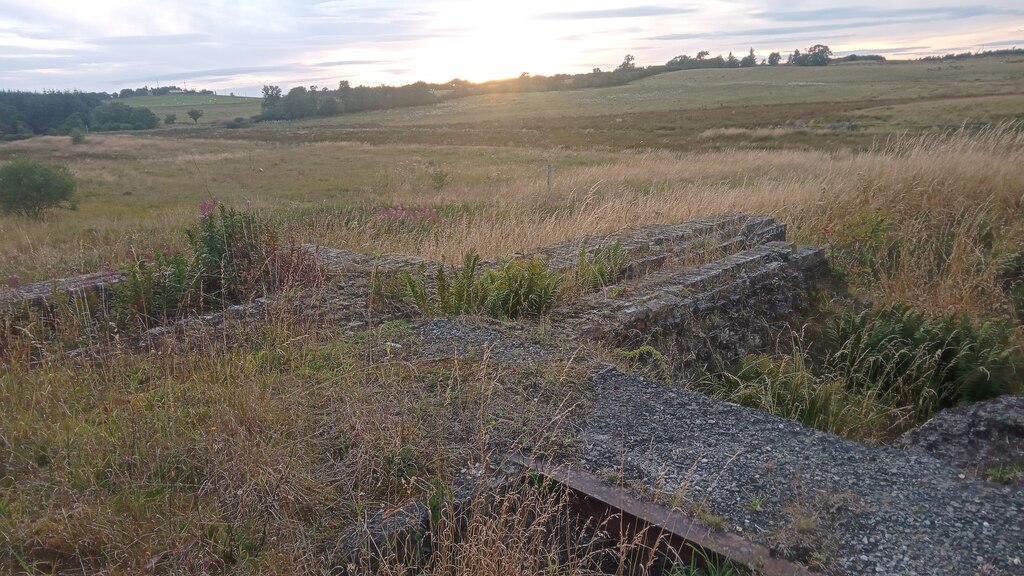
The No. 3 and 4 bing is landscaped as a community park at Greenrigg; the substantial brick underbuilding of the Netherton winding house and its tiny bing survive in Netherton woods; the No. 1 bing is wooded and the railway embankments and cuttings can be walked, the M8 cutting across the route.
The Netherton (Nos. 7 and 8) winding-house underbuilding, pit bings at Nos. 1 and 7 and 8, and the trackbed of the colliery railway.
Related mines
- Blairmuckhill Colliery — Neighbouring Harthill pits.
- Greenrigg Colliery — Nos. 3 and 4 were joined underground to Greenrigg; Greenrigg's men escaped through the connection in the 1924 fire.
Nearby mines
- Polkemmet Colliery — 0.8 km NE
- Greenrigg Colliery — 0.9 km SW
- Fallahill Colliery — 2.0 km SW
- Crofthead Colliery — 2.5 km SE
- Fauldhouse Colliery — 3.7 km S
Straight-line distance, within 15 km. Show on the map.
Recorded claims
Individual factual claims, each attached to the source(s) that support it below. Where sources disagree, both are kept.
- No. 1 begun 1883; No. 3 about 1900; Nos. 7 and 8 1903 to 1909; the Southrigg pits stopped in 1939. 1,2,3
- George Moir, Alexander M. Graham, James Nimmo and Son from 1898, then United Collieries Ltd. 1
- Nos. 3 and 4 employed 406 underground and 88 on the surface in 1924 and 320 and 75 in 1938. 2
- Stopped in 1939 because the undulating strata needed nearly thirty pumps in one pit and long undulating roads; a new pit was sunk to the west. 2,3
- The 130-foot chimney at Netherton pit was struck by lightning in May 1910 and blown down by steeplejacks. 3
Photographs & further reading
The museum's story of the Southrigg pits, their railway and what survives in Netherton and Southrigg woods.
View sourceEmployment returns, maps and the 1939 and 1940 newspaper reports on the closure.
View sourceThe Netherton pits' sod-cutting of 1903, closure of 1909, lightning-struck chimney of 1910 and the 1939 new mine, with photographs of the remains.
View sourceSources
- (secondary) Southrigg Bogies and Butterflies — Scottish Shale — Museum of the Scottish Shale Oil Industry
- (secondary) Southrigg No. 3 & 4 pits — Scottish Shale — Museum of the Scottish Shale Oil Industry
- (secondary) Southrigg No. 7 & 8 pits — Scottish Shale — Scottish Shale (Museum of the Scottish Shale Oil Industry)
Record created: 12 September 2026 · Last researched: 12 September 2026