 MineArchive
Snailbeach Mine
| Location | Snailbeach, Shropshire — 52.6126, -2.9252 (exact) |
|---|---|
| Commodities | Lead, Barite, Fluorspar, Silver, Zinc |
| Type | Metal |
| Worked | 1781–1955 |
| Operators | Thomas Lovatt & Co. (1781–?) |
Overview
Snailbeach was the biggest lead mine in Shropshire and is reputed to have yielded more lead per acre than any other mine in Europe. Worked on and off since Roman times and intensively from the late 18th century, it now has some of the best-preserved lead-mine surface buildings in Britain, cared for as a Scheduled Monument open to the public.
History
A Roman pig (ingot) of lead found nearby suggests galena was being extracted at Snailbeach in Roman times, though there appears to have been little activity between then and the late 18th century. Sustained development began in 1781, when the mine was leased to Thomas Lovatt & Co., launching a boom that lasted around 150 years. By the 1850s, at full production, around 500 men worked the mine, and in 1877 the narrow-gauge Snailbeach District Railway was built from the main line at Pontesbury specifically to bring in coal for the steam engines and carry ore away for processing.
Lead production continued until 1911, when the ore reserves were largely exhausted and pumping was allowed to stop, flooding the workings below the drainage adit. Smaller-scale extraction of barytes (barite) from the spoil continued for several more decades, and underground working finally ceased altogether in 1955.
Geology
The mineralised vein runs steeply, at 70–80 degrees, up the valley from the village. Lead ore (galena) was the primary target, with zinc ore (sphalerite) found at depth and barytes, calcite, fluorspar and silver worked as secondary minerals, particularly barytes in the mine's final years.
Geological setting: Veins and Lodes (well documented example)
Workings
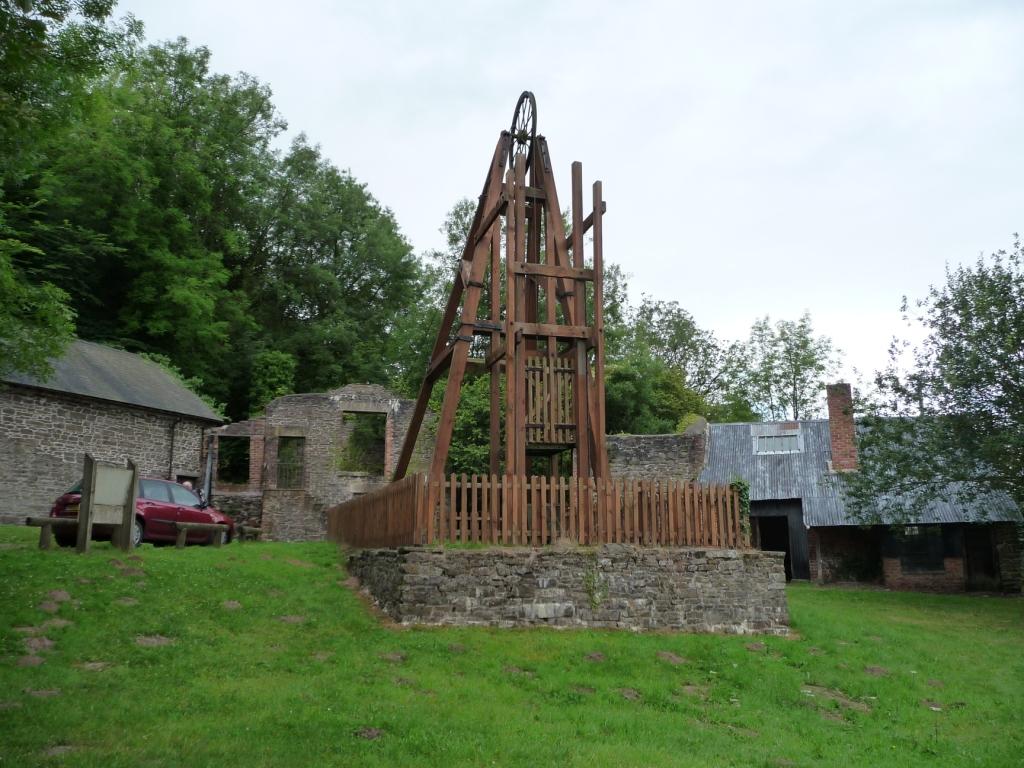
Ore was raised through a series of shafts served by steam winding engines, with a smelter built around half a mile north of the village replacing earlier facilities at Pontesford. The 1877 narrow-gauge Snailbeach District Railway connected the site to the main line at Pontesbury.
Closure
Lead extraction ended in 1911 when pumping ceased and the lower workings flooded; smaller-scale barytes extraction from the spoil heaps continued until underground working finally stopped in 1955, after which the site lay largely derelict for around 30 years.
What remains
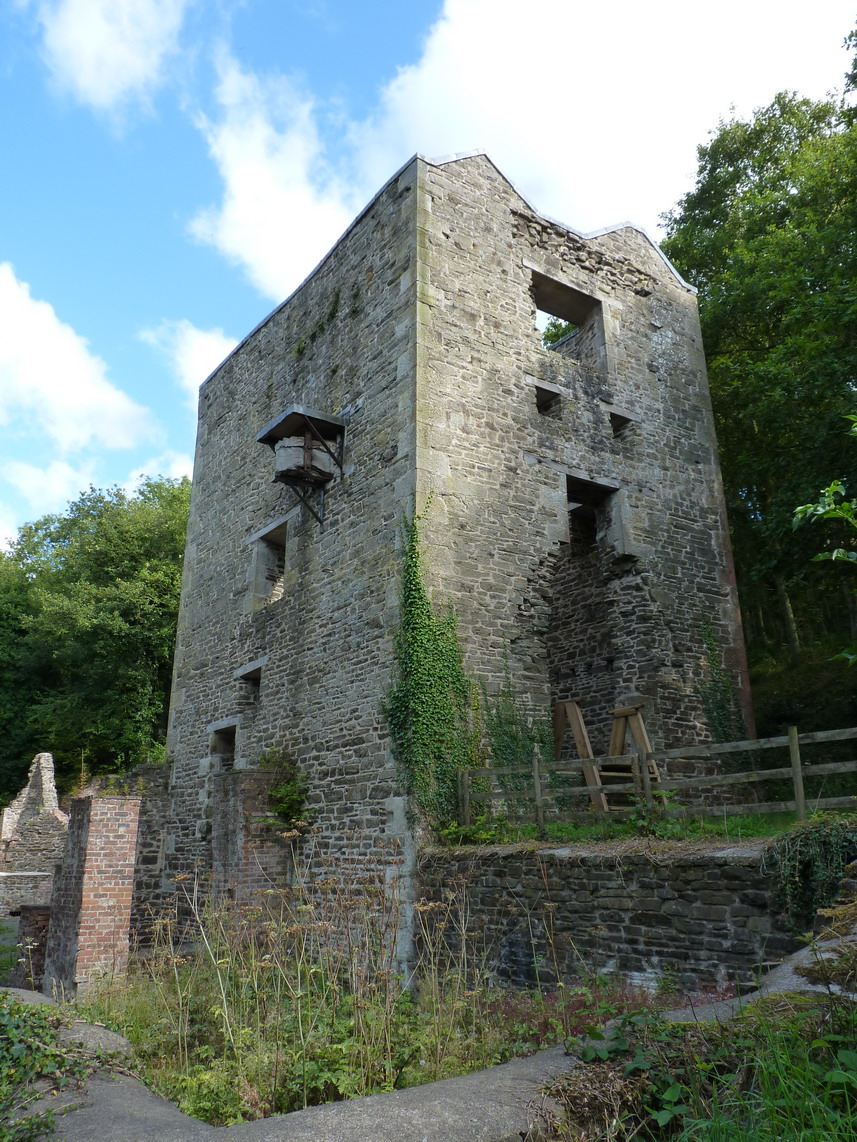
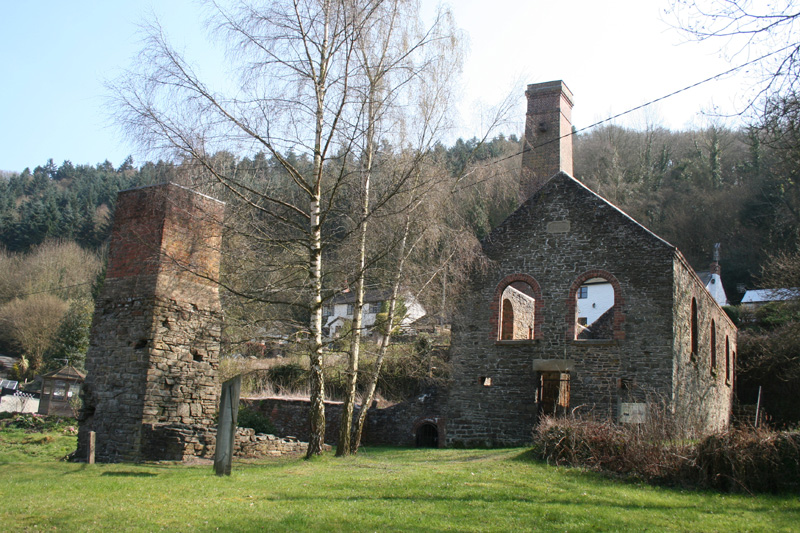
The mine has been flooded since 1911. From the mid-1990s, Shropshire County Council carried out grant-funded reclamation work, including landscaping and tree-planting on the prominent white spoil tip. The site was designated a Scheduled Monument in 1997, and a visitor centre opened in 1998. It's now owned by Shropshire Council and managed day to day by the Shropshire Mines Trust, unfenced and open for visitors.
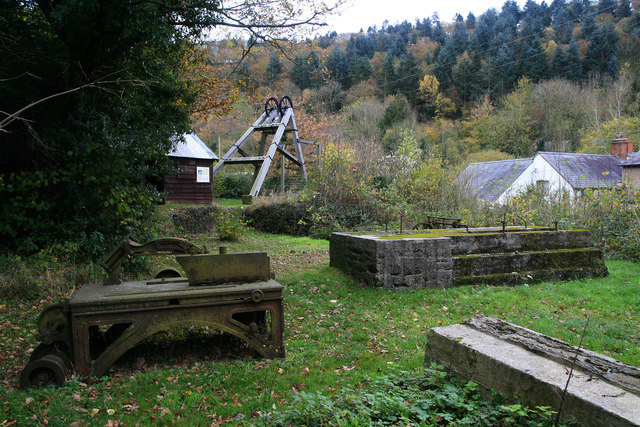
Surviving structures include a Cornish engine house, compressor house, crusher house, winding engine house, blacksmith's shop and locomotive shed — described as among the best-preserved surface buildings of any lead mine left standing in Britain.
Redevelopment
Guided tours are run by the Shropshire Mines Trust, and the site operates as the publicly accessible Snailbeach Countryside Site.
Nearby mines
- Ladywell Mine — 0.8 miles (1.4 km) SE
- Burgham Mine — 1.1 miles (1.7 km) SE
- Perkinsbeach Mine — 1.1 miles (1.8 km) SE
- Myttonsbeach Mine — 1.2 miles (1.9 km) SE
- Potter's Pit — 1.2 miles (1.9 km) S
Straight-line distance, within 9 miles (15 km). Show on the map.
Disasters & major incidents
-
Snailbeach Mine winding-rope accident, 1895
6 March 1895 · Winding / Shaft Accident · 7 fatalities
Seven miners were killed at George's Shaft when the winding rope — in continuous service for eight and a half years, twice the normal replacement interval — snapped internally and dropped their cage 252 yards to the bottom of the shaft.
What's uncertain
Points where sources disagree or the record could not be settled; both accounts are kept. All open questions in the archive.
- Snailbeach is reputed to have yielded the greatest volume of lead per acre of any mine in Europe. (uncertain) 1
Recorded claims
Individual factual claims, each attached to the source(s) that support it below. Where sources disagree, both are kept.
- Snailbeach is reputed to have yielded the greatest volume of lead per acre of any mine in Europe. (uncertain) 1
- Lead extraction ended in 1911 when pumping stopped and the lower workings flooded; smaller-scale barytes extraction from the spoil continued until underground working finally ceased in 1955. 2,1
- The site was designated a Scheduled Monument in 1997. 1
- Snailbeach reached peak production in the 1850s, when about 500 men were employed at the mine. 1
- As the workings deepened, shafts were sunk and levels driven along the vein at roughly 40-yard intervals, following the lode at its steep angle of 70 to 80 degrees. 1
- The BGS catalogue holds a plan of the Snailbeach sett and a plan of the New Wish Snailbeach mine, though neither has a publicly viewable scan. 3
Photographs & further reading
Further freely-licensed photographs of the surviving engine houses and surface buildings.
View sourceSources
- (secondary) Snailbeach Mine — Shropshire Mines Trust
- (secondary) Snailbeach, Shropshire — Wikipedia
- (primary) Snailbeach mine plans (BGS catalogue) — British Geological Survey
- (secondary) Snailbeach Mine — Northern Mine Research Society
Record created: 19 August 2026 · Last researched: 28 August 2026