 MineArchive
Shotton Colliery
| Location | Shotton Colliery, near Peterlee, County Durham — 54.7650, -1.3814 (approximate) |
|---|---|
| Commodity | Coal |
| Type | Coal |
| Worked | 1840–1 September 1972 |
| Maximum depth | Unknown. |
| Operators | Haswell, Shotton & Easington Coal & Coke Co. Ltd. (1840–?), Haswell Coal Company, Horden Collieries Ltd (1901–1947), National Coal Board (1947–1972) |
Overview
A large east Durham colliery won about 1841, whose coal first went by waggonway to Haswell and Seaham Harbour. It lay abandoned from 1877 to 1901, its village boarded up street by street, until the Horden Coal Company reopened it; it closed on 1 September 1972 after 132 years and 162 deaths.
History
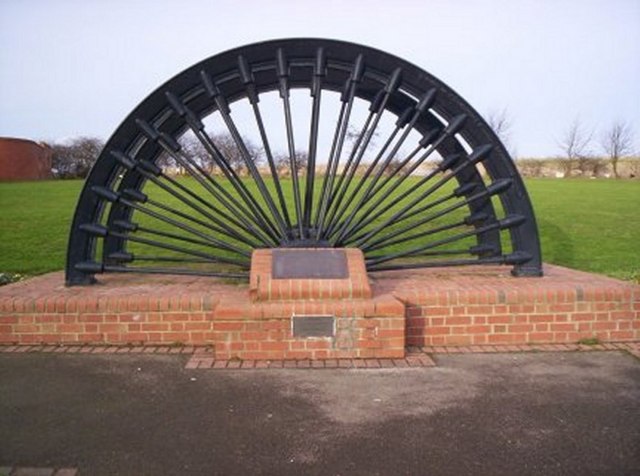
Shotton Colliery was won in about 1841 in east Durham, and its first problem was getting the coal away. It was connected by waggonway to Haswell Colliery, which was connected in turn through South Hetton to the new port and town of Seaham Harbour: a tortuous route to a tiny and already overloaded coal port. It was given up in favour of a link straight from Shotton to the North Eastern Railway's Hartlepool to Sunderland line, probably about 1855, when a through service between the two towns began. By 1871 the colliery village held 323 households. Then it stopped. The colliery was abandoned from 1877 to 1901, and the village emptied with it: entire streets stood boarded up, and some had only one or two inhabitants left in them. It was the coast that brought it back. In 1900 the colliery was reopened by the Horden Coal Company, a new and very large concern which was also planning its own super-pits on the coast at Horden and Blackhall. Shotton Colliery Mark II was producing 392,000 tons a year from 1,163 employees by 1906, and the village filled up again. It worked on under Horden Collieries and then the National Coal Board until 1 September 1972. There was never a disaster there in the sense the coalfield used the word - no single incident killed five or more - but across 132 years the pit is known to have killed 162 men, one and two at a time. Their names are on the memorial pit wheel that stands in the village.
Geology
Worked the coal seams of the concealed East Durham coalfield beneath the Magnesian Limestone, including the Five Quarter, Hutton, Low Main, Main Coal, Harvey, Three Quarter and County High Main.
Workings
Worked from about 1841, at first sending its coal by waggonway to Haswell and thence through South Hetton to Seaham Harbour, and from about 1855 by a direct link to the North Eastern Railway's Hartlepool to Sunderland line. The colliery was abandoned between 1877 and 1901 and reworked from 1900 on a much larger scale, raising 392,000 tons a year by 1906.
Closure
The colliery was abandoned once between 1877 and 1901 before the Horden Coal Company reopened it, and closed for good on 1 September 1972.
What remains
The colliery has gone and the village remains. A memorial pit wheel stands in Shotton Colliery carrying the names of the men killed at the pit.
The memorial pit wheel in the village, inscribed with the names of those killed at the colliery.
Redevelopment
Unknown.
Related mines
- Haswell Colliery — Both worked by the Haswell Coal Company; Shotton was opened by the associated Haswell, Shotton & Easington company.
Nearby mines
- Wheatley Hill Colliery — 2.4 km SW
- Haswell Colliery — 2.6 km W
- Easington Colliery — 3.6 km NE
- Wingate Grange Colliery — 4.0 km S
- Hawthorn Combined Mine — 4.6 km N
Straight-line distance, within 15 km. Show on the map.
Recorded claims
Individual factual claims, each attached to the source(s) that support it below. Where sources disagree, both are kept.
- The North Pit was sunk from 18 November 1840, and the colliery worked until it stopped in 1877. 1
- After standing idle for more than twenty years the colliery was reopened around 1900 by Horden Collieries Ltd. 1
- Employment reached 1,659 in 1910 and the colliery raised 425,148 tons in 1947. 1
- Worked the Five Quarter, Hutton, Low Main, Main Coal, Harvey, Three Quarter and County High Main seams. 1
- Passed to the National Coal Board in 1947 and closed on 1 September 1972. 1,2
- The colliery's abandonment plans are held in the mine-plans catalogue of the British Geological Survey. 3
- Shotton was won in about 1841 and connected by waggonway to Haswell Colliery, and through South Hetton to Seaham Harbour. That route to a small and overloaded port was abandoned in favour of a link direct to the North Eastern Railway's Hartlepool to Sunderland line, probably about 1855. 4
- The colliery was abandoned from 1877 to 1901. The village emptied with it: entire streets were boarded up and some had only one or two inhabitants left. 4
- In 1900 the colliery was reopened by the Horden Coal Company, which was also planning coastal super-pits at Horden and Blackhall. By 1906 Shotton was producing 392,000 tons a year from 1,163 employees. 4
- The colliery closed in 1972. No single incident there killed five or more, but over its 132-year life it is known to have claimed the lives of 162 men. 4
Photographs & further reading
Owners, output, employment, seams worked and the roll of those killed at the colliery.
View sourceSources
- (primary) Shotton Colliery (DMM s004) — Durham Mining Museum
- (secondary) Shotton Colliery — Wikipedia
- (primary) Shotton Colliery abandonment plans (BGS mine-plans catalogue) — British Geological Survey
- (secondary) Shotton and Shotton Colliery — Durham Records Online
Record created: 23 September 2026 · Last researched: 23 September 2026