 MineArchive
Haswell Colliery
| Location | Between Haswell and Haswell Plough, East Durham, County Durham — 54.7736, -1.4186 (approximate) |
|---|---|
| Commodity | Coal |
| Type | Coal |
| Worked | 1835–31 December 1896 |
| Maximum depth | The Hutton seam was reached at 930 feet in 1835; the Engine Pit was later bored below the Beaumont seam. |
| Operators | Haswell Coal Company (1835–?) |
Overview
An East Durham colliery won through the Magnesian Limestone and its quicksands in the early 1830s, scene of the 1844 explosion that killed 95 men and boys, and abandoned in 1896; its ruined engine house stands as the disaster's memorial.
History
Haswell was one of the first places where coal was proved beneath East Durham's Magnesian Limestone, by a sinking carried out by the geologist William Smith about 1811, but the colliery itself was not won for another two decades. Sinking of the Engine Pit began on 28 February 1831 and was lost in 54 feet of quicksand; a new Engine Pit started in July 1833 reached a good seam at 504 feet in August 1834 and the Hutton seam, 5 feet 6 inches thick, at 930 feet in March 1835. Winning the colliery cost nearly £100,000, and its first cargo of coal was shipped at Seaham on 2 July 1835 amid public celebration. Three railways raced to serve it — the Hartlepool Dock and Railway, the Sunderland Dock company's branch from Murton and an extension of the Braddyll Railway — and it is said to have been the first colliery in the world to use a wire rope in its shaft. Gas and water made Haswell a troubled pit: explosions in June 1840 and August 1841 each killed one man. At 3 p.m. on Saturday 28 September 1844, weeks after the end of the Great Strike, an explosion in the Hutton seam killed all 95 men and boys in the main pit and all the pit ponies; four men and two boys in the Little Pit survived (see Disasters, below). The inquest found no one to blame, leaving the owners — Clark, Taylor, Plummer and partners, the Haswell Coal Company — without liability to the families; more than fifty of the dead were buried in a mass grave at South Hetton. The colliery worked on through changes of ownership, employing 1,259 in 1883 and 1,309 in 1894. The Hutton seam was abandoned in 1886, and the Five Quarter, Main Coal and Low Main seams on 31 December 1896, when the mineral became unprofitable to work.
Geology
Coal seams concealed beneath the Magnesian Limestone, with about 20 fathoms of water-bearing quicksand under the limestone; the Hutton seam, 5 feet 6 inches thick at 930 feet, was worked first, later the Five Quarter, Main Coal and Low Main seams.
Workings
The Engine Pit and the Little Pit; a beam pumping engine in a thick-walled engine house drained the quicksand-troubled sinking. The colliery is said to have been the first to use a wire rope in its shaft.
Closure
The Hutton seam was abandoned in 1886, and the Five Quarter, Main Coal and Low Main seams on 31 December 1896 as unprofitable, in the economic slump of the 1890s.
What remains
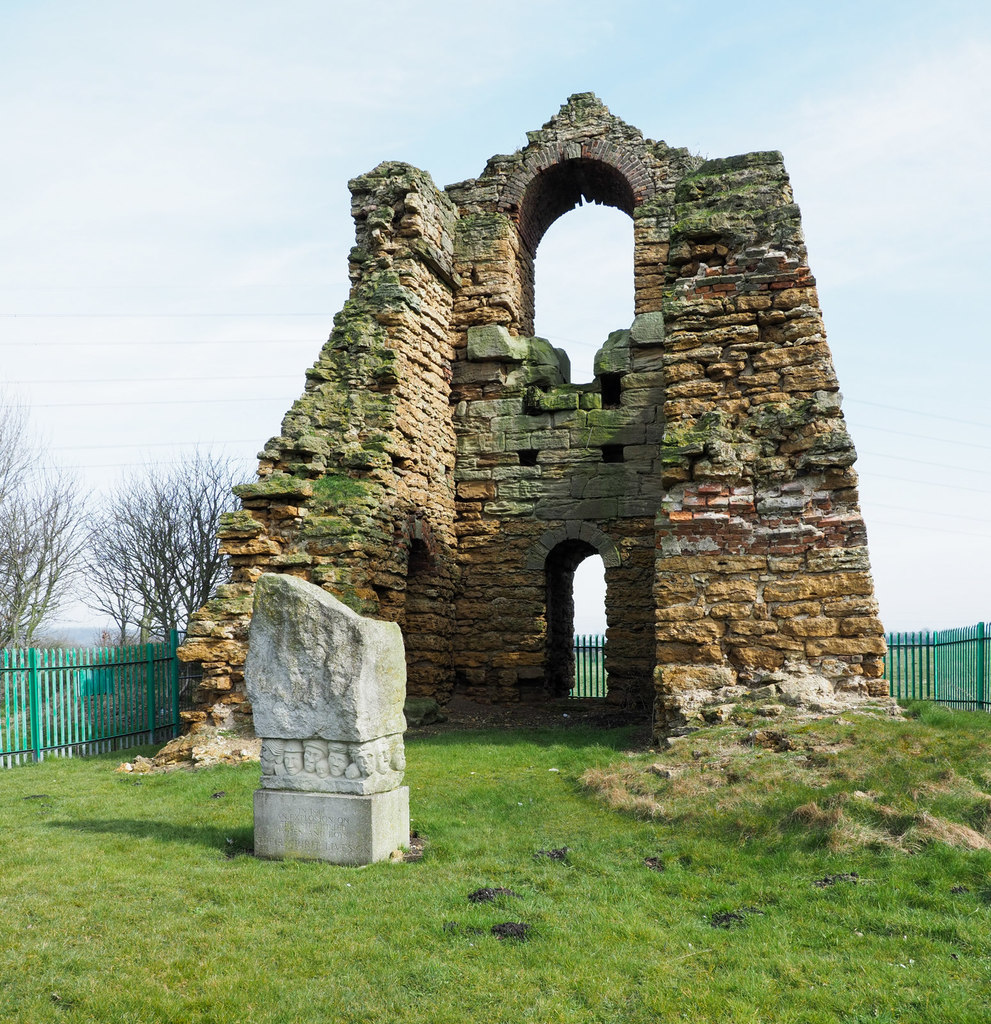
The ruined engine house survives as a memorial to the 1844 disaster; the colliery's other buildings have gone.
The ruined engine house (the 'Haswell Arch'), with a 1996 sculpture, 'The Spirit of Haswell', by Michael Disley, and green railings each bearing a head for one of the dead.
Nearby mines
- Wheatley Hill Colliery — 3.2 km S
- Elemore Colliery — 3.8 km NW
- Thornley Colliery — 4.3 km S
- Easington Colliery — 5.1 km E
- Wingate Grange Colliery — 5.5 km SE
Straight-line distance, within 15 km. Show on the map.
What's uncertain
Points where sources disagree or the record could not be settled; both accounts are kept. All open questions in the archive.
- Haswell is reputed to have been the first colliery in the world with a wire (steel) rope in its shaft. (uncertain) 5,2
Recorded claims
Individual factual claims, each attached to the source(s) that support it below. Where sources disagree, both are kept.
- The first Engine Pit was lost in quicksand in 1831; a new pit reached coal at 504 feet in August 1834 and the Hutton seam at 930 feet in March 1835, and the first coals were shipped at Seaham on 2 July 1835 after a cost of nearly £100,000. 1,2
- At 3 p.m. on 28 September 1844 an explosion killed 95 men and boys; four men and two boys in the Little Pit were saved. 1,3,4
- Haswell is reputed to have been the first colliery in the world with a wire (steel) rope in its shaft. (uncertain) 5,2
- Haswell employed 1,259 in 1883 and 1,309 in 1894; its last seams were abandoned on 31 December 1896 as unprofitable. 1
- The former engine house, the 'Haswell Arch', remains as a memorial; a 1996 sculpture by Michael Disley and railings with a head for each of the 95 dead were installed there. 2
- The national mine plans catalogue holds an abandonment plan of the Haswell Hutton seam dated 1844, with later plans for 1886 and 1897. 6
- A 2009 visitor found the engine house newly enclosed by a green fence, with a small car park nearby and an added memorial stone. 7
Photographs & further reading
Owners, pits, employment, the sinking chronology and abandonment dates.
View sourceThe railways that served the pit, the 1844 explosion and a list of the 95 dead with their families.
View sourceSources
- (secondary) Haswell Colliery (Durham Mining Museum) — Durham Mining Museum
- (observational) Haswell Colliery Engine House — Fabulous North
- (secondary) Haswell Colliery & the Disaster of September 1844 — Durham Records Online
- (secondary) Haswell Colliery Explosion – Haswell – 1844 — Northern Mine Research Society
- (secondary) Haswell Colliery (1835-1896) — Co-Curate, Newcastle University
- (primary) BGS / Mining Remediation Authority mine plans catalogue: Haswell (Hutton seam, 1844) — British Geological Survey
- (observational) Haswell Colliery (Derelict Places forum thread, 2009) — Derelict Places
Record created: 17 September 2026 · Last researched: 17 September 2026