 MineArchive
The Hundred Men of Haswell (Georg Weerth)
| Category | Literature |
|---|---|
| Also known as | Die hundert Männer von Haswell, The Hundred Men of Haswell |
| Dates | Explosion at Haswell Colliery 28 September 1844; poem first printed 1845; English translation 1880; Zurich edition 1886. |
A poem of five four-line stanzas by the German writer Georg Weerth, printed in 1845, in which a hundred widows ask the rich man of Haswell for their dead husbands' wages after the colliery explosion of 1844 and are paid one week's wages for each man; translated into English in 1880 by Laura Lafargue.
The mining history in this record
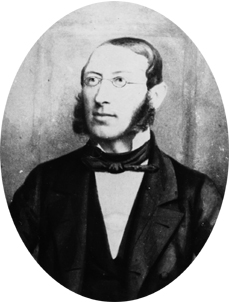
Georg Weerth, born in Detmold in 1822, lived in Bradford from 1843 to 1846 as a representative of a textile firm, and used the time to study the effects of the Industrial Revolution on property owner and working class. He attended Chartist meetings, befriended Engels, was a friend of Marx, and wrote reports and poems for German papers. 'Die hundert Männer von Haswell' belongs to his cycle 'Lieder aus Lancashire' and was first printed in the Gesellschaftsspiegel, a journal for the propertyless classes published at Elberfeld, in 1845.
The poem answers the explosion at Haswell Colliery, County Durham, at 3 p.m. on Saturday 28 September 1844, which killed 95 of the 99 men and boys underground, and all the ponies; Weerth rounds the toll to a hundred. The colliery belonged to the Haswell Coal Company, Clark, Taylor, Plummer & Co., and the official enquiry found no blame attributable to anyone, which freed the owners of any liability to the bereaved. In the poem the men all die in the same hour, and after the burial a hundred women come with their children to the rich man of Haswell and demand their husbands' pay; he pays a week's wages for each dead man, then locks his chest with a ringing iron bolt while the women weep. A relief fund of £4,265 was raised, which came to about £40 for each family.
People
Georg Weerth (1822-1856), German writer, journalist and merchant, in Bradford 1843-46, friend of Engels and Marx, who died in Havana. Laura Lafargue, translator, 1880.
Legacy today
The German text is online in the Zeno.org and Wikisource editions of Weerth. Laura Lafargue, the daughter of Karl Marx, translated it into English in 1880, and that version appears on Durham Records Online's page on Haswell Colliery, among the names of the 95 dead. A 1886 Zurich edition of Weerth's poems prints it under the heading 'Lieder aus Lancashire'.
Recorded claims
Individual factual claims, each tagged with how solidly it's grounded and attached to the source(s) that support it. Where sources disagree, both are kept.
- Georg Weerth, a German writer, lived in Bradford from 1843 to 1846 as a representative of a textile firm and studied the effects of the Industrial Revolution on owners and workers. (documented fact) 1
- The poem was first printed in the Gesellschaftsspiegel (Elberfeld), volume 1, in 1845, as one of Weerth's 'Lieder aus Lancashire'. (documented fact) 2
- The poem has five stanzas of four lines, with the word Haswell used as a repeated rhyme in all but the last. (documented fact) 3,4
- The poem tells how, after the dead were buried, a hundred women of Haswell came with their children to demand their husbands' wages from the rich man of Haswell, who paid a week's wages for each dead man and then locked his chest. (documented fact) 5,3
- The poem's hundred men is a round figure: 95 of the 99 men and boys in the pit were killed in the Haswell explosion of 28 September 1844. (reasonable inference) 5,4
- The owners in 1844 were Clark, Taylor, Plumer & Co., the Haswell Coal Company; the official enquiry found no blame attributable to anyone, freeing the owners from liability to the bereaved. (documented fact) 5
- A relief fund of £4,265 was raised after the disaster, about £40 to each family. (documented fact) 5
- The poem was translated into English by Laura Lafargue, the daughter of Karl Marx, in 1880. (documented fact) 5
- A Zurich edition of 1886, edited by Rudolf Lavant and printed by the Volksbuchhandlung in Hottingen, prints the poem as number 4 under the heading 'Lieder aus Lancashire'. (documented fact) 3
Mines
- Haswell Colliery — County Durham
The colliery whose explosion of 28 September 1844 is the poem's subject; the poem names Haswell throughout.
Disasters
- Haswell Colliery explosion, 1844 — 28 September 1844
Sources
- (secondary) Georg Weerth (Wikipedia) — Wikipedia
- (secondary) Georg Weerth: Gedichte (Zeno.org) — Zeno.org
- (secondary) Die hundert Männer von Haswell (Wikisource, German) — Wikisource
- (secondary) Gedicht #4 Die hundert Männer von Haswell (Der Sinn der Sinnlosigkeit, 2015) — Der Sinn der Sinnlosigkeit (blog)
- (secondary) Haswell Colliery & the Disaster of September 1844 — Durham Records Online
Record created: 29 September 2026 · Last researched: 30 September 2026