 MineArchive
Seaton Burn Colliery
| Also known as | Brenkley Colliery, Seatonburn Colliery |
|---|---|
| Location | Seaton Burn, North Tyneside, Tyne and Wear — 55.0606, -1.6292 (approximate) |
| Commodities | Coal, Fireclay |
| Type | Coal |
| Worked | 1844–17 August 1965 |
| Maximum depth | Unknown. |
| Operators | Grand Allies, John Bowes & Partners Ltd (1852–?), Seaton Burn Coal Company Ltd (1899–1938), Hartley Main Collieries Ltd (1938–1946), National Coal Board (1947–1965) |
Overview
A North Tyneside colliery opened about 1844 by the Grand Allies, later worked by John Bowes & Partners, the Seaton Burn Coal Company and Hartley Main, which employed 1,311 people in 1921, lost four men to a boiler explosion in 1860 and closed on 17 August 1965, its Brenkley Drift working on into the 1980s.
History
Seaton Burn Colliery opened about 1844 at Seaton Burn, 6½ miles north-north-west of Newcastle, after several years' sinking of the shaft. The Durham Mining Museum lists the Engine Pit, with sinking from 1844, the North Pit, and the Mason Pit, sunk from April 1888, and coal left by the Seaton Burn Wagonway. The first owners were the Grand Allies; by October 1852 it belonged to John Bowes & Co. (Messrs Bowes, Hutt, Wood and Charles M. Palmer), and in the 1860s to John Bowes & Partners. By 1899 the owners were the Seaton Burn Coal Company, which became part of Hartley Main Collieries Ltd in April 1938, and the National Coal Board took over in 1947.
Employment was 617 in 1894, 890 in 1900, 1,105 in 1908, 1,258 in 1910 and 1,311 in 1921, then 560 in 1930, 758 in 1940, 686 in 1950, 350 in 1960 and 129 in 1964. The colliery raised 238,000 tons in 1947. Its output was steam coal, with coking, gas and manufacturing coal in 1925-30 and fireclay in several years from 1910; the Low Main and Yard seams were worked in 1905-15, the Bensham and Main by the 1930s and the Five Quarter in the 1960s. The Yard seam was abandoned on 12 July 1933 and the Main and Yard in 1950. Boring was under way on the West Brenkley estate in November 1887.
The Durham Mining Museum and Wikipedia give closure on 17 August 1965, although the county Historic Environment Record says 1963. Brenkley Drift was the last producing part of the site and latterly the smallest National Coal Board pit in Northumberland. The museum lists Brenkley Colliery separately, with an air shaft sunk on 30 September 1870, employing 651 in 1965, 665 in 1970 and 639 in 1985 on the Beaumont and Busty seams, and gives its closure as 1985; Wikipedia says it worked until 1986. The site is now a business park, and the 1950s pithead baths on the A1067 were demolished about 1990.
A boiler explosion on 2 April 1860 killed four men: William Chevil, the stokers Robert Ewing and John Turner, and the engineman Wilkinson Younger, who died on 9 April. Two men were suffocated on 3 September 1877, a steam boiler exploded on 14 March 1881 killing the mason John Connell, 76, and the labourer Joseph Gascoigne, 31, and on 20 February 1882 the deputy Christopher Appleby and the hewer William Spoors were killed by a fall of stone. The museum lists 62 names in all.
Geology
The Low Main and Yard seams were worked in 1905-15, the Bensham and Main in the 1930s and the Five Quarter in the 1960s; the Yard seam was abandoned on 12 July 1933. Brenkley worked the Beaumont and the Top and Bottom Busty seams.
Workings
The Engine Pit, North Pit and Mason Pit, served by the Seaton Burn Wagonway; Brenkley Drift was the last producing part, reached by an incline with a separate pumping and ventilation shaft.
Closure
The Durham Mining Museum gives closure on 17 August 1965, when 129 people had been employed the previous year; the Historic Environment Record says 1963. Brenkley Drift carried on, closing in 1985 or 1986.
What remains
The site is a business park; a few later workshops are the only surviving buildings. The incline route to Brenkley Drift survives and the drift mouth and ventilation shaft sites are discernible.
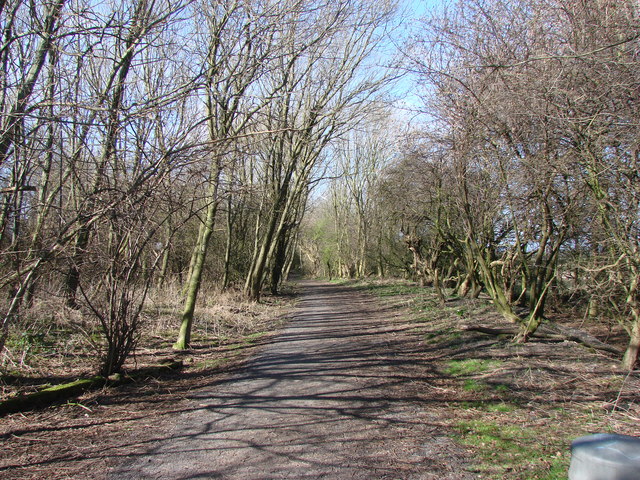
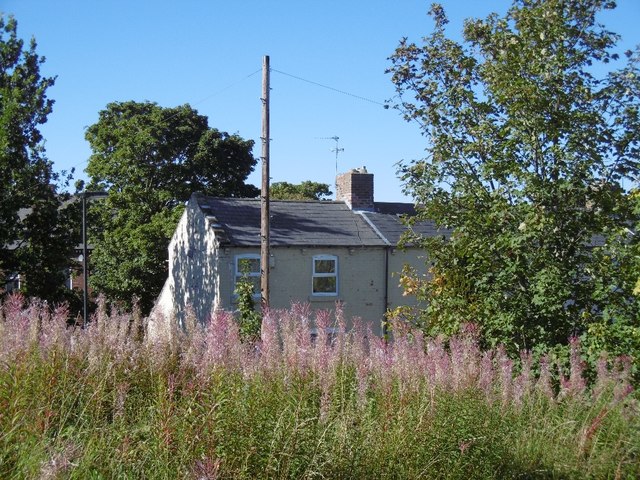
The old wagonway is now a footpath and cycleway and rows of colliery houses survive at Blagdon Terrace.
Redevelopment
The colliery site has been redeveloped as a business park, and the wagonway is a cycleway.
Nearby mines
- Dudley Colliery — 1.4 miles (2.2 km) E
- Hazlerigg Colliery — 1.6 miles (2.5 km) SW
- Weetslade Colliery — 1.8 miles (2.8 km) SE
- Burradon Colliery — 2.1 miles (3.3 km) E, Northumberland
- Shotton Surface Mine — 2.1 miles (3.3 km) N, Northumberland
Straight-line distance, within 9 miles (15 km). Show on the map.
What's uncertain
Points where sources disagree or the record could not be settled; both accounts are kept. All open questions in the archive.
- The colliery was closed by the National Coal Board on 17 August 1965. (disputed) 1,3
- The county Historic Environment Record gives 17 August 1963 for the closure. (disputed) 2
- Brenkley Colliery, with an air shaft sunk on 30 September 1870, worked the Beaumont and Busty seams and closed in 1985. (disputed) 4
- The National Coal Board's Brenkley Colliery was based on the old Seaton Burn site and produced coal until 1986. (disputed) 3
Recorded claims
Individual factual claims, each attached to the source(s) that support it below. Where sources disagree, both are kept.
- The colliery opened about 1844 after several years' sinking of the shaft. 1,2
- The Grand Allies were the first owners, John Bowes & Co. owned the colliery by October 1852, the Seaton Burn Coal Company by 1899 and Hartley Main Collieries Ltd from April 1938. 1,2
- Employment was 617 in 1894, 1,311 in 1921, 560 in 1930, 686 in 1950 and 129 in 1964. 1,3
- The colliery was closed by the National Coal Board on 17 August 1965. (disputed) 1,3
- The county Historic Environment Record gives 17 August 1963 for the closure. (disputed) 2
- Brenkley Drift was the last producing part of the site and latterly the smallest National Coal Board pit in Northumberland. 2
- Brenkley Colliery, with an air shaft sunk on 30 September 1870, worked the Beaumont and Busty seams and closed in 1985. (disputed) 4
- The National Coal Board's Brenkley Colliery was based on the old Seaton Burn site and produced coal until 1986. (disputed) 3
- A boiler explosion on 2 April 1860 killed four men. 5
- Two men were suffocated on 3 September 1877, two died in a steam boiler explosion on 14 March 1881 and two were killed by a fall of stone on 20 February 1882. 5
- The site of Seaton Burn Colliery is now a business park, and the 1950s pithead baths were demolished about 1990. 2
Photographs & further reading
Owners, pits, output and employment from 1894 to 1964, seams worked and 62 names of those killed.
View sourceCounty record of the colliery, its wagonway, ownership, Brenkley Drift and what survives.
View sourceThe museum's separate entry for the Brenkley workings at Seaton Burn, with employment from 1956 to 1985.
View sourceSources
- (primary) Durham Mining Museum - Seaton Burn Colliery — Durham Mining Museum
- (primary) Seaton Burn Colliery (Brenkley Colliery) (HER 1064) — Tyne and Wear Historic Environment Record (Sitelines)
- (secondary) Seaton Burn (Wikipedia) — Wikipedia
- (primary) Durham Mining Museum - Brenkley Colliery — Durham Mining Museum
- (primary) Durham Mining Museum - Fatal Accidents at Seaton Burn Colliery — Durham Mining Museum
Record created: 30 September 2026 · Last researched: 30 September 2026