 MineArchive
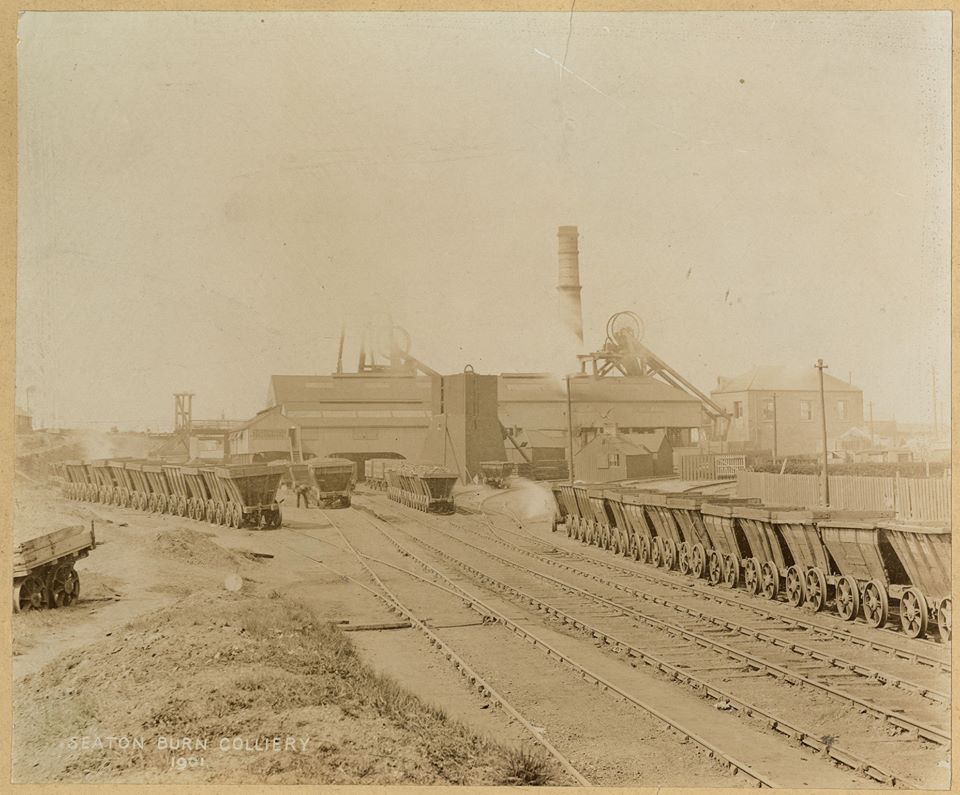
Seaton Burn Colliery boiler explosion, 1860
On the morning of 2 April 1860 a boiler at Seaton Burn Colliery exploded beside a pit-head crowded with men waiting to go down, hurling its six-ton shell 150 yards across the North Road and killing four men.
| Date | 2 April 1860 |
|---|---|
| Mine | Seaton Burn Colliery |
| Region | Tyne and Wear |
| Type | Machinery |
| Fatalities | 4 (The stokers Robert Ewing and John Turner and the labourer William Chevil; the engineman Wilkinson Younger died on 9 April. James Rous and Conolly Mullen, hewers, and a woman, Isabella Tennant, were also hurt.) |
| Injuries | 4 |
| Context | During active mining |
Cause
One of a row of six boilers, 32 feet by 6 feet 10 inches, which supplied the winding and pumping engines, exploded; it had been almost entirely rebuilt after an explosion at the colliery about twelve years earlier, and had been laid off the previous week to repair loose rivets.
What happened
Seaton Burn Colliery belonged to John Bowes and Co. Five of its six boilers were at work on the morning of Monday 2 April 1860. The night engineman had checked the valves and floats at about eight, and his successor, Wilkinson Younger, had examined them soon after; the alarm float gave no warning. At about twenty to nine the third boiler from the outside sprang from its bed, unseating four of its neighbours and throwing stone and brickwork in all directions. Its main part, about six tons, flew as high as the furnace chimney and came down in a garden across the North Road about 150 yards away. Younger and the stokers Robert Ewing and John Turner were buried in the rubble at the fire-hole: Ewing and Turner were killed and Younger badly scalded. Between 120 and 150 men and boys were gathered at the pit-head to go down; flying stones riddled the roofs of nearby houses, and a labourer on the tramway, William Chevil, was struck on the head.
Recorded claims
Individual factual claims, each attached to the source(s) that support it below. Where sources disagree, both are kept.
- William Chevil and the stokers Robert Ewing and John Turner were killed by a boiler explosion on 2 April 1860, and the engineman Wilkinson Younger died of it on 9 April. 1
- At about twenty to nine on the Monday the third boiler from the outside sprang from its bed, unseating four others; its main portion, about six tons, landed in a garden across the North Road about 150 yards away. 2
- The boiler had suffered severely in an explosion at the colliery about twelve years before and been almost entirely rebuilt; the week before, loose rivets had been found and it was laid off for repair. 2
- Between 120 and 150 men and boys were at the pit-head about to descend when the boiler exploded. 2
Related terminology
Mining terms this disaster is structurally linked to, with the nature of the relationship.
- Colliery (contextual relationship)
Named 3 times in this record, first in the summary: “On the morning of 2 April 1860 a boiler at Seaton Burn Colliery exploded beside a pit-head crowded with men waiting to go down,…” - Pithead (contextual relationship)
Named twice in this record, first in the summary: “…of 2 April 1860 a boiler at Seaton Burn Colliery exploded beside a pit-head crowded with men waiting to go down, hurling its six-ton shell 150…” - Pumping Engine (contextual relationship)
Named in this record’s cause: “…boilers, 32 feet by 6 feet 10 inches, which supplied the winding and pumping engines, exploded; it had been almost entirely rebuilt after an explosion at…” - Waggonway (contextual relationship)
Named in this record’s narrative: “…stones riddled the roofs of nearby houses, and a labourer on the tramway, William Chevil, was struck on the head.”
Photographs & further reading
This page doesn't try to reproduce everything — these are the best original sources found for this disaster.
A detailed contemporary report of the boiler explosion.
View sourceSources
- (primary) Durham Mining Museum - Fatal Accidents at Seaton Burn Colliery — Durham Mining Museum
- (primary) Fatal boiler explosion - Monmouthshire Merlin, 7 April 1860 — Welsh Newspapers (National Library of Wales)
Record created: 30 September 2026 · Last researched: 2 October 2026