 MineArchive
Shotton Surface Mine
| Location | Blagdon estate, near Cramlington, Northumberland — 55.0895, -1.6410 (exact) |
|---|---|
| Commodities | Coal, Fireclay |
| Type | Coal |
| Worked | 2007–2020 |
| Maximum depth | Not applicable: opencast working. |
| Operators | Banks Group (2007–2020) |
Overview
An opencast coal mine on the Blagdon estate in Northumberland, permitted by government in 2007 over the local council's refusal and worked until summer 2020. Its spoil built Northumberlandia, a quarter-mile reclining female figure of land opened as a public park in 2012.
History
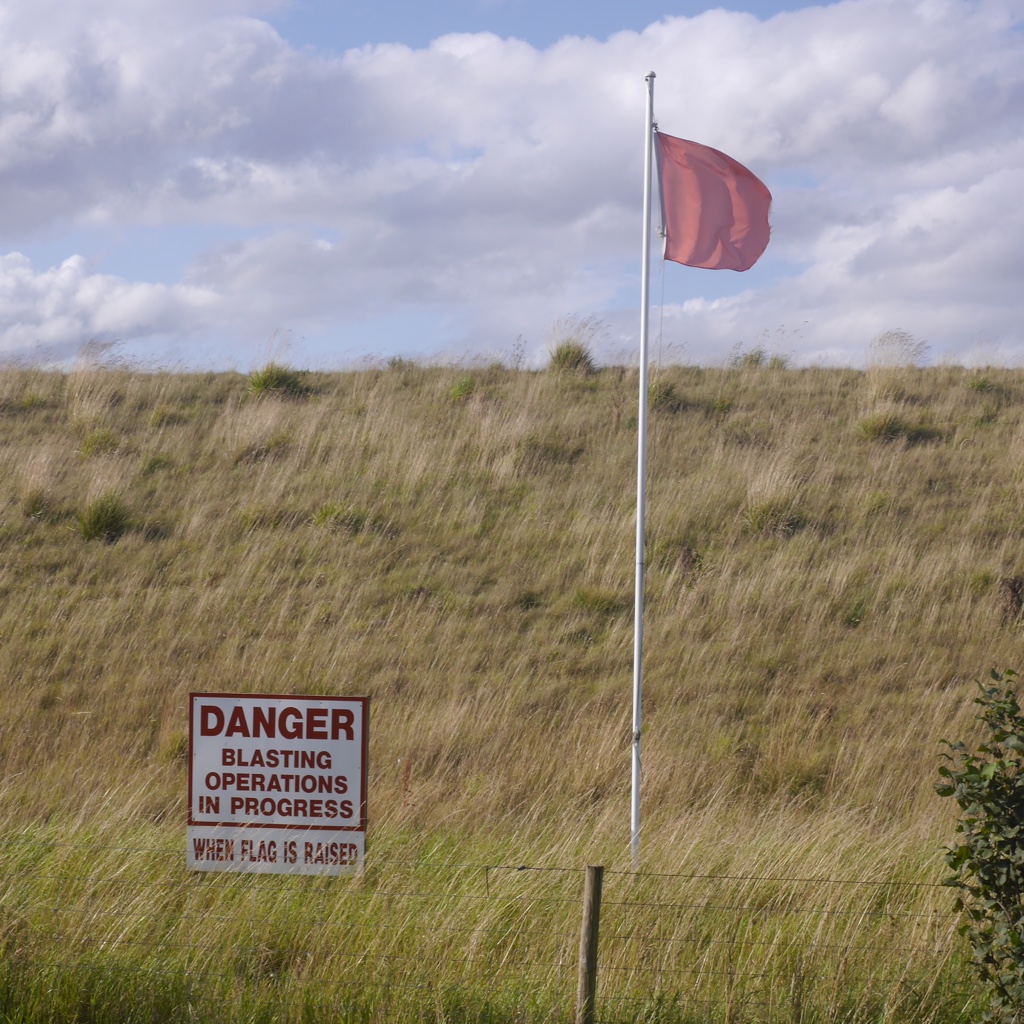
Shotton was an opencast coal mine on the estate of Blagdon Hall, worked by the Banks Group. Blyth Valley Council refused it permission; the government granted it in 2007, with an initial agreement to take 3.4 million tonnes of coal, 2 million tonnes of shale and 750,000 tonnes of fireclay. That was extended by two years in 2011 for a further 2 million tonnes of coal, and again in 2014 when two new pits were approved — Shotton Triangle at 290,000 tonnes and Shotton South West at 250,000 — pushing the end date to October 2017 with restoration expected by 2019. Production finally ceased in the summer of 2020.
At its height the site produced over a million tonnes of coal in 2014 and employed around 150 people, though the jobs were temporary and some were expected to transfer to the company's next site at Highthorn near Druridge Bay. Over eight per cent of British coal output came from Shotton.
The land is owned by the science writer and Conservative hereditary peer Matthew White Ridley, fifth Viscount Ridley, a prominent climate change sceptic, and that made the site a target: the Keep it in the Ground fossil fuel divestment campaign picketed it on 26 October 2015 and halted work for the day. Royalties went to the government while the Blagdon estate took a wayleave payment estimated at three to four million pounds.
Geology
The mine worked the Coal Measures of the Northumberland coalfield north of Cramlington, taking shale and fireclay alongside the coal — 2 million tonnes of shale and 750,000 of fireclay in the original permission, which is a fair measure of how much of an opencast's output is not the coal.
Geological setting: Sedimentary Beds and Seams (well documented example)
Workings
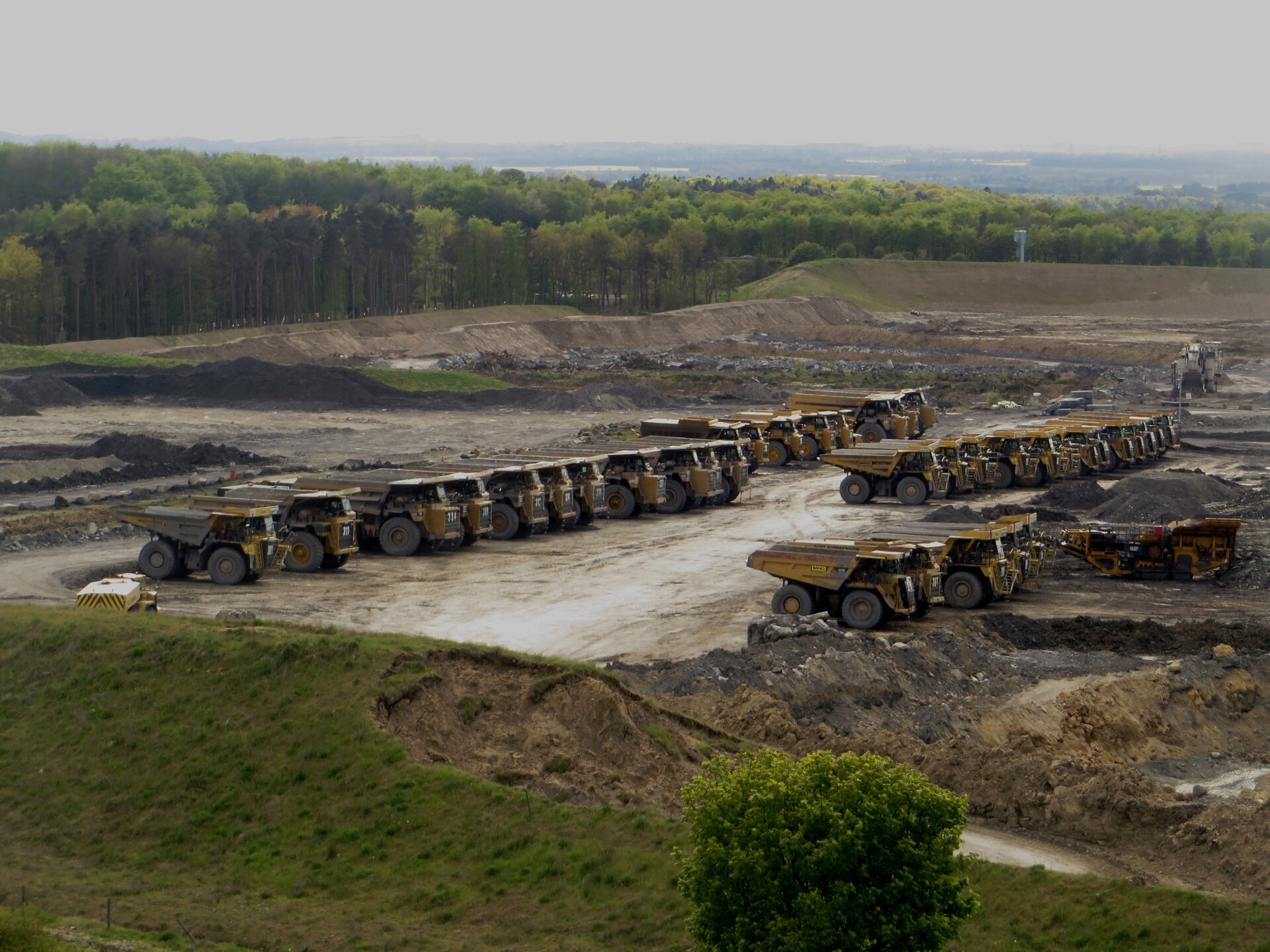
Opencast working with Caterpillar 777 haul trucks, extended across several pits: the original site, then Shotton Triangle and Shotton South West from 2014.
Closure
Production ceased in the summer of 2020, after successive extensions had pushed the end date from the original permission through 2016 and October 2017.
What remains
Worked out and under restoration; the site runs to 988 acres and full restoration was being targeted for autumn 2022. The most conspicuous thing left is not on the mine site at all: Northumberlandia, built from over 1.5 million tonnes of the mine's waste on adjoining land, a naked reclining female figure made as planning gain to allow the development and opened as a public park in 2012.
Not applicable in the usual sense: the workings were opencast and are being restored. Northumberlandia, the land sculpture built from the mine's spoil, stands alongside.
Redevelopment
Northumberlandia, a public park in the form of a reclining female figure raised from over 1.5 million tonnes of the site's waste material, opened in 2012.
Nearby mines
- Nelson Colliery — 1.9 miles (3.1 km) E
- Stannington Church Colliery — 1.9 miles (3.1 km) NW
- Seaton Burn Colliery — 2.1 miles (3.3 km) S, Tyne and Wear
- West Cramlington Colliery — 2.3 miles (3.8 km) E
- East Cramlington Colliery — 2.7 miles (4.3 km) SE
Straight-line distance, within 9 miles (15 km). Show on the map.
What's uncertain
Points where sources disagree or the record could not be settled; both accounts are kept. All open questions in the archive.
- The Wikipedia article dates the permission to 2007; the councillor's report says operations commenced in 2008. (disputed) 1,2
- The Wikipedia article says the site employed around 150 people at its height in 2014; the councillor's report of September 2019, during the final phase, gives 117. (disputed) 1,2
Recorded claims
Individual factual claims, each attached to the source(s) that support it below. Where sources disagree, both are kept.
- The mine was granted permission by the government in 2007 despite being refused by Blyth Valley Council, with an initial agreement to mine 3.4 million tonnes of coal, 2 million tonnes of shale and 750,000 tonnes of fireclay; extended in 2011 for a further 2 million tonnes and again in 2014 for two new pits, with the end date pushed to October 2017. 1
- The mine produced over a million tonnes of coal in 2014 and employed around 150 people, with over eight per cent of British coal output coming from the site; production ceased in summer 2020. 1
- Over 1.5 million tonnes of waste material from the site was used to build Northumberlandia, a land sculpture in the form of a naked reclining female figure on adjoining land, constructed as planning gain by the Banks Group and opened as a public park in 2012. 1
- A councillor's report of a site visit, dated 12 September 2019, gives the site as 988 acres with operations having commenced in 2008, over seven million tonnes of coal extracted along with fireclay and sandstone, extraction due to finish in 2020 and full restoration targeted for autumn 2022; 117 people were employed, generating over three million pounds a year in wages across the north east, and the site paid around £500,000 a year in business rates to Northumberland County Council. 2
- The site held planning permission for up to 190 wagon movements a day, though traffic had fallen during the final phase of extraction, and a liaison committee met quarterly to deal with local concerns. 2
- Banks Mining ran a biodiversity plan on the site, and its surveys reported higher populations of lapwings, skylarks, brown hares and bats than the baseline recorded before extraction began. 2
- The Wikipedia article dates the permission to 2007; the councillor's report says operations commenced in 2008. (disputed) 1,2
- The Wikipedia article says the site employed around 150 people at its height in 2014; the councillor's report of September 2019, during the final phase, gives 117. (disputed) 1,2
- The land is owned by Matthew White Ridley, fifth Viscount Ridley; the Keep it in the Ground divestment campaign picketed the site on 26 October 2015 and halted operations for the day. Royalties went to the government and the Blagdon estate received a wayleave payment estimated at between three and four million pounds. 1
Photographs & further reading
A first-hand account of the working site in September 2019 — its acreage, tonnages, employment, wagon movements, restoration timetable and biodiversity surveys — written for a town council rather than for the operator or its opponents.
View sourceThe planning history from the 2007 permission through the 2011 and 2014 extensions to the 2020 closure, the tonnages and employment, the ownership and the protest, and Northumberlandia built from the spoil.
View sourceSources
- (secondary) Shotton Surface Mine — Wikipedia
- (observational) Councillor's report on visit to Shotton Surface Mine — Cramlington Town Council
Record created: 9 September 2026 · Last researched: 9 September 2026