 MineArchive
Seaton Burn Colliery boiler explosion, 1881
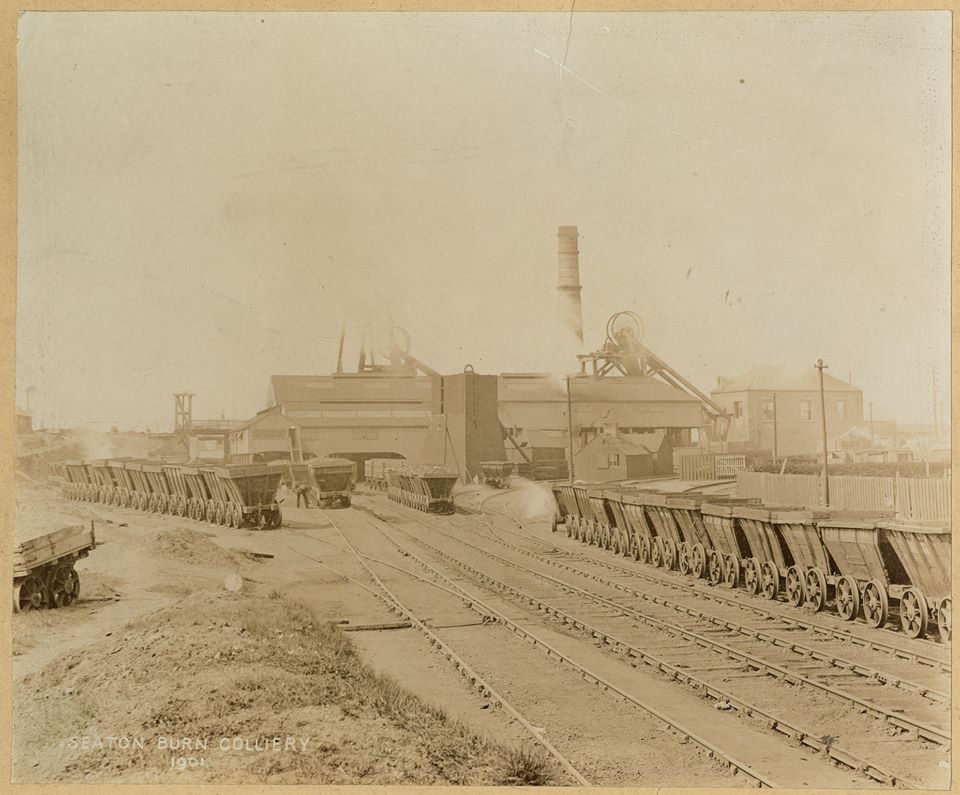
A steam boiler explosion at Seaton Burn Colliery on Monday 14 March 1881 killed a mason and a labourer.
| Date | 14 March 1881 |
|---|---|
| Mine | Seaton Burn Colliery |
| Region | Tyne and Wear |
| Type | Machinery |
| Fatalities | 2 (John Connell (76), mason (printed 'John Collins' in one newspaper), and Joseph Gascoigne (31), labourer.) |
| Context | During active mining |
Location
Plotted at Seaton Burn Colliery. Recorded location. The large pin is the mine; the small round markers are the nearest mines on record. Click one for its page. View on full map
Cause
The explosion of a steam boiler at the colliery. The inspector could find no negligence in its working, repair or cleaning, and concluded that age and long use had simply worn it out.
What happened
On Monday 14 March 1881 a steam boiler exploded at Seaton Burn Colliery, north of Newcastle. The mason John Connell, 76, and the labourer Joseph Gascoigne, 31, were killed. Gascoigne was buried at North Gosforth Cemetery. The colliery was then J. Bowes and Partners'. The boiler was cylindrical and externally fired, one of a range of five or six, worked at 35 to 40 lb per square inch and carried every fitting the Act required. Its water gauges had been checked about five minutes before the explosion and showed enough water. It had been heavily repaired in 1879, in good workmanship though with some plates of poor quality, and was over twenty years old.
Investigation & inquiry
The explosion is No. 13 in the inspector's report for the year.
Changes to practice & legislation
The whole range of boilers was afterwards replaced by tubular boilers.
Recorded claims
Individual factual claims, each attached to the source(s) that support it below. Where sources disagree, both are kept.
- John Connell, 76, mason, and Joseph Gascoigne, 31, labourer, were killed by the explosion of a steam boiler on 14 March 1881. 1
- Two men, a mason and a labourer, were killed on Monday by a boiler explosion at Seaton Burn, near Newcastle. 2
- Joseph Gascoigne was buried at North Gosforth Cemetery. 1
- The boiler's water gauges had been examined about five minutes before the explosion and showed enough water. 3
- The inspector found no negligence and concluded that the boiler, over twenty years old, had simply worn out. 3
- The colliery's whole range of five or six boilers was afterwards replaced by tubular boilers. 3
Related terminology
Mining terms this disaster is structurally linked to, with the nature of the relationship.
- Colliery (contextual relationship)
Named 3 times in this record, first in the summary: “A steam boiler explosion at Seaton Burn Colliery on Monday 14 March 1881 killed a mason and a labourer.”
Sources
- (primary) Durham Mining Museum - Fatal Accidents at Seaton Burn Colliery — Durham Mining Museum
- (secondary) Boiler explosion: two men killed - Monmouthshire Merlin, 18 March 1881 — Welsh Newspapers (National Library of Wales)
- (primary) Seaton Burn, 14 March 1881: inspector's account of the boiler explosion — Durham Mining Museum
Record created: 30 September 2026 · Last researched: 30 October 2026