 MineArchive
Parys Mountain
| Location | Amlwch, Anglesey — 53.3822, -4.3525 (exact) |
|---|---|
| Commodities | Copper, Gold, Lead, Silver, Zinc |
| Type | Metal |
| Worked | Bronze Age–1904 |
| Maximum depth | worked to at least the 90-fathom level (about 165 m) at Carreg Y Doll lode |
| Operators | Parys Mine Company (1774–1811), Mona and Parys Mines Ltd (1899–1904) |
Overview
Parys Mountain, above Amlwch on Anglesey, was worked for copper from the Bronze Age onward, but its defining moment came in 1768, when a huge new lode discovery briefly made it the largest copper mine in the world — copper that went on to sheathe the hulls of Nelson's navy. Substantial ore reserves are thought to remain beneath the old workings today.
History
Sub-surface debris nearly 4,000 years old shows Parys Mountain was mined for copper in the early Bronze Age, and the Romans are thought to have worked parts of the hill for both copper and lead. The mountain took its modern name from Robert Parys, a royal tax collector granted the land — then called Mynydd Trysglwyn — in 1406. By the mid-18th century ownership was split between the Bayly family and William Lewis, and in 1762 the Bayly family leased the whole site.
Everything changed on 2 March 1768, when the miner Rolant Puw struck an exceptionally rich lode near the Golden Venture shaft. Thomas Williams, who formed the Parys Mine Company in 1774, built the operation into the largest copper mine in the world through the 1780s, employing around 1,200 people at its peak and earning himself the nickname the "Copper King". Ore was shipped from the newly developed port of Amlwch to the smelters of Swansea, and Parys copper was used to sheathe the hulls of Royal Navy ships, including those of Nelson's fleet. Between 1768 and 1904 the mountain yielded around 3.5 million tons of ore, producing roughly 130,000 tons of copper metal, with output peaking at 16,400 tonnes of ore in 1829 alone. Control passed to Lord Uxbridge of Plas Newydd in 1811, and output declined sharply after Williams's death in 1802; the Mona and Parys Mines Ltd, formed by merger in 1899, ran the operation through its final years. The last precipitation-pond operations ceased in 1904, though the mines continued as a private company into the 1930s on a much reduced, sporadic basis.
Geology
The site sits on a substantial polymetallic ore deposit worked historically as a series of named lodes, including the Golden Venture and Carreg Y Doll lodes. Anglesey Mining's April 2023 Mineral Resource Estimate — the first to report a Measured category at Parys Mountain — put total resources at 16.06 million tonnes grading 0.98% copper, 1.32% zinc, 0.71% lead, 15 g/t silver and 0.17 g/t gold, superseding an earlier, smaller estimate. Underground development over the mine's working life totalled around 20 kilometres of tunnels.
Geological setting: Veins and Lodes (well documented example)
Workings
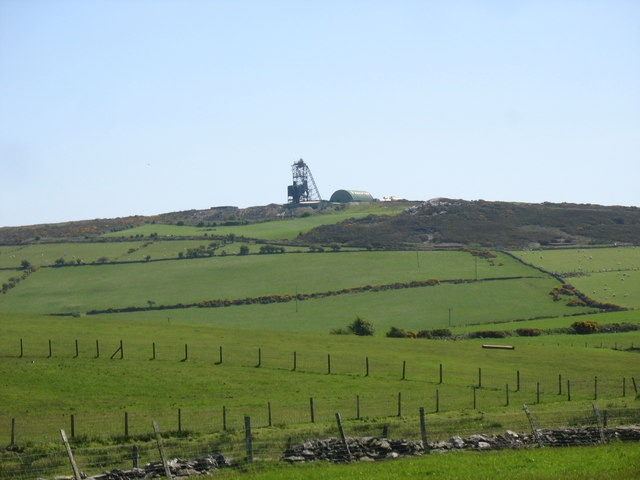
Workings reached at least the 90-fathom level at the Carreg Y Doll lode. Modern exploration has included a new shaft, the Morris Shaft, sunk in 1988.
Closure
The main mining operation wound down as the ore quality declined through the 19th century, with the last precipitation-pond processing ceasing in 1904; the site continued as a private company working on a much smaller, sporadic scale into the 1930s.
What remains
The site remains under active exploration and development by Anglesey Mining plc. An April 2023 Mineral Resource Estimate reported Measured resources at Parys Mountain for the first time, and drilling to better define the Northern Copper Zone began in late 2023 to further improve confidence ahead of a planned Pre-Feasibility Study covering underground mine design, metallurgical testwork, and tailings and processing infrastructure. In January 2025, Anglesey County Council approved the project's Environmental Impact Assessment Scoping Report, broadly agreeing with the company's proposed approach while requesting further work on ground and surface water, cultural heritage, and traffic and transportation. No mining is currently active. Since a 2003 dewatering programme lowered water levels in the workings by around 70 metres, snottites — bacterial formations that thrive on the mine water's high mineral content — have colonised passages that were previously submerged.
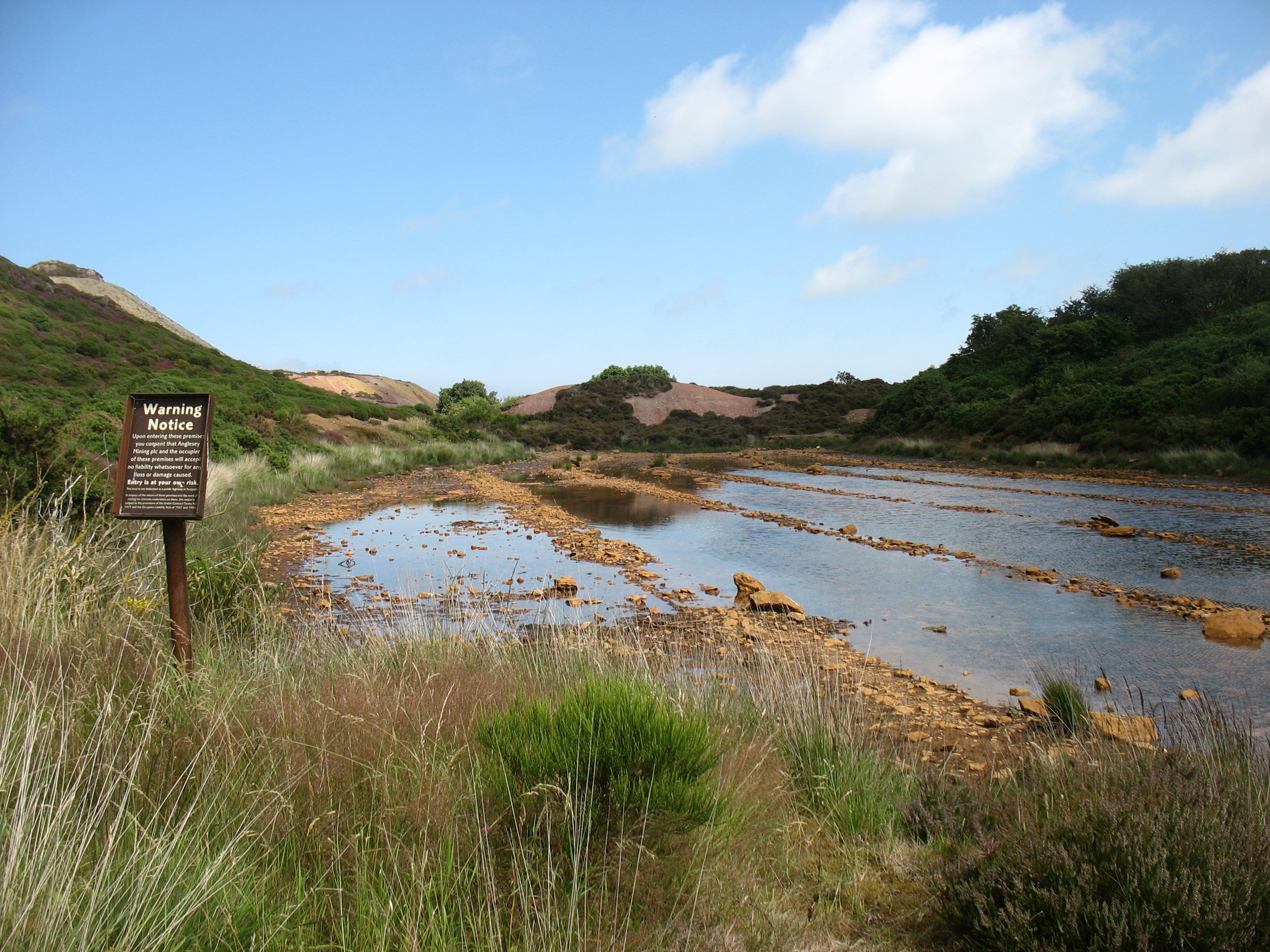
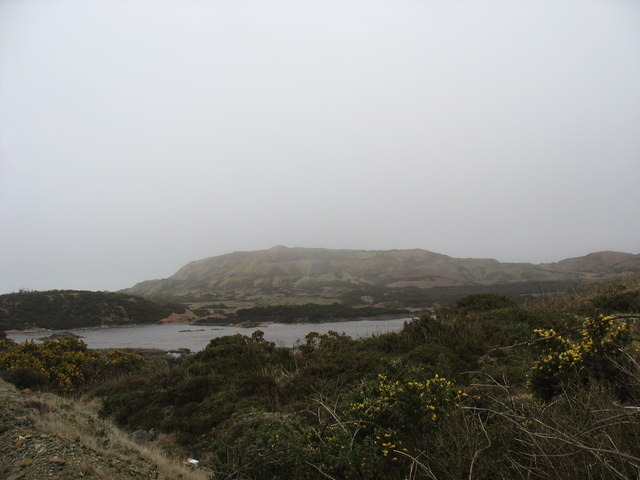
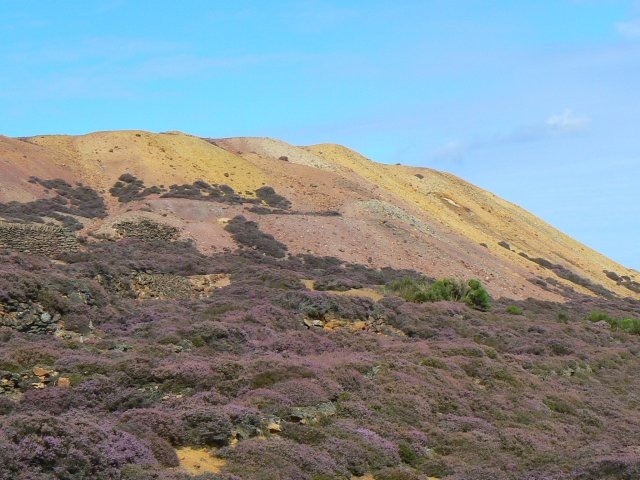
The mountain's distinctive, strikingly coloured landscape — a product of nearly 4,000 years of mineral extraction — survives largely intact, along with extensive opencast workings, spoil, and processing remains.
Redevelopment
No major redevelopment has taken place; the site remains a candidate for a future modern mining operation rather than having been repurposed for another use.
Related mines
- Mona Mine — Mona Mine was one of the two great mines making up Parys Mountain, worked at times as a single combined operation.
- Morfa Du Mine — Morfa Du lies at the western end of the Parys Mountain deposit and was sunk and worked by the same company, Parys Mountain Mines Limited.
Nearby mines
- Morfa Du Mine — 0.4 miles (0.6 km) NW
- Mona Mine — 0.7 miles (1.1 km) NE
- Aber Quarry — 4.9 miles (7.9 km) SE
- Mynachdy (Rhosmynach and Carmel Head Copper Mines) — 8.3 miles (13.4 km) W
Straight-line distance, within 9 miles (15 km). Show on the map.
Disasters & major incidents
-
Parys Mountain boiler explosion, 1870
19 October 1870 · Explosion · 1 fatality
A large Cornish boiler at the ore-crushing plant exploded during a lunch break, demolishing the building; accounts from the same local research group differ sharply on the death toll, citing either one confirmed death with 8–10 injured, or seven men killed.
What's uncertain
Points where sources disagree or the record could not be settled; both accounts are kept. All open questions in the archive.
- Copper from Parys Mountain was used to sheathe the hulls of Royal Navy ships, reportedly including vessels of Nelson's fleet. (uncertain) 1
Recorded claims
Individual factual claims, each attached to the source(s) that support it below. Where sources disagree, both are kept.
- Between 1768 and 1904 Parys Mountain yielded around 3.5 million tons of ore, producing roughly 130,000 tons of copper metal. 1
- Copper from Parys Mountain was used to sheathe the hulls of Royal Navy ships, reportedly including vessels of Nelson's fleet. (uncertain) 1
- Anglesey Mining's April 2023 Mineral Resource Estimate, the first to report a Measured category at Parys Mountain, put total resources at 16.06 million tonnes grading 0.98% copper, 1.32% zinc, 0.71% lead, 15 g/t silver and 0.17 g/t gold. 2
- In January 2025, Anglesey County Council approved the Parys Mountain Mine Environmental Impact Assessment Scoping Report, broadly agreeing with the company's proposed methodology while requesting further work on ground and surface water, cultural heritage, and traffic and transportation. 3
- A 2003 dewatering programme lowered water levels in the workings by around 70 metres; snottites, bacterial formations thriving on the mine water's high mineral content, have since colonised the newly-exposed passages. 4,5
- Located at about 53.382 N, 4.353 W. 4
Photographs & further reading
A specialist local group researching and exploring the mountain's underground workings.
View sourceFurther freely-licensed photographs of the mountain's distinctive coloured landscape and workings.
View sourceSources
- (secondary) History — Grwp Tanddaearol PARYS Underground Group — Grwp Tanddaearol PARYS Underground Group
- (primary) Parys Mountain Resource Update — Anglesey Mining plc
- (primary) Parys Mountain Mine Environmental Impact Assessment (EIA) Scoping Report Approved — Anglesey Mining plc
- (secondary) Parys Mountain — Wikipedia
- (observational) Parys Mountain — Derelict Places Urban Exploring Forum
- (primary) Parys Mountain Copper Mines, Amlwch — Coflein (RCAHMW)
Record created: 19 August 2026 · Last researched: 27 August 2026