 MineArchive
New Fancy Colliery
| Also known as | New Fancy Pit |
|---|---|
| Location | Forest of Dean, near Parkend, Gloucestershire — 51.7833, -2.5411 (approximate) |
| Commodity | Coal |
| Type | Coal |
| Worked | From early 1800s–August 1944 |
| Maximum depth | 861ft (Parkend High Delf seam) |
| Operators | Thomas Hedges Deakin (1884–?) |
Overview
A Forest of Dean coal mine near Parkend worked under the district's customary Free Miner 'gale' system, whose thin seams pushed its owners toward some of the earliest compressed-air coal cutters in the west of England after a mid-1880s reopening. Coal was raised at New Fancy's own shafts from the 1850s until closure in August 1944. Its landscaped spoil tip is now New Fancy View, a well-known viewpoint managed by Forestry England, with a stone retaining wall, a chimney base and a capped shaft surviving on site.
History
The New Fancy gale — a working claim granted under the Forest of Dean's ancient Free Miner system — was held by Edward Protheroe from the early 1800s and confirmed to him in the 1841 Coal Awards, but coal was raised through the neighbouring Parkend gale's own shafts rather than New Fancy's for some years afterward. Sinking of New Fancy's own shafts began around 1852 under the Park End Coal Company, with two shafts completed by 1857 and production under way by 1860 at around 250 tons a day.
Ownership changed hands repeatedly over the following decades — Parkend Coal Company Ltd from 1878, United Parkend and New Fancy Collieries Co. Ltd from 1881 (wound up the following year), a brief period under private ownership, then Parkend and New Fancy Collieries Co. Ltd from 1884/85 — before the colliery closed in 1883 under heavy mortgage debt. It reopened in 1884 under a new consortium (Thomas Hedges Deakin, Fanny Toomer and Susan Broadley) with new machinery including, by local report, the first compressed-air coal cutters in the district and probably in the west of England — a response to seams that averaged only 17 inches thick, with the best of them, the Parkend High Delf, no more than 3 feet. From around 1888 the Parkend gale's coal was again being raised through New Fancy's own shafts, and in 1889 the company acquired further, deeper gales.
From 1890/92 the colliery was worked by the Parkend Deep Navigation Collieries Company Ltd, under whom it reached its peak: around 500 tons a day and some 700 men in 1906, with 694 recorded in 1922. Pumping, haulage and cutting machinery were converted to electric power in 1914, with winding gear following by 1916. Output fell steadily thereafter, averaging around 350 wagons a week by 1940, and the colliery closed in August 1944 after a lifetime output put at over 3.5 million tons.
Geology
Coal of the Forest of Dean, in seams thin enough to push the owners into repeated reorganisation.
Workings
Worked under the Forest of Dean's customary gale system — a working claim granted to a Free Miner, or the company holding it, by the Crown's Deputy Gaveller under the ancient privilege specific to the Hundred of St Briavels. Six named veins lay within the gale: Churchway High Delf, Rockey, Starkey, Park End (Parkend) High Delf, Little Delf and Smith Coal, worked from two shafts sunk in the 1850s down to 861ft at the Parkend High Delf seam. The unusually thin seams — averaging only 17 inches — were the direct reason for the 1884 investment in compressed-air coal cutting machinery, hand-getting having become uneconomic. Surface plant included a wooden headframe and a Cornish-type engine house with an external egg-ended boiler dating from the 1840s.
Closure
The 1881 company was wound up the following year; the colliery passed through private hands and then to the Parkend and New Fancy Collieries Company.
What remains
The site is managed by Forestry England as a recreational and heritage area, anchoring the roughly five-mile Mine Trail through 300 years of Forest of Dean mining history.
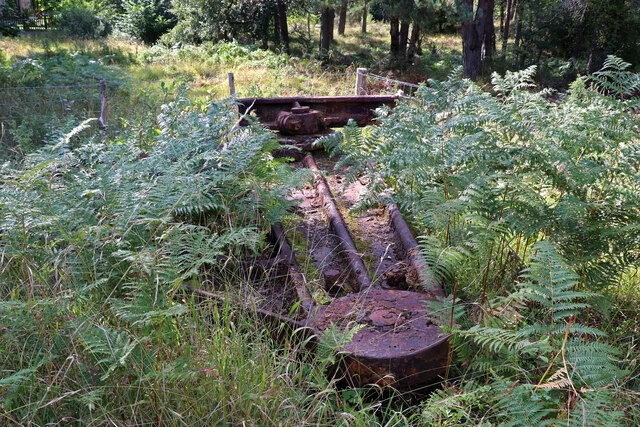
A stone retaining wall, a chimney base and a capped shaft survive on site, along with visible remains of pumping machinery. The colliery's landscaped spoil tip has become New Fancy View, a well-known picnic and bird-watching viewpoint over the Forest of Dean, with a Roll of Honour (unveiled 2005) and the Forest of Dean Geomap (unveiled May 2008) both installed at the site.
Nearby mines
- Dog Delf Colliery — 0.7 miles (1.1 km) SE
- Brookall Ditches Colliery — 0.8 miles (1.3 km) SW
- Hopewell Colliery — 1.5 miles (2.5 km) NW
- Princess Royal Colliery — 1.6 miles (2.6 km) SW, Forest of Dean
- Cannop Colliery — 1.7 miles (2.7 km) NW
Straight-line distance, within 9 miles (15 km). Show on the map.
Recorded claims
Individual factual claims, each attached to the source(s) that support it below. Where sources disagree, both are kept.
- The New Fancy gale was held from the early 1800s but coal was raised through the neighbouring Parkend gale's shafts before New Fancy's own two shafts were sunk c.1852-57, with production at New Fancy itself under way by 1860 at around 250 tons a day. 1,2
- After closing in 1883 under heavy mortgage debt, the colliery reopened in 1884 under a new consortium with new machinery reported as including the first compressed-air coal cutters in the district and probably in the west of England, a response to seams averaging only 17 inches thick. 3,1
- The colliery reached its peak around 1906 with roughly 500 tons a day and about 700 men; 694 men were recorded in 1922. 3,1
- The colliery closed in August 1944 after a lifetime output put at over 3.5 million tons. 1
- The BGS/Coal Authority mine plans catalogue holds a 1958 Coal Authority abandonment plan (ref. SW376) naming New Fancy among some seventeen named workings on one composite plan. 4
- The site is managed today by Forestry England as the anchor of a roughly five-mile Mine Trail covering 300 years of Forest of Dean mining history, with a landscaped former spoil tip, New Fancy View, as a well-known viewpoint. 5
Sources
- (secondary) New Fancy — Dates of Operation — Forest of Dean Local History Society
- (secondary) Forest Coal: New Fancy — Forest of Dean Local History Society (via Lightmoor)
- (secondary) New Fancy Colliery — Forest of Dean Local History Society
- (primary) New Fancy mine plan records — British Geological Survey / Coal Authority mine plans catalogue
- (observational) The Mine Trail at New Fancy — Forestry England
Record created: 26 August 2026 · Last researched: 26 August 2026