 MineArchive
Brookall Ditches Colliery
| Also known as | Brookhall Ditches, Brockhole Ditches |
|---|---|
| Location | Parkend, Gloucestershire — 51.7766, -2.5565 (approximate) |
| Commodity | Coal |
| Type | Coal |
| Worked | By 1840–after 1880 |
| Maximum depth | 153 yards (140 m) as returned in 1841 |
| Operators | Edward Protheroe (1840–1850), Parkend Coal Company (1851–1890) |
Overview
One of the five pits of the Park End Colliery in the Forest of Dean, on Edward Protheroe’s estate, and by 1841 already 153 yards deep with a high-pressure winch and its water discharged by a level — a serious pit by the standards of a coalfield mostly worked by free miners with horse whims. Its coal went to Lydney by railway. In April 1851 the men descending in the morning found the whole underground works full of smoke; four horses were found dead and two more could not be reached, the source of the fire could not be traced, and the only option was to seal the pit, throwing upwards of a hundred men and boys out of work. The official 1880 list of collieries at work returns it under the Parkend Coal Company.
History
Brookall Ditches — Brookhall Ditches in the gaveller’s spelling — was one of the constituent pits of the Park End Colliery, which with the Park End ironworks and New Fancy Colliery was the property of Edward Protheroe and was offered for sale by private contract in 1840. The sale notice describes the whole concern: Park End Main, Park End Royal, Ivy Moorhead, Birches Well and Brookhall Ditches pits, worked by seven steam engines in six veins of coal of which nearly five million tons remained unworked.
The return of March 1841 gives Brookall Ditches in its own right. The coal was raised by a high-pressure winch, the water discharged by a level, the pits 153 yards deep, and the output disposed of at Lydney by railway. Another pit was then being sunk by horse whim, forty yards deep, driving four hundred yards to cut the vein to the rise, and when finished was expected to get one to two hundred tons a day.
On a Saturday in April 1851 the men going down in the morning found the whole of the underground works filled with smoke. Attempts were made to save the horses and failed: four valuable ones were found dead and two others could not be reached and had, the Gloucester Journal assumed, met the same fate. Every effort to trace the source of the fire proved fruitless and the only option was to seal the mouth of the pit, stopping the works and throwing upwards of a hundred men and boys out of employment. A week later the paper reported that the damage was much less than first thought — no permanent damage to the colliery, and nothing beyond the loss of six horses and a quantity of burnt timber in the horse road — and blamed gross carelessness on the part of some colliers, all of whom were the sufferers by the temporary stoppage.
The colliery outlasted that. The official list of collieries at work in 1880 returns it as "Brookall Ditches, Parkend, Parkend Coal Co."
Geology
The Parkend Delph — the vein named in the 1841 return — on the western side of the Forest of Dean basin. The Park End group as a whole was working six veins of coal in 1840 with nearly five million tons reckoned still unworked, which is why it needed seven steam engines when most of the Forest was still being got by level and horse whim.
Geological setting: Sedimentary Beds and Seams (well documented example)
Workings
Pits 153 yards deep in 1841, the coal raised by a high-pressure winch and the water discharged by a level rather than pumped — the level doing by gravity what would otherwise have needed steam. A second pit was being sunk that year by horse whim to forty yards, from which a heading of four hundred yards was to be driven to cut the vein to the rise; the expectation was one to two hundred tons a day once it was through. Coal went out by railway to Lydney.
Closure
The closure date is not known. The colliery is returned as at work in 1880 under the Parkend Coal Company and nothing found records when it stopped; the Park End group of which it was part continued in various hands into the twentieth century.
What remains
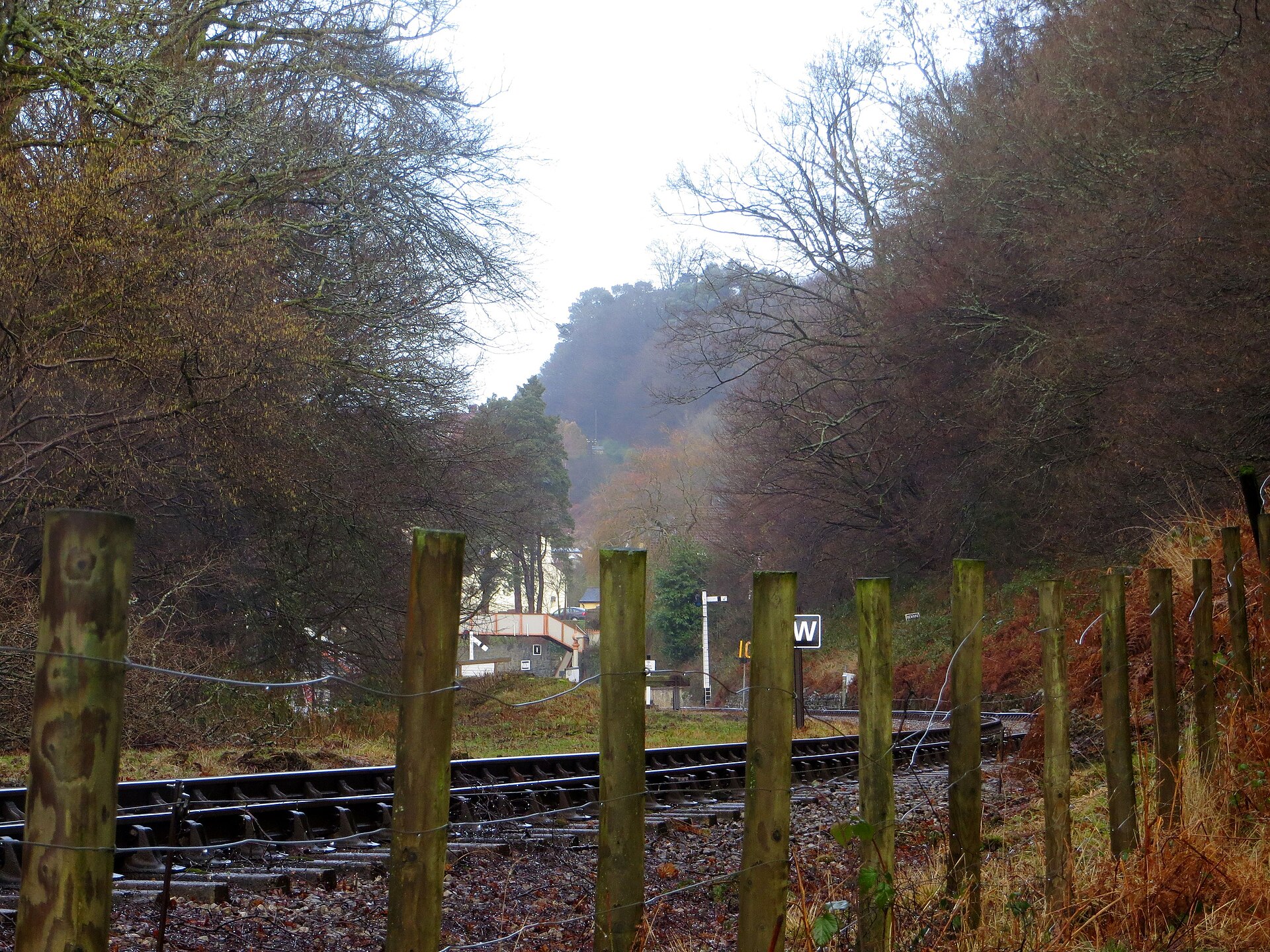
Nothing specific is known. The Parkend colliery ground is now forest, with a large colliery spoil heap still standing behind the village and a surviving Parkend Deep Navigation Collieries wagon preserved nearby.
Nothing specific to this pit. The Parkend colliery tip behind the village is the most visible survival of the group Brookall Ditches belonged to.
Nearby mines
- New Fancy Colliery — 0.8 miles (1.3 km) NE
- Dog Delf Colliery — 0.9 miles (1.5 km) E
- Princess Royal Colliery — 1.0 miles (1.5 km) S, Forest of Dean
- Hopewell Colliery — 1.4 miles (2.3 km) NW
- Saint Vincent's Colliery — 1.5 miles (2.4 km) W, Forest of Dean
Straight-line distance, within 9 miles (15 km). Show on the map.
Recorded claims
Individual factual claims, each attached to the source(s) that support it below. Where sources disagree, both are kept.
- The official list of collieries at work in 1880 returns the pit as "Brookall Ditches, Parkend, Parkend Coal Co." 1
- The March 1841 return gives Brookhall Ditches as Edward Protheroe Esq. & Co.’s, working the Parkend Delph, the coal raised by high-pressure winch, water discharged by a level, pits 153 yards deep, and the output disposed of at Lydney by railway; another pit was then being sunk by horse whim to forty yards, driving four hundred yards to cut the vein to the rise, and expected to get 100 to 200 tons a day when done. 2
- A sale notice of 1840 describes the Park End Colliery and ironworks and New Fancy Colliery, the property of Edward Protheroe, the Park End Colliery comprising Park End Main, Park End Royal, Ivy Moorhead, Birches Well and Brookhall Ditches pits, worked by seven steam engines in six veins of coal of which nearly 5,000,000 tons remained unworked. 3
- The Gloucester Journal of 19 April 1851 reported that the men descending the pit in the morning found the whole underground works filled with smoke; four valuable horses were found dead and two others could not be reached, the source of the fire could not be traced, the mouth of the pit was sealed and upwards of 100 men and boys were thrown out of employment. 2
- A week later the same paper reported the damage much less than first thought — no permanent damage to the colliery and nothing beyond the loss of six horses and a considerable quantity of burnt timber in the horse road — and attributed the accident to gross carelessness on the part of some colliers, all of whom suffered by the temporary stoppage. 2
Photographs & further reading
The 1841 return for the pit set out line by line — depth, winding, drainage, market — followed by both Gloucester Journal reports of the 1851 underground fire, a week apart and markedly different in tone.
View sourceSources
- (secondary) List of coal mines UK 1880 — Coalmining History Resource Centre
- (secondary) Brookhall Ditches — Forest of Dean Coal Mining — Lightmoor Press
- (secondary) Park End — Forest of Dean Coal Mining — Lightmoor Press
- (secondary) A History of the County of Gloucester: Volume 5, Bledisloe Hundred, St Briavels Hundred, the Forest of Dean — Industry — Victoria County History / British History Online
- (secondary) Forest of Dean coal mines — index of named collieries — torrens.org
Record created: 6 September 2026 · Last researched: 6 September 2026