 MineArchive
Murton Colliery
| Location | Murton, near Seaham, County Durham — 54.8180, -1.3760 (approximate) |
|---|---|
| Commodity | Coal |
| Type | Coal |
| Worked | From April 1838 (sinking)–29 November 1991 |
| Maximum depth | Hutton Seam, 1,476 ft (450 m) |
| Operators | South Hetton Coal Company (1838–1947) |
Overview
A South Hetton Coal Company pit whose sinking took five years to beat quicksand and flooding at 200 feet down — and which, once open, worked for nearly 150 years, surviving a 1942 firedamp explosion that killed 15 men.
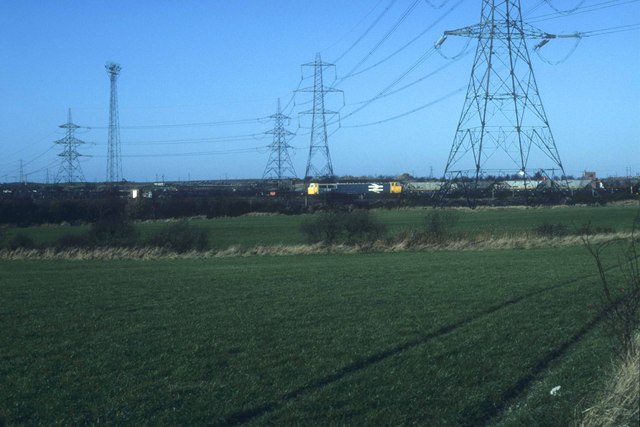
History
Murton Colliery was sunk by the South Hetton Coal Company from April 1838, but reaching workable coal took far longer than planned: at around 200 feet down the shafts struck waterlogged, quicksand-like ground that had to be pumped at up to 10,000 gallons a minute and sealed with metal tubbing before sinking could continue. The colliery finally opened in April 1843, its 14-foot-diameter shafts eventually reaching the Hutton Seam at 1,476 feet, with the Five Quarter (1,068 ft), Main Coal (1,224 ft) and Low Main (1,356 ft) seams worked at shallower depths. By 1894 the colliery employed 2,000 men and boys, producing 3,000 tons a day; employment peaked in 1925 at 3,636 (2,799 below ground, 837 on the surface).
On 26 June 1942 an explosion of firedamp, triggered during shotfiring, killed 15 miners (see Disasters, below). The colliery continued working for a further half-century after the disaster, passing to the National Coal Board at nationalisation in 1947 and finally closing on 29 November 1991. A Koepe winder installed at the west pit in 1922 remained in use until closure; it was given Grade II listed status in January 1992, just weeks after the colliery shut, but was nonetheless demolished in May 1994.
Geology
Coal of the Durham field: the Hutton Seam at 1,476 feet, with the Five Quarter, Main Coal and Low Main seams worked at shallower depths.
Workings
Worked from 14-foot-diameter shafts reaching the Hutton Seam at 1,476 feet, with the Five Quarter, Main Coal and Low Main seams worked at shallower depths above it. A Koepe winder, installed at the west pit in 1922, remained in service until the colliery's 1991 closure.
Closure
Closed 29 November 1991.
What remains
The colliery's Koepe winder was awarded Grade II listed status in January 1992, shortly after closure, but was demolished in May 1994 despite the listing.
Nearby mines
- Hawthorn Combined Mine — 1.1 miles (1.8 km) SW
- Seaton Colliery — 1.5 miles (2.4 km) NE
- Seaham Colliery — 1.6 miles (2.6 km) N
- South Hetton Colliery — 1.6 miles (2.6 km) SW
- Vane Tempest Colliery — 2.0 miles (3.3 km) NE
Straight-line distance, within 9 miles (15 km). Show on the map.
Disasters & major incidents
-
Murton Colliery Polka Pit explosion, 1848
15 August 1848 · Explosion · 15 fatalities
An explosion in the Polka Pit, Murton Colliery, near South Hetton, at about half past twelve on 15 August 1848 killed fifteen men and boys, sixteen by another count, among about a hundred underground. Candles were used throughout the mine, and the toll would have been higher had one workman not had the presence of mind to hold the survivors to the shaft. -
Murton Colliery roof fall, 1892
24 November 1892 · Collapse / Roof Fall · 2 fatalities
Two timber drawers recovering props from a worked-out jud at Murton Colliery were killed by a heavy roof fall in the early hours of 24 November 1892. -
Murton Colliery roof fall, 1898
2 May 1898 · Collapse / Roof Fall · 2 fatalities
Two shifters retimbering a place at Murton Colliery were killed by a fall of stone at a slip in the roof on 2 May 1898. -
Murton Colliery explosion, 1942
26 June 1942 · Explosion · 13 fatalities
A firedamp explosion at 8pm on 26 June 1942, in the Back-over Flat district of Murton Colliery's Five Quarter seam, killed 13 of the 15 men working there when a deputy fired six shot holes simultaneously without first checking for gas.
Culture
- Murton Colliery Welfare F.C. (Sports)
The club took the name of this colliery's welfare in 1928, when it moved onto the Recreation Ground the welfare provided. - Tom McGuinness (Art)
The subject of a McGuinness painting that TUC general secretary Frances O'Grady hung in her office in 2018; the collieries he worked at are not yet established.
Recorded claims
Individual factual claims, each attached to the source(s) that support it below. Where sources disagree, both are kept.
- Sinking began in April 1838 but was slowed for years by waterlogged, quicksand-like ground around 200 feet down, requiring pumping at up to 10,000 gallons a minute; the colliery finally opened in April 1843. 1
- The 14-foot-diameter shafts reached the Hutton Seam at 1,476 feet, with the Five Quarter (1,068 ft), Main Coal (1,224 ft) and Low Main (1,356 ft) seams worked at shallower depths. 1
- By 1894 the colliery employed 2,000 men and boys producing 3,000 tons a day; employment peaked in 1925 at 3,636. 1
- A Koepe winder installed at the west pit in 1922 remained in use until the colliery's 1991 closure; it was given Grade II listed status in January 1992 but was demolished in May 1994. 1
- Murton Colliery closed on 29 November 1991. 2
Sources
- (secondary) Murton Colliery — Northern Mine Research Society
- (secondary) Murton Colliery (1843-1991) — Co-Curate (Newcastle University)
Record created: 27 August 2026 · Last researched: 27 August 2026