 MineArchive
Tom McGuinness
| Category | Art |
|---|---|
| Dates | Born 1926, Witton Park; Bevin Boy 1944; joins Spennymoor Settlement 1948; first exhibitions 1949; London 1958; John Whibley Gallery 1972; redundant early 1980s; book 1997; died 2006; Mining Art Gallery opens 2017; centenary exhibition Feb–Dec 2026 |
A Witton Park miner conscripted underground as a Bevin Boy in 1944, who spent 39 years in County Durham's pits and painted them in hunched, tunnel-shaped figures and green-and-blue glazes, leaving what the co-founder of the Gemini Collection of Mining Art calls an unrivalled pictorial record of the coal industry.
The mining history in this record
Tom McGuinness was born in 1926 in Witton Park, near Bishop Auckland, a village still feeling the closure of its ironworks. He left school in 1940, did odd jobs, and in 1944, aged 18, was conscripted into the mines as a Bevin Boy. A colliery training officer who saw him drawing on the sides of coal tubs encouraged him to take evening classes, and he studied at Darlington School of Art. In 1948 he took his portfolio to London and was offered an apprenticeship as a commercial artist, but went back to the pits; that year he joined the Spennymoor Settlement, where he came into the circle of Norman Cornish, Sid Chaplin and the warden Bill Farrell, who urged him to paint what he knew.
He stayed underground for 39 years, working, as Tennants puts it, in many of County Durham's collieries, sketching in breaks and painting in the evenings, and was made redundant in the early 1980s. Which collieries he worked at has not been established from the sources read. His work distorts the pit to show what it felt like: figures bent to the shape of the roadways, legs bowed like props, tilted perspectives. He first showed at the Laing and the Shipley in 1949, in London at the Coal Industry Social Welfare Organisation in 1958, with Cornish and Josef Herman at the Stone Gallery in 1969, and had a sell-out solo show at the John Whibley Gallery, Cork Street, in 1972. His paintings include one of Murton Colliery, which the TUC general secretary Frances O'Grady hung in her office in 2018.
People
Tom McGuinness (1926–2006), miner and painter. Bill Farrell, warden of the Spennymoor Settlement. Norman Cornish and Sid Chaplin, fellow Settlement members. Bob McManners and Wales, his biographers and founders of the Gemini Collection. Sidney Lockey, school friend and collector.
Legacy today
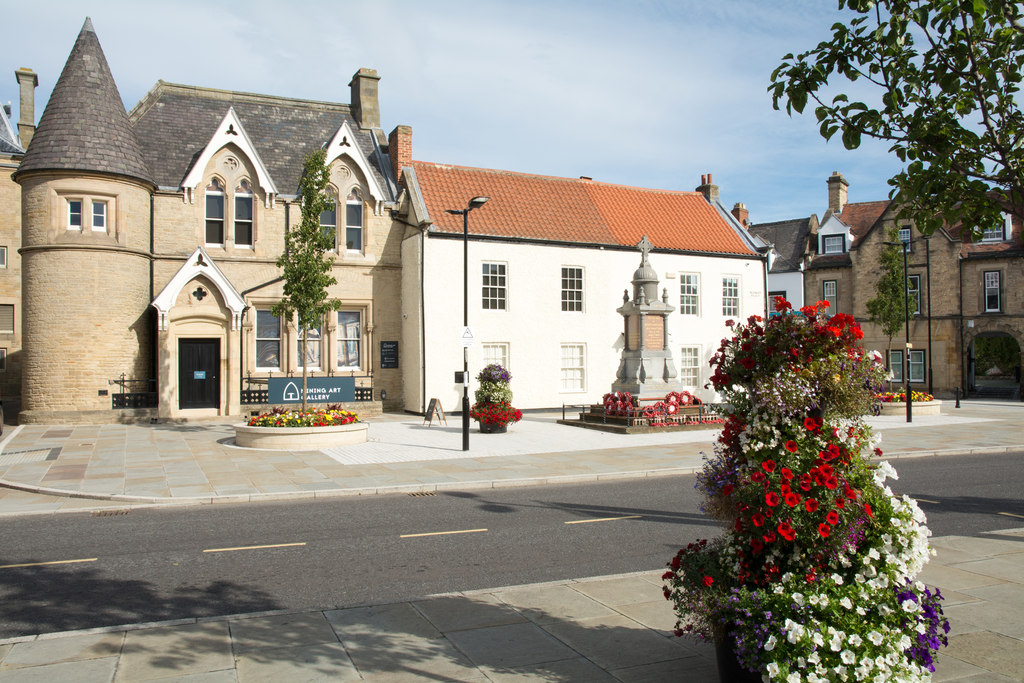
McGuinness died in 2006, two months before a planned 80th-birthday retrospective at Bishop Auckland Town Hall, having held more than 50 solo exhibitions. The collectors Bob McManners and Wales (as Art Fund names her) self-published Tom McGuinness: The Art of an Underground Miner in 1997, the start of what became the Gemini Collection of Mining Art, on permanent display at the Mining Art Gallery in Bishop Auckland since 2017; its holdings include the Jack Reading Bequest of 50 McGuinness works and his 1968 Durham Big Meeting. For his centenary the gallery opened Tom McGuinness: Out of the Darkness in February 2026, running to December 2026.
Mining language in this record
Words and phrases in this record that are genuine mining terminology, occupations, methods or economic practice — not scenery or ordinary regional language that merely appears in a mining-adjacent work.
| Expression | Meaning | MineArchive connection |
|---|---|---|
| putter | The worker pushing a coal tub underground in McGuinness's etching Putter No. 2. (County Durham) | Putter — Same concept, same word: links the Putter term. |
| Durham Big Meeting | The Durham Miners' Gala, held by the Durham Miners' Association every July since 1871; the title of his 1968 painting. (County Durham) | A name for an event, not a mining technique; no Term equivalent. |
Recorded claims
Individual factual claims, each tagged with how solidly it's grounded and attached to the source(s) that support it. Where sources disagree, both are kept.
- McGuinness was born in Witton Park in 1926, entered the mines as a Bevin Boy in 1944 and spent 39 years working underground. (documented fact) 1,2,3
- Tennants says he worked in many of County Durham's collieries over his 39 years; none of the sources read names them. (documented fact) 2
- He joined the Spennymoor Settlement, where his contemporaries included Norman Cornish, Herbert Dees and Robert Heslop; Tennants dates his joining to 1948. (documented fact) 4,2,3
- In 2018 TUC general secretary Frances O'Grady exhibited his painting of Murton Colliery in her office. (documented fact) 4,3
- He first exhibited in 1949 at the Laing and Shipley galleries, in London in 1958 at the Coal Industry Social Welfare Organisation, and had his first solo London exhibition at the John Whibley Gallery in 1972. (documented fact) 2,3
- The Gemini Collection, with many McGuinness works including the Jack Reading Bequest of 50, has been shown at the Mining Art Gallery, Bishop Auckland, since 2017; its centenary exhibition Out of the Darkness runs February to December 2026. (documented fact) 1,5
Mines
- Murton Colliery — County Durham
The subject of a McGuinness painting that TUC general secretary Frances O'Grady hung in her office in 2018; the collieries he worked at are not yet established.
Regions
Real-world mining concepts used here
Related Culture records
- Norman Cornish
Fellow Spennymoor Settlement painter; they exhibited together at the Stone Gallery in 1969.
Sources
- (secondary) Out of the Darkness: Mining Art Gallery marks Tom McGuinness centenary (20 February 2026) — Cultured North East
- (secondary) Tom McGuinness: Artist/Miner (19 April 2024) — Tennants Auctioneers
- (secondary) Tom McGuinness — Gallagher & Turner
- (secondary) Tom McGuinness (artist) — Wikipedia
- (secondary) The story behind the Mining Art Gallery — Art Fund
Record created: 17 September 2026 · Last researched: 17 September 2026