 MineArchive
Keld Heads Mine
| Location | Preston-under-Scar, Wensleydale, North Yorkshire — 54.3155, -1.8820 (exact) |
|---|---|
| Commodities | Lead, Silver |
| Type | Metal |
| Worked | From the 12th century–c.1884 (closure) |
Overview
A Wensleydale lead mine worked since at least the 12th century, once regarded as the most technologically advanced lead mine in the country after its mid-19th-century smelt mill and a 2.1-mile condensing flue were built to recover lead fume and appease pollution complaints from local farmers — before falling lead prices and rising flood-pumping costs shut the whole complex in 1888.
History
Lead is first recorded as having been worked at Keld Heads, on the north side of Wensleydale above Preston-under-Scar, in the 12th century, and by the following century the mine was prosperous enough to have supplied lead for the roof of nearby Jervaulx Abbey. By 1823 the accessible ore was nearing exhaustion, but a programme of long adits driven into the hillside opened up substantial new ground and greatly increased production. A smelt mill was built on site in 1851, ending the previous practice of carting ore away to be processed at Preston Mill, and the works also refined the silver naturally present in the lead ore. Local farmers, concerned at the pollution the mill's fumes caused to grazing land, prompted the construction of an unusually long condensing flue — extended to 3.3km (2.1 miles) up the hillside, ultimately joining the flue system of the neighbouring Cobscar smelt mill — both to recover valuable lead fume that would otherwise have been lost and to disperse the remaining fumes well clear of farmland. Further new equipment and techniques introduced through the mid-19th century led the works to be regarded, at its peak, as the most technologically advanced lead mine anywhere in the country.
That advantage did not save the mine once economic conditions turned against it. The smelt mill closed around 1884 as the price of smelted lead fell, and increasingly severe flooding in the mine's lower levels drove pumping costs up sharply; the whole complex — mine and mill together — closed for good in 1888. The buildings found a second industrial life afterward, converted for use by a neighbouring stone quarry, with the old chimney later pressed into service for a coal-fired electricity generating plant.
Geology
Keld Heads worked lead-bearing veins within the Carboniferous limestone and shale sequence of the Yoredale Series that underlies Wensleydale, part of the same North Pennine orefield worked at scale across Swaledale and Arkengarthdale to the north.
Workings
Ore was raised through a series of long adits driven into the hillside from 1823 onward, reaching new ground as older workings became exhausted, with an engine house, wheelpit and stables supporting pumping and haulage; ore was processed on site from 1851 at a purpose-built smelt mill with ore hearths, slag hearths and settling tanks, its fumes carried up a 2.1-mile condensing flue system to a hillside condenser house before final discharge.
Closure
The smelt mill closed around 1884 once falling lead prices made processing unprofitable, and worsening flood-pumping costs in the mine's lower levels forced the closure of the entire complex in 1888.
What remains
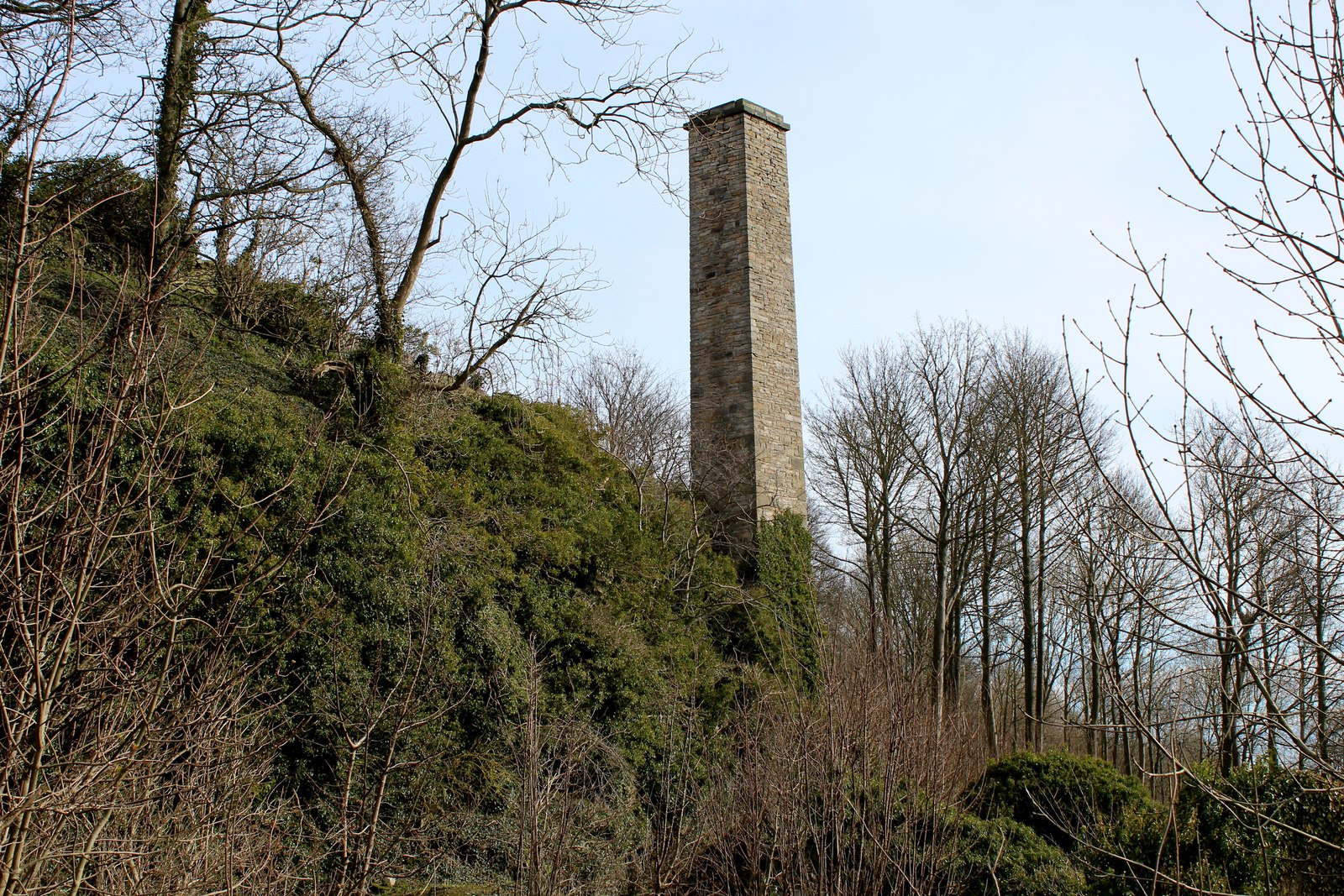
Scheduled as an ancient monument on 30 August 1996, the site survives as a substantially ruined but genuinely evocative industrial complex: the unroofed engine house, a roughly 12m-high chimney, wheelpit, condenser house, settling tanks and long stretches of the flue system all survive above ground, along with a still-roofed peat store, though most of the mill building's own footings lie buried beneath later quarry waste. Several structures are separately Grade II listed.
The engine house walls, chimney, wheelpit, condenser house, peat store and extensive sections of the flue running up the hillside all survive as visible ruins above Preston-under-Scar.
Related mines
- Cobscar Mill — A flue built in 1855 physically connected Keld Heads Mine to Cobscar Mill.
Nearby mines
- Wensley Quarry — 0.9 miles (1.4 km) NW
- Cobscar Mill — 1.7 miles (2.7 km) NW
- Redmire Quarry — 2.2 miles (3.6 km) NW
- Bolton Parks Lead Mine — 3.2 miles (5.2 km) W
- Whiteside Mine — 3.6 miles (5.8 km) NW
Straight-line distance, within 9 miles (15 km). Show on the map.
The ruined structures and old flue system are unstable — this entry describes history and general location only, not an access guide.
Recorded claims
Individual factual claims, each attached to the source(s) that support it below. Where sources disagree, both are kept.
- Lead is first recorded as worked at Keld Heads in the 12th century, and by the 13th century the mine was prosperous enough to have supplied lead for the roof of Jervaulx Abbey. 1
- A smelt mill was built on site in 1851, refining silver alongside lead; its flue was extended to 3.3km, joining the neighbouring Cobscar mill's flue system, both to recover lead fume and to address pollution complaints from local farmers. 1,2
- The scheduled monument comprises an unroofed engine house (20m by 10m), a roughly 12m-high chimney, a wheelpit, condenser house, settling tanks, peat store and around 250m of surviving flue running up the hillside, alongside buried footings of the mill building itself. 2
- The smelt mill closed around 1884 as lead prices fell, and increasing flood-pumping costs in the mine's lower levels closed the whole complex in 1888. 1,2
Sources
- (secondary) Keld Heads Mine — Wikipedia
- (primary) Keld Heads lead smelt mill and mine complex (scheduled monument) — Historic England
Record created: 26 August 2026 · Last researched: 26 August 2026