 MineArchive
Slag Hearth
| Category | Structures & Machinery |
|---|
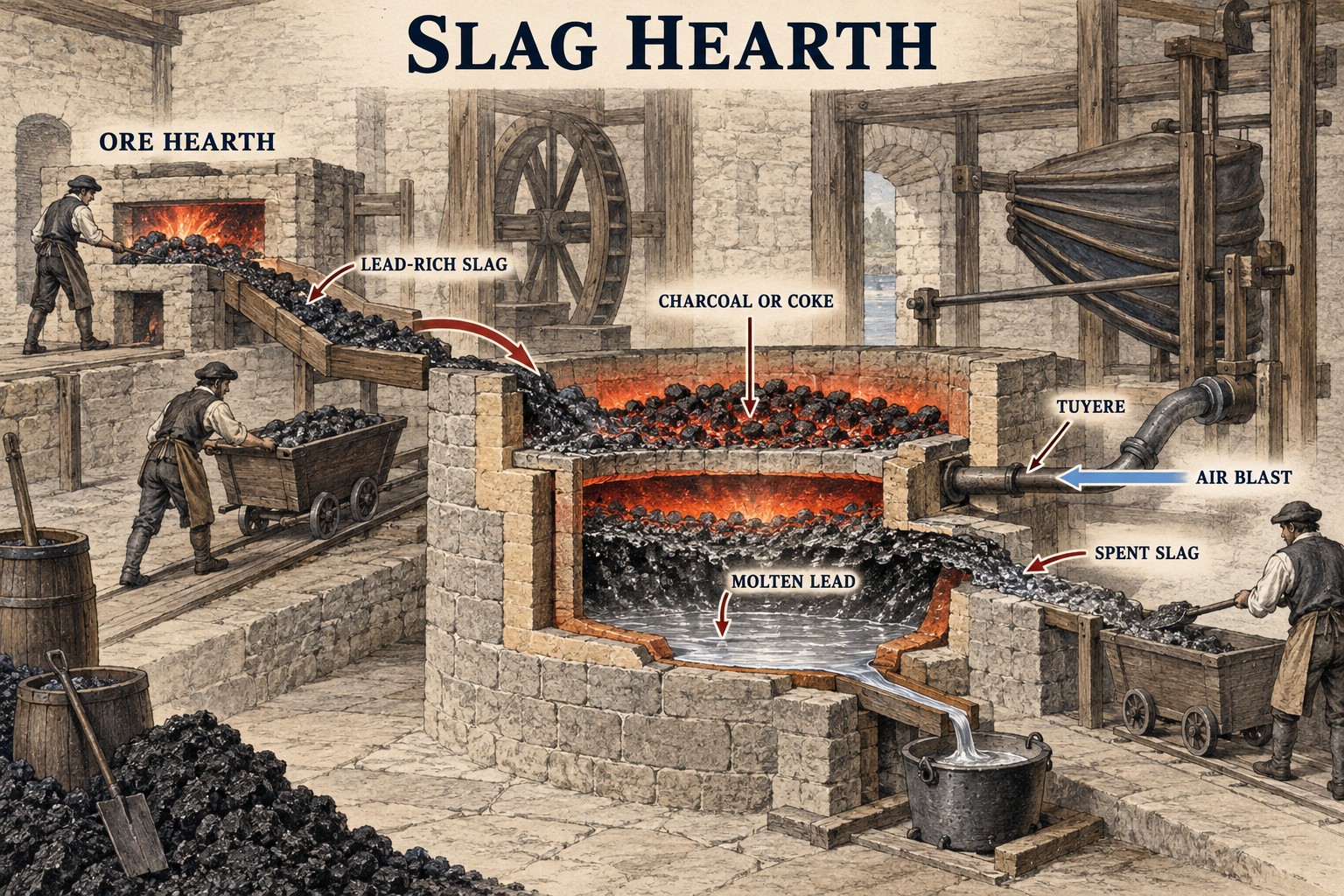
A secondary smelting hearth, built alongside a lead smelt mill's main ore hearth, used to re-smelt the slag the ore hearth produced and recover the lead still trapped within it.
Historical usage
Ore hearth smelt mills, introduced to England from the Mendips around 1577, remained the normal way of smelting lead until the 18th century, when they were increasingly replaced by the reverberatory ('cupola') furnace. Larger 18th- and 19th-century smelt mill complexes commonly combined several ore and slag hearths with roasting furnaces to prepare ore, refining furnaces to extract silver by cupellation, and reducing furnaces to recover lead from the cupellation residue, all connected by increasingly elaborate flues and condensers built to trap lead fume that would otherwise have escaped up the chimney.
How it worked
An ore hearth's slag still contained recoverable lead; feeding it into a separate slag hearth and re-smelting it at a higher temperature -- fired with charcoal or, later, coke -- extracted a further yield rather than discarding the slag as waste.
Why it was used
Reprocessing slag through a dedicated hearth substantially increased the total lead a smelt mill could recover from a given quantity of ore, at the cost of additional fuel and labour.
Related terminology
Mines associated with this term
5 examples chosen from 9 linked records — the term page is not an index.
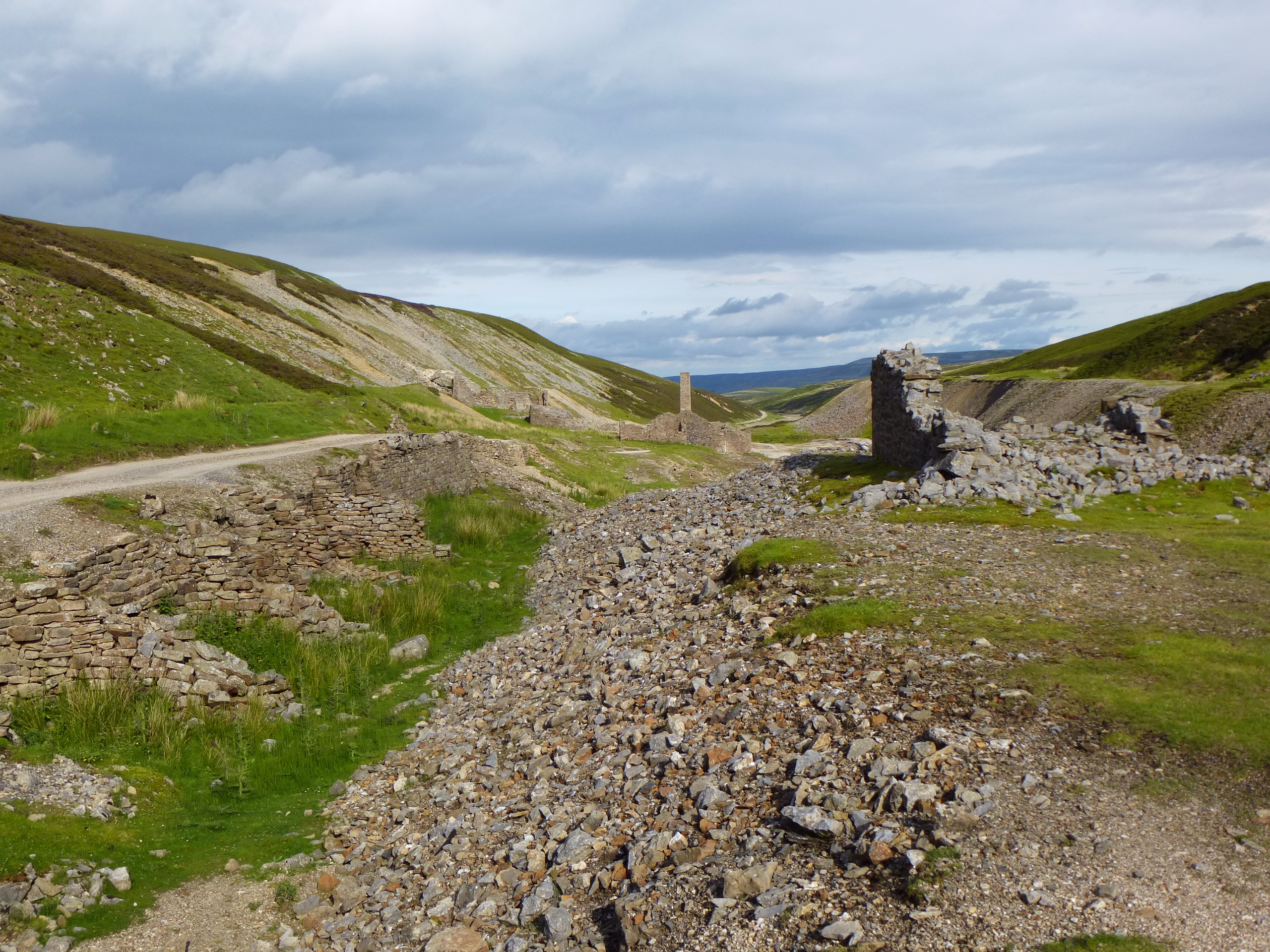
- Old Gang Mines — North Yorkshire (surviving physical example)
The mill building survives to roof height in places and contains the remains of a wheelhouse, a slag hearth and three ore hearths. - Alport Smelt Mill — Derbyshire (well documented example)
Named in this record’s history: “…1870. The mill included reverberatory smelting furnaces and Spanish slag hearths -- small blast furnaces used to reprocess slag for further lead --…” - Cobscar Mill — North Yorkshire (well documented example)
Named twice in this record, first in the history: “…in the central bay, blowing two ore hearths to the south and a slag hearth to the north. By 1823 the rake was described as 'nearly exhausted',…” - Froggatt Wood Smelt Mill — Derbyshire (well documented example)
Named in this record’s history: “…date regardless. Large quantities of slag from both ore hearth and slag hearth survive south-west and north-west of the mill, and a white-coal kiln…” - Langley Barony Mine — Northumberland (well documented example)
Named in this record’s history: “…left after the silver had been taken into metallic lead, and a slag hearth for resmelting the waste from the ore hearths. In the 1780s the…”
Sources
- (primary) her.derbyshire.gov.uk (Designation DDR297) — Derbyshire Historic Environment Record
- (secondary) Smeltmill — Wikipedia
Record created: 31 August 2026 · Last researched: 31 August 2026