 MineArchive
Jackfield Colliery
| Also known as | Exley’s Pits, Jackfield, Jubilee Clay Pit |
|---|---|
| Location | The Rock, Jackfield, Broseley, Shropshire — 52.6230, -2.4594 (approximate) |
| Commodities | Coal, Brick Clay, Fireclay |
| Type | Coal |
| Worked | By 1869–c. 1940 |
| Maximum depth | 105 ft (32 m) — Exley’s Nos. 1 and 2 shafts as returned in 1891 |
| Operators | William Exley & Son (1869–1940) |
Overview
Jackfield Colliery appears in the official 1880 list of collieries at work as "Jackfield, Broseley, William Exley and Son" — the pit of a tile and brick manufacturer whose works stood at the Rock, on the Severn at Jackfield, in what is now the Ironbridge Gorge World Heritage Site. It was small, like everything else left in the Broseley field by then. Broseley coal had been one of the most important sources in the country around 1600, but by the middle of the nineteenth century mining here was mostly for ironstone and clay, with a little coal alongside it. Exley’s own pits are returned in 1891 as two shafts of 5½ feet diameter and 105 feet deep working red clay, and by 1908 the firm was working the Jubilee Clay Pit at the Rock and the Gitchfield Level at Coalport. Clay mining in Broseley outlived the coal by a century, ending about 1950.
History
Coal was being got in Broseley by the early fifteenth century, and intensive working of the Coal Measures where they outcrop near the Severn was the basis of the town’s prosperity in the seventeenth and eighteenth centuries. Jackfield was the port from which it left: by 1605 James Clifford, lord of the manor, had built a wooden waggonway from his pits down to the river there, one of the earliest railways anywhere, and by 1758 some 100,000 tons a year were being shipped from Broseley and Madeley. That prosperity ended when the coal ran out in the early nineteenth century, and the town stagnated.
What replaced it was clay. Mining had exposed abundant high-quality local clays, got along with the coal and ironstone; as the tile and brick manufactories expanded, clay came to be mined separately for its own sake. William Exley, a Yorkshireman, was one of the men who made that transition. His works at the Rock, Jackfield, was reputedly established before 1840 and stayed open until about 1940; in 1851, aged thirty-eight, he employed five labourers, thirty-two brickmakers, fourteen coalminers and six bargemen at his earthenware factory. He made the first encaustic tiles in the district around 1835–45 under the guidance of the Coalport china modeller Peter Stephan, until Herbert Minton, who held the patent, threatened legal action and production stopped. One of the coalfield’s first down-draught chimneys was built at his works in 1876, and about 1892 the firm opened a large second factory, the Coalport Brick and Tile Works at Gitchfield, which became one of the largest roof-tile manufactories in the country.
The pit went with the works. It is returned as "Broseley, Broseley, William Exley" in the 1869 list of collieries at work, as "Jackfield, Broseley, William Exley and Son" in 1880, and by 1891 as Exley’s Nos. 1 and 2, two shafts each 5½ feet across and 105 feet deep, working red clay and naturally ventilated. The 1908 return records the firm at the Jubilee Clay Pit, the Rock, Broseley, with seven men below ground and two above, and at the Gitchfield Level at Coalport with nine and one. By then the whole of Broseley employed eighty-two men underground and twenty-six on the surface. Gitchfield was still working ten men in 1930 and three in 1948, and closed in 1950; by 1960 all mining in the Broseley area had ceased.
Geology
Broseley lies on the southern edge of the east Shropshire coalfield, where the Severn has cut down through it to make the Ironbridge Gorge. Extensive outcrops of the Lower Coal Measures occur in the west of the parish; to the east the workable seams are overlain by the Carboniferous sandstones, marls and mudstones of the Hadley and Coalport formations. The seams here were few, thin and shallow — which is why the mines were always small and the equipment primitive — and the coal, ironstone and clay lay close enough together to be got in the same workings. The slopes down to the Severn are unstable and have produced notable landslips, in 1881 and again in 1952.
Geological setting: Sedimentary Beds and Seams (well documented example)
Workings
Small shafts and adits, worked with the plainest equipment. The 1891 return of mines in the area records Exley’s Nos. 1 and 2 as two shafts of 5½ feet diameter and 105 feet depth, both naturally ventilated — as were all but three of the seventeen mines then at work in Broseley, the exceptions relying on a firelamp hung in the shaft, exhaust steam piped into the upcast, or a surface furnace. On the Madeley bank opposite, seventeenth-century working had been by insett, a local word for an adit driven straight into the hillside from the riverside, some of them a thousand yards long and supported throughout with timber; the same pattern of adits along the seam outcrops, with deep shafts sunk from higher up the hill to meet them from the 1790s, ran along the Broseley side too.
Closure
The Broseley coal had effectively gone by the middle of the nineteenth century and what kept Exley’s pits going afterwards was clay for his own tileworks. The works at the Rock closed about 1940; the firm’s Gitchfield Level, the last of its workings, employed ten men in 1930 and three by 1948 and closed in 1950. Mining in the Broseley area ended altogether by 1960.
What remains
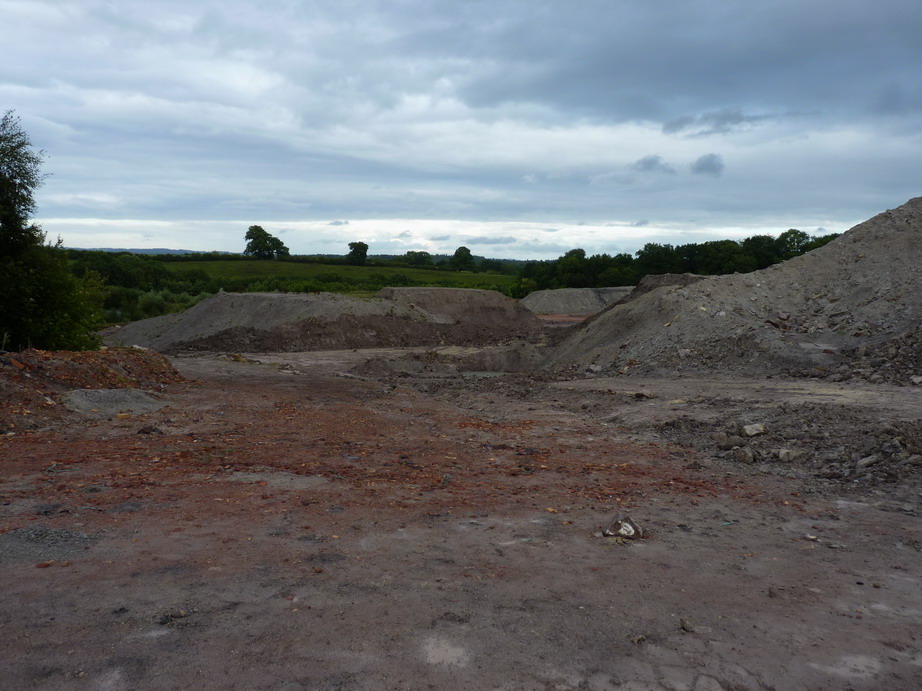
Nothing survives of the pit itself. Clay was still being taken from the ground at Broseley by opencast working within the last two decades, photographed in 2010. Jackfield is now part of the Ironbridge Gorge World Heritage Site, and the tile industry the colliery existed to supply is represented by the Jackfield Tile Museum in the former Craven Dunnill works nearby.
The abandonment plans for the Broseley clay mines survive and record several of the workings in detail, including shaft sections and depths; on the ground the older workings show as depressions in the spoil and, at Broseley Wood Green Pit, as a brick-lined shaft filled to within a foot of the top. Nothing specific to Exley’s Jackfield pit is known.
Related mines
- Calcutts Colliery — Both are small workings in the same Jackfield ground of Broseley parish, returned together in the collieries at work in 1869, 1880 and 1908, and both ended as clay pits serving the Severn Gorge tile industry rather than as coal mines.
Nearby mines
- Calcutts Colliery — 0.3 miles (0.4 km) NW
- Lloyds Mines Ironbridge — 0.7 miles (1.1 km) NW
- Halesfield Pit — 1.0 miles (1.6 km) E
- Blists Hill Colliery — 1.3 miles (2.1 km) N
- Coalbrookdale Colliery — 1.5 miles (2.4 km) NW
Straight-line distance, within 9 miles (15 km). Show on the map.
What's uncertain
Points where sources disagree or the record could not be settled; both accounts are kept. All open questions in the archive.
- The BGS mine-plans catalogue holds a Mining Remediation Authority abandonment plan titled 'Jackfield' (catalogue 1025, Rowhurst, New Mine, Bungilow, Winghay, Burnwood, Little Mine Ironstone, dated 1879); the catalogue gives no location and the plan's details do not clearly tie it to this working, so it may belong to another of the same name. (uncertain) 5
Recorded claims
Individual factual claims, each attached to the source(s) that support it below. Where sources disagree, both are kept.
- The official list of collieries at work in 1880 returns the pit as "Jackfield, Broseley, William Exley and Son"; the same firm appears in the 1869 list as working a colliery at Broseley. 1
- The 1851 census records William Exley, a Yorkshireman then aged thirty-eight, employing five labourers, thirty-two brickmakers, fourteen coalminers and six bargemen at his earthenware factory at Jackfield. 2
- The 1891 return of mines at work in the area records Exley’s Nos. 1 and 2 as two shafts, each 5½ feet in diameter and 105 feet deep, working red clay and naturally ventilated. 3
- William Exley & Sons’ works was reputedly established at the Rock before 1840 and remained open until about 1940; one of the coalfield’s first down-draught chimneys was built there in 1876, and about 1892 the firm opened the Coalport Brick and Tile Works at Gitchfield. 4
- Exleys produced the first encaustic tiles in the district around 1835–45, under the guidance of the Coalport china modeller Peter Stephan, until Herbert Minton — a patentee of the process — threatened legal action and production ceased. 4
- By 1908 the whole of the Broseley area employed only eighty-two men underground and twenty-six on the surface; the firm’s Jubilee Clay Pit at the Rock had seven below and two above. 1
- Exley’s Gitchfield red clay level employed ten men in 1930 and three in 1948 and closed in 1950; by 1960 all mining in the Broseley area had ceased. 3
- By 1605 James Clifford, lord of the manor of Broseley, had built a wooden waggonway from his coal mines down to the river at Jackfield — an early example of railway technology used to move coal. 4
- The BGS mine-plans catalogue holds a Mining Remediation Authority abandonment plan titled 'Jackfield' (catalogue 1025, Rowhurst, New Mine, Bungilow, Winghay, Burnwood, Little Mine Ironstone, dated 1879); the catalogue gives no location and the plan's details do not clearly tie it to this working, so it may belong to another of the same name. (uncertain) 5
Photographs & further reading
The local history society’s transcription of the official colliery returns for Broseley in 1869, 1880 and 1908, owner by owner — the source that places Exley’s Jackfield pit in the record and shows how small the field had become by the Edwardian period.
View sourceIvor Brown’s 1980 collection of notes on how primitive the Broseley mines remained into the twentieth century, with the 1891 table of every shaft at work — diameter, depth and how it was ventilated — and the dates each of the surviving clay mines closed.
View sourceAbstracts of the abandonment plans for the Broseley clay mines, giving shaft depths, seam sections and what can still be traced on the ground at each site.
View sourceSources
- (primary) List of mines in Broseley — Broseley Local History Society
- (secondary) Jackfield in 1851 — Broseley Local History Society
- (secondary) Some Mining Incidents in the Broseley Field (Wilkinson Journal No. 8, 1980) — Ivor Brown, Broseley Local History Society
- (primary) Broseley — A History of the County of Shropshire, Volume 10 — Victoria County History, via British History Online
- (primary) BGS / Mining Remediation Authority mine plans: JACKFIELD — British Geological Survey / Mining Remediation Authority
- (observational) Opencast clay workings at Broseley (photographed 24 August 2010) — Richard Law, Geograph Britain and Ireland
- (primary) Clay Mines of Broseley — abandonment plan abstracts — Broseley Local History Society
Record created: 6 September 2026 · Last researched: 6 September 2026