 MineArchive
Gwynfynydd Gold Mine
| Location | Ganllwyd, Gwynedd — 52.8371, -3.8784 (exact) |
|---|---|
| Commodity | Gold |
| Type | Metal |
| Worked | 1863 (discovery)–1998 |
| Maximum depth | Worked from the No. 6 (Main Adit) Level down to the 160 Level, roughly 160 ft below it |
| Operators | William Pritchard Morgan (1887–1924) |
Overview
The second most productive mine in the Dolgellau gold belt after Clogau, worked deep quartz veins in the hills above the Mawddach valley and supplied the kilogram gold ingot presented to the Queen on her 60th birthday.
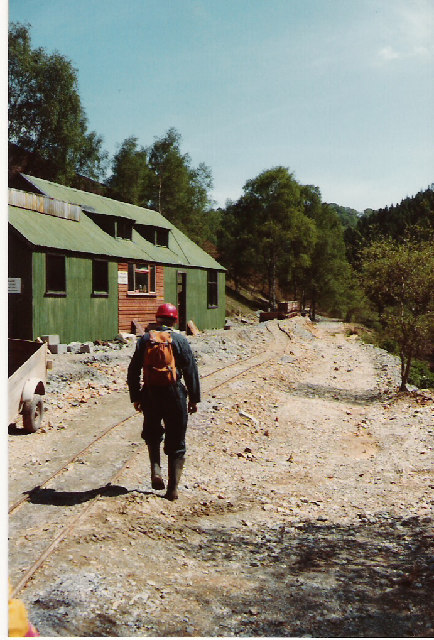
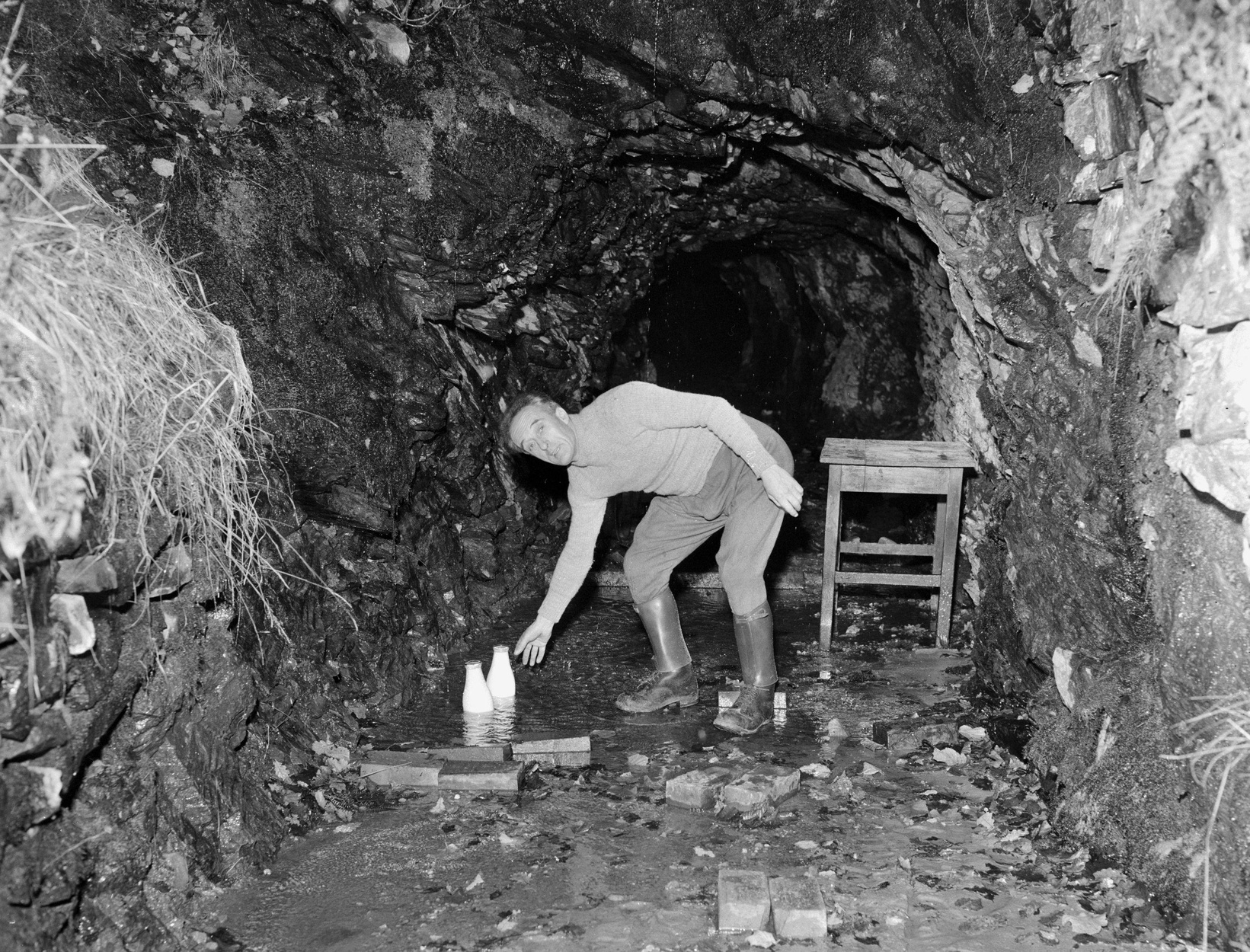
History
Gold-bearing quartz was first found at Gwynfynydd in 1863, but it was not until William Pritchard Morgan acquired the site in 1887 that commercial working began. Under his management the mine grew to employ around 200 people by 1888, driving horizontal adits deep into the mountainside and working by candlelight; together with the neighbouring Clogau mine, Gwynfynydd accounted for roughly 95% of the entire Dolgellau gold belt's output. Over its working life the mine produced more than 45,000 troy ounces of gold. On 21 April 1986, a kilogram ingot of Gwynfynydd gold was presented to Queen Elizabeth II to mark her 60th birthday. In the 1990s the mine was opened to the public for guided tours, including gold panning, before closing for good in 1998.
Geology
Unlike the shallower gold deposits worked at other mines in the district, Gwynfynydd's gold occurs in large quartz veins deep underground, within the Cambrian and Ordovician rocks of the Dolgellau gold belt.
Workings
Ore was won by driving a series of horizontal adits into the hillside, with underground haulage and crushing machinery originally powered by water wheels and turbines drawing on the mine's upland stream setting. A major fault cuts the mine into three sections: a western section carrying the Big, Little, White Lady, Collett and Chidlaw Lodes, a central section holding the Chidlaw Link Zone, and an eastern section with the New-Main Lodes. Access is by the No. 6 or Main Adit Level, whose portal stands about 13 m above the Afon Mawddach. In its last working years the mine employed ten men, raised about 5,000 tonnes of ore a year by overhand shrinkage stoping, and worked to an estimated grade of 15.2 grammes per tonne.
Closure
Closure in 1998 was driven by economics as much as by exhausted ground: new health and safety regulation would have nearly doubled the cost of sinking further shafts and galleries, while tightening pollution-control legislation would have made the owners liable for the quality of the mine's discharge into the River Mawddach.
What remains
The site, within a Site of Special Scientific Interest, is disused and largely reclaimed by woodland; Clogau Gold of Wales Ltd bought around 80 acres of land surrounding the mine in mid-2013, taking control of the ground from the previous owner Welsh Gold Plc.
Old adit entrances, spoil heaps and dressing-floor remains survive within the surrounding forestry, with the route partly followed by the public Clogau Trail through the old workings.
Related mines
- Clogau Gold Mine — Both mines were run by St Davids Gold and Copper Mines Ltd from 1900, and both were reopened together in the 1930s by C. V. Sale's Hillside Mining Company.
- Prince Edward Gold Mine — Both belong to the Merioneth gold belt; Gwynfynydd lies about six miles to the south.
- Tyddyn Gwladys Mine — Tyddyn Gwladys's buildings became barracks for Gwynfynydd's miners by 1893; both were Pritchard Morgan sites.
Nearby mines
- Tyddyn Gwladys Mine — 0.9 miles (1.5 km) S
- Turf Copper Mine — 1.7 miles (2.8 km) S
- Dolfrwynog Mine — 1.8 miles (2.9 km) SE
- Cefn Coch Gold Mine — 3.2 miles (5.2 km) S
- Glasdir Mine — 3.6 miles (5.7 km) S
Straight-line distance, within 9 miles (15 km). Show on the map.
Recorded claims
Individual factual claims, each attached to the source(s) that support it below. Where sources disagree, both are kept.
- Gold-bearing quartz was found at Gwynfynydd in 1863, but the mine was not developed commercially until William Pritchard Morgan acquired it in 1887. 1,2
- Gwynfynydd produced more than 45,000 troy ounces of gold over its working life, and together with Clogau accounted for around 95% of the Dolgellau gold belt's total output. 1,3
- A kilogram ingot of Gwynfynydd gold was presented to Queen Elizabeth II on 21 April 1986 to mark her 60th birthday. 1,2
- The mine closed in 1998, a decision driven by new health and safety regulation that would have nearly doubled shaft-sinking costs and by pollution-control legislation that would have made the owners liable for discharge quality into the River Mawddach. 1,3
- Gwynfynydd first produced gold about 1863 under T. A. Readwin & Co.; after a succession of failed ventures Pritchard Morgan took the mine in 1887 and immediately found the largest gold pocket ever recorded there, over 200,000 grammes on the Chidlaw Lode. It passed through Morgan's successive companies to St Davids Gold and Copper Mines in 1900, was abandoned in 1917, reopened in the 1930s and closed again in 1939, and was reopened in earnest in 1981 before Welsh Gold Plc took it over in February 1995. 4
- By the mid-1990s the mine had produced over 1.2 million grammes of gold; the figure usually quoted for its whole working life is more than 45,000 troy ounces, about 1,400 kg. 4
- Located at about 52.837 N, 3.878 W. 1
Photographs & further reading
28DaysLater exploration report and photographs of the disused underground workings.
View sourceSources
- (secondary) Gwynfynydd Gold Mine — Wikipedia
- (secondary) Gwynfynydd Gold Mine — Clogau
- (secondary) Dragon's hoard: the allure of Welsh gold — Mining Technology
- (secondary) Complex gold-bearing veins in the Gwynfynydd Mine, British Mining No. 57 — Northern Mine Research Society
- (observational) Gwynfynydd Gold Mine (1982) — Geograph Britain and Ireland
- (primary) BGS mine plans catalogue: Gwynfynydd Level 6 — British Geological Survey
Record created: 20 August 2026 · Last researched: 9 September 2026