 MineArchive
Clogau Gold Mine
| Location | Bontddu, near Barmouth, Gwynedd — 52.7618, -3.9647 (exact) |
|---|---|
| Commodities | Gold, Copper |
| Type | Metal |
| Worked | 1854–1998 |
| Maximum depth | Unknown. |
| Operators | William Roberts / Clogau Gold of Wales Ltd (1989–1998), Alba Mineral Resources (2010–?) |
Overview
Clogau, above the village of Bontddu near Barmouth, is the most famous of the Dolgellau gold mines — the source of the Welsh gold nugget used in every British royal wedding ring since 1923, from the Queen Mother to Meghan Markle.
History
The mine began as a copper and lead working before gold was discovered in its quartz veins in 1854. In 1860 an agreement was struck with the Crown Estate to work the ‘St David's lode’, with operations formally commencing that August; by 1899 the mine's gold was worth some £60,000 a year. New veins found in 1919 prompted a reopening with a new crushing plant, but the workings closed in 1911 after nearly fifty years of major production had followed the initial 1862 gold rush — production between 1862 and 1911 totalled around 165,031 tonnes of ore for roughly 78,507 troy ounces (2,442kg) of refined gold. The site lay abandoned from 1911 until 1989, when William Roberts rediscovered it and began developing it as a tourist attraction, founding Clogau Gold of Wales Ltd in 1992 to mine small quantities for jewellery; this final phase of extraction ended in 1998 as costs rose and yields fell. The mine changed hands again in 1999 and 2010, and is now majority owned by Alba Mineral Resources; a 2012 assessment by Snowdon Mining Consultants estimated as much as 500,000 ounces of gold might remain, with subsequent drilling recording grades of between 30.2 and 263 grams per tonne in sampled areas.
Geology
Clogau worked the St David's lode of Clogau mountain, a gold-bearing quartz vein within the wider Dolgellau gold belt — a mineralised zone running some 30 km across Meirionnydd which has been the most productive gold ground in Wales — alongside the co-owned Vigra mine on the far side of the valley. One miner described the search for payable gold as being 'like finding the sixpence in the biggest Christmas cake', given how erratically the gold occurred within the vein. The lode carried copper and a little lead as well as gold, and it was as a copper mine that the workings began; the gold was the later and far more famous product. The workings are cut by a geological fault, with the No. 1 (St David's) and No. 2 levels lying either side of it.
Geological setting: Veins and Lodes (well documented example)
Workings
Worked underground on the gold-bearing quartz veins above Bontddu; a new crushing plant was installed for the reopening after 1919.
Closure
Major production ended in 1911; the mine last closed in about 1998 and has been held by a local exploration company since 1999.
What remains
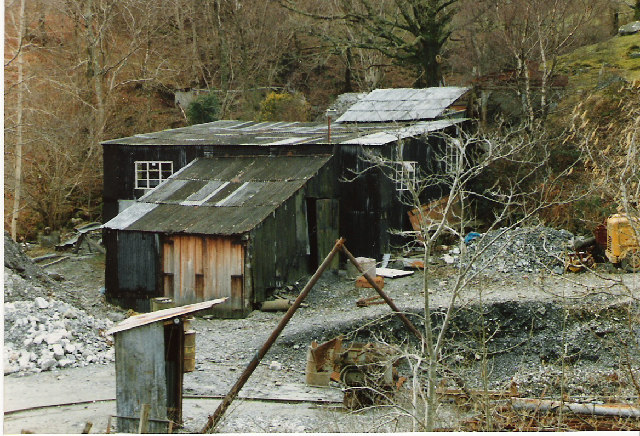
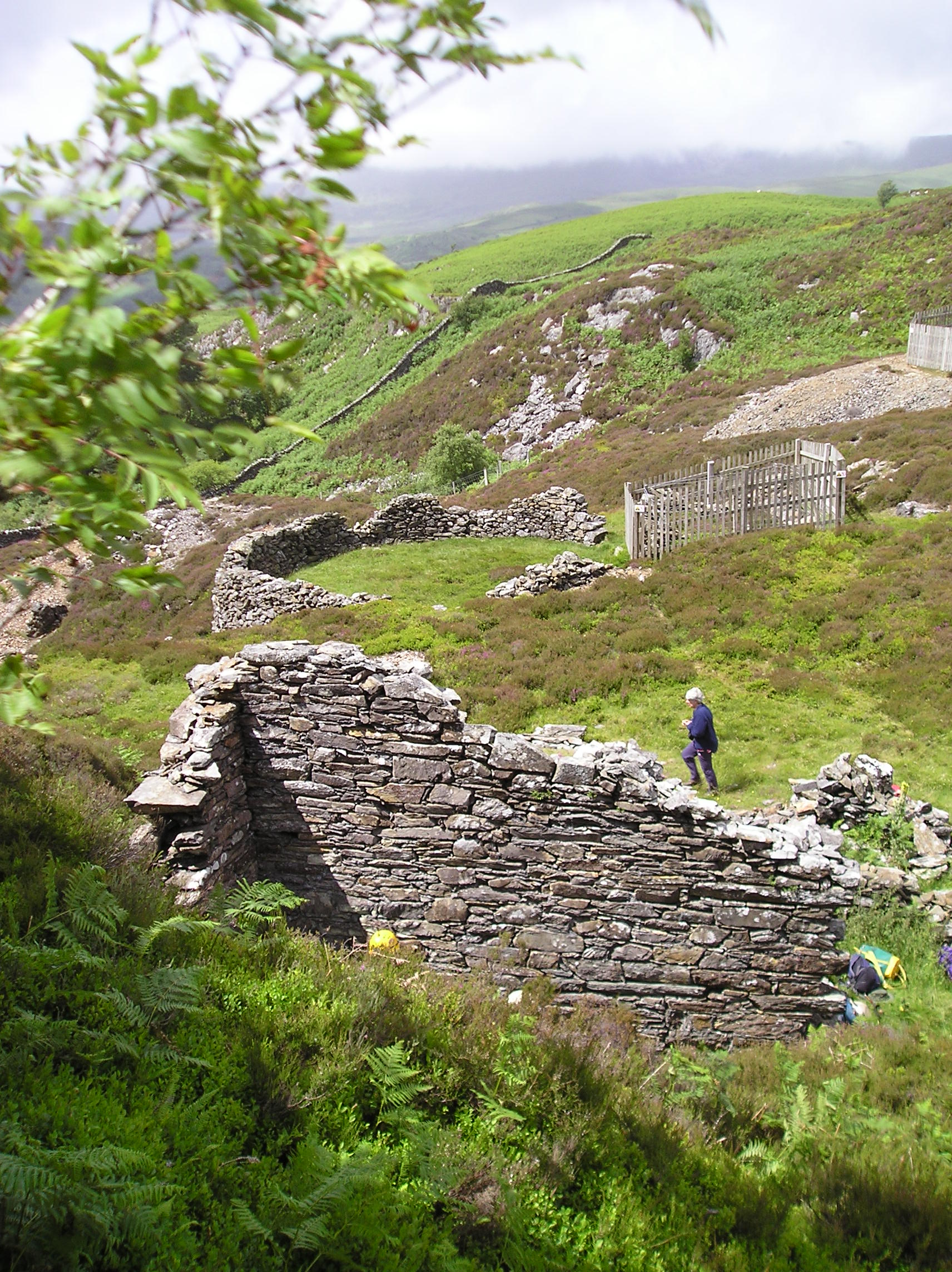
The mine last closed in about 1998 and has been held by a local exploration company since 1999. Workings across the hillside include the 1861 Eliza Level drainage tunnel, the No. 1 (St David's) and No. 2 levels either side of a geological fault, the original Old Clogau copper workings, and the Brynygroes Level, along with the ruins of a mine office, workshop and steam-powered mill and a surviving horse whim. Part of the site remains under lease to a mineral exploration company, with some levels off-limits. As reported in February 2019, Alba Mineral Resources, holding a 90 per cent stake in Gold Mines of Wales Limited, was preparing a formal pre-application to the Mineral Planning Authority for the works needed to reopen the mine, beginning a rehabilitation programme of repairs to the Llechfraith Adit, and had engaged SRK Exploration Services on a sampling programme across the Dolgellau belt. No source confirms that production has since restarted.
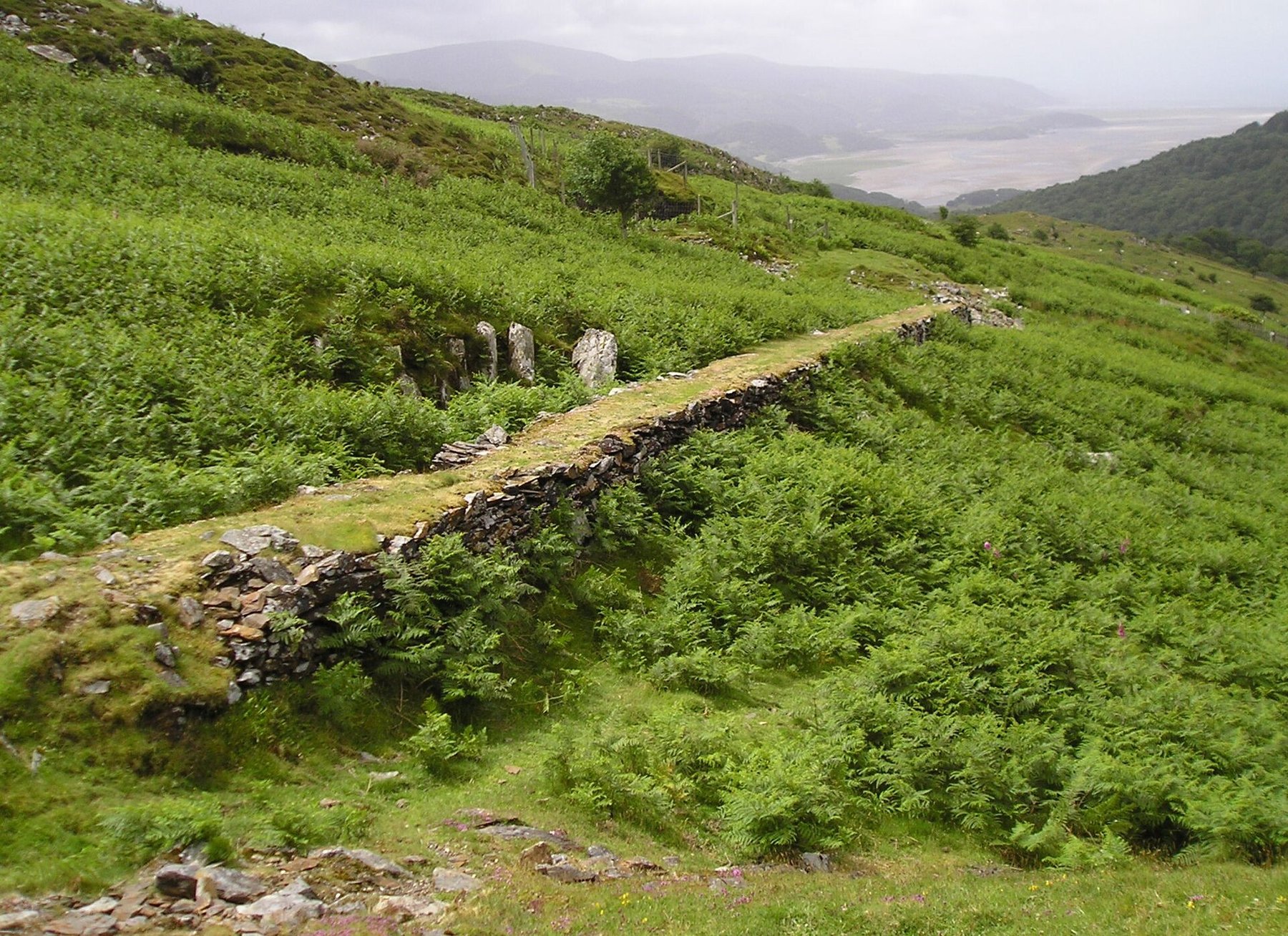
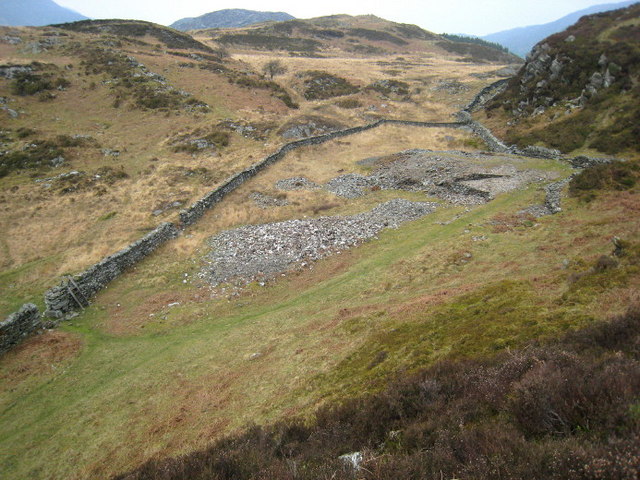
A complex series of openworks, tramways, inclines and open levels runs across the hillside, the mine having used a two-foot gauge railway when in production. The ruins of the mine office, workshop and steam-powered mill survive, together with a horse whim. The Ordnance Survey County Series First Edition of 1889 shows the workings as disused; the Second Edition of 1901 shows the St David's Gold & Copper Mine back in operation.
Related mines
- Gwynfynydd Gold Mine — Both mines were run by St Davids Gold and Copper Mines Ltd from 1900, and both were reopened together in the 1930s by C. V. Sale's Hillside Mining Company.
- Vigra Mine — The two gold mines on opposite sides of the valley were co-owned.
Nearby mines
- Vigra Mine — 0.9 miles (1.4 km) SW
- Cefn Coch Gold Mine — 3.4 miles (5.5 km) NE
- Hafotty Manganese Mine — 3.9 miles (6.3 km) SW
- Glasdir Mine — 4.2 miles (6.8 km) NE
- Turf Copper Mine — 5.3 miles (8.6 km) NE
Straight-line distance, within 9 miles (15 km). Show on the map.
What's uncertain
Points where sources disagree or the record could not be settled; both accounts are kept. All open questions in the archive.
- Every British royal wedding ring since 1923, when the future Queen Elizabeth The Queen Mother married the Duke of York, has reputedly been made from a nugget of Welsh gold sourced from Clogau — including those of Queen Elizabeth II, Princess Diana, and Meghan Markle in 2018. (uncertain) 2
- A 2022 report describes extensive surviving surface infrastructure at Clogau, including a horse whim, the ruins of a mine office and workshop, and remnants of a steam-powered mill, alongside stopes and deep shafts on the St David's and No. 2 levels either side of the hill's central fault. (uncertain) 3
- The BGS mine-plans catalogue holds a BGS plan titled 'Clogau' (catalogue KP19209, undated in the catalogue); the catalogue gives no location and the plan's details do not clearly tie it to this working, so it may belong to another of the same name. (uncertain) 6
Recorded claims
Individual factual claims, each attached to the source(s) that support it below. Where sources disagree, both are kept.
- Between 1862 and 1911, Clogau produced around 165,031 tonnes of gold ore for roughly 78,507 troy ounces (2,442kg) of refined gold; by 1899 the mine's gold was worth some £60,000 a year. 1
- A 2012 assessment by Snowdon Mining Consultants estimated as much as 500,000 ounces of gold might remain at Clogau, with subsequent drilling recording grades of between 30.2 and 263 grams per tonne in sampled areas. 1
- Every British royal wedding ring since 1923, when the future Queen Elizabeth The Queen Mother married the Duke of York, has reputedly been made from a nugget of Welsh gold sourced from Clogau — including those of Queen Elizabeth II, Princess Diana, and Meghan Markle in 2018. (uncertain) 2
- A 2022 report describes extensive surviving surface infrastructure at Clogau, including a horse whim, the ruins of a mine office and workshop, and remnants of a steam-powered mill, alongside stopes and deep shafts on the St David's and No. 2 levels either side of the hill's central fault. (uncertain) 3
- Clogau consists of a complex series of openworks, tramways, inclines and open levels and was a major mine in the Dolgellau gold mining area. It used a two-foot gauge railway when in production. 4
- The mine produced copper and a little lead before developing into gold production in the 1862 'rush', working the St David's lode of Clogau mountain. 4
- Since 1911 the mine has been reopened several times for smaller-scale operations. It last closed in about 1998 and has been held by a local exploration company since 1999. 4
- The workings are shown as disused on the Ordnance Survey County Series First Edition (Merioneth XXXIII.9) of 1889, but the Second Edition of 1901 shows the St David's Gold & Copper Mine in operation. 4
- As reported in February 2019, Alba Mineral Resources held a 90 per cent stake in Gold Mines of Wales Limited and was due to submit a pre-application to the Mineral Planning Authority to reopen the mine, to begin repairs to the Llechfraith Adit, and to have SRK Exploration Services collect up to 3,000 samples across about half of the 30 km Dolgellau Gold Belt. 5
- The BGS mine-plans catalogue holds a BGS plan titled 'Clogau' (catalogue KP19209, undated in the catalogue); the catalogue gives no location and the plan's details do not clearly tie it to this working, so it may belong to another of the same name. (uncertain) 6
Photographs & further reading
A detailed survey of Clogau's levels, shafts and surviving surface buildings.
View sourceThe Royal Commission's record of the site, describing the openworks, tramways, inclines and levels, the shift from copper to gold in the 1862 rush, and the Ordnance Survey map evidence for the mine standing disused in 1889 and working again by 1901.
View sourceSources
- (secondary) Clogau Gold Mine — Wikipedia
- (secondary) History of Welsh Gold — Clogau
- (observational) Mines 33 - Welsh Gold Mines 1 - Clogau, Wales — Feb 2022 — 28DaysLater
- (primary) Clogau Gold Mine; Clogau St David's Mine (NPRN 33964) — Royal Commission on the Ancient and Historical Monuments of Wales
- (secondary) Clogau gold mine re-opening moves step closer (11 February 2019) — North Wales Live
- (primary) BGS / Mining Remediation Authority mine plans: CLOGAU — British Geological Survey / Mining Remediation Authority
Record created: 20 August 2026 · Last researched: 4 September 2026