 MineArchive
Great Laxey Mine
| Location | Laxey, Isle of Man — 54.2401, -4.4064 (exact) |
|---|---|
| Commodities | Lead, Copper, Silver, Zinc |
| Type | Metal |
| Worked | 1780s–1929 |
| Maximum depth | over 2,200 ft (670 m) |
| Operators | The Great Laxey Mining Company Limited (1848–1929) |
Overview
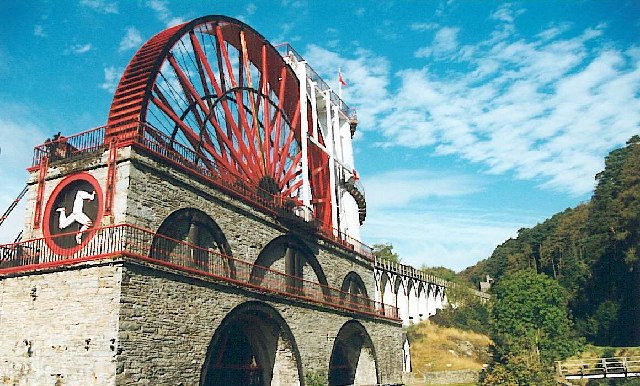
Great Laxey Mine was, at its Victorian peak, the richest metal mine on the Isle of Man and one of the most productive zinc mines anywhere in the British Isles. It's better known today for the structure built to keep it dry: the Lady Isabella, the largest working waterwheel in the world.
History
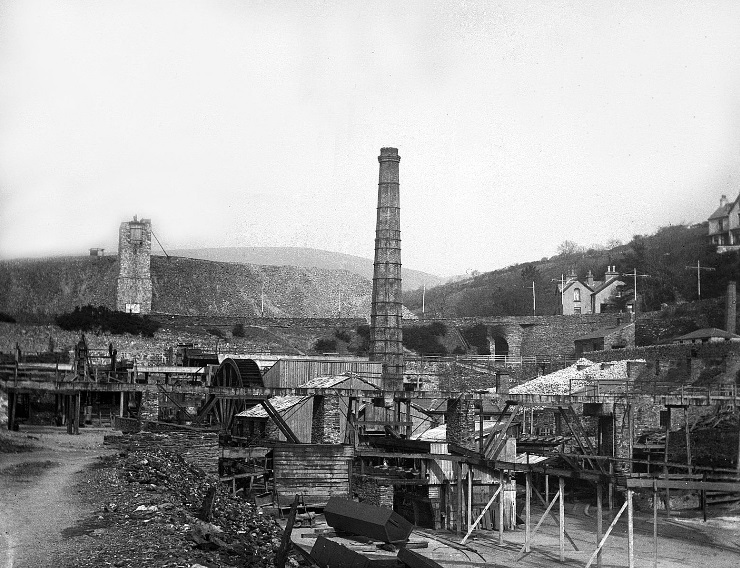
Zinc and lead ore were discovered in the Laxey valley in the 1780s, and mining developed steadily through the early 19th century under licence from George Murray, 6th Duke of Atholl. The Great Laxey Mining Company Limited was formed in 1848 to consolidate and expand operations, and the mine grew into the largest employer on the island, with over 600 workers at its peak. By the early 1900s the mine was raising a mix of lead, zinc, silver and copper ore from three main shafts — the Welsh Shaft, Dumbell's Shaft and the Engine Shaft — connected by an extensive network of levels reaching over 2,200 ft (670 m) below surface. At full production, Laxey produced more zinc than any other mine in the British Isles, and shares that had traded for as little as £34 in the late 1820s were changing hands for £1,500–£2,000 by 1833.
A rich new vein found in 1901 briefly promised further expansion, but instead brought on uncontrollable flooding — by 1902 water was reported rising by six inches a day, and the narrow Victorian shafts proved unsuitable for the electric pumps that might otherwise have coped. Combined with increasingly antiquated pumping machinery elsewhere in the mine, the flooding proved impossible to overcome, and the mine closed in 1929, though processing of surface spoil continued for a few more years, into the mid-1930s.
Geology
The mine worked lead, zinc, silver and copper-bearing veins in the Laxey valley; a galena (lead sulphide) specimen from the mine, weighing 118 kg, is recognised as one of the largest sulphide crystals known and is held by the Natural History Museum in London.
Geological setting: Veins and Lodes (well documented example)
Workings
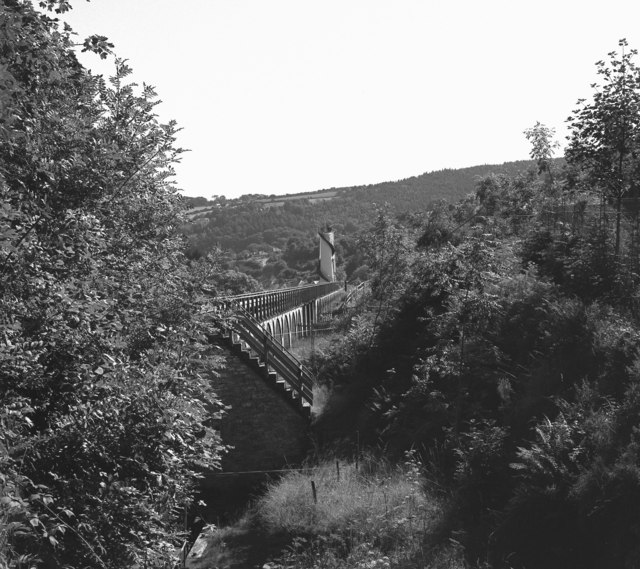
Ore was raised from three principal shafts — the Welsh Shaft, Dumbell's Shaft and the Engine Shaft — linked by levels extending to over 2,200 ft (670 m) depth. From 1854 the mine's water problems were addressed by the Lady Isabella waterwheel, built to a design by the engineer Robert Casement specifically to pump water out of the workings; ore was processed at dedicated washing floors built in 1848.
Closure
Persistent flooding, worsened by a rich but wet new vein struck in 1901, combined with ageing pumping equipment to force closure in 1929; reprocessing of surface spoil continued on a small scale until around 1934.
What remains
The Lady Isabella waterwheel survives and is a major visitor attraction, with displays at the site; visitors can venture a short distance into one of the adits. Mineral specimens from the mine are held at the Manx Museum.
Surviving features include the Lady Isabella waterwheel (the largest working waterwheel in the world, at 72 ft 6 in / 22 m diameter), the 1848 washing floors, and remains of the mine railway used to move ore and spoil around the site.
Redevelopment
The site is now managed as a heritage attraction, with the Great Laxey Mine Railway and washing floors forming part of a wider Laxey Mines Trail alongside the wheel itself.
Related mines
- Snaefell Mine — Both were worked by the Great Laxey Mining Company, and Snaefell was opened in 1856 on ground separate from but administratively linked to the larger Laxey mine down the valley.
Nearby mines
- North Laxey Mine — 2.3 miles (3.6 km) N
- Snaefell Mine — 2.7 miles (4.4 km) NW
- Elerslie Mine — 6.5 miles (10.4 km) W
- Douglas Head Mine — 7.4 miles (11.8 km) SW
- Beckwith Mine — 8.6 miles (13.9 km) W
Straight-line distance, within 9 miles (15 km). Show on the map.
Disasters & major incidents
-
Great Laxey Mine scaffold collapse
10 December 1904 · Collapse / Roof Fall · 4 fatalities
A working scaffold gave way underground, and the four men on it fell into a water-filled sump about 17 feet deep. All four drowned, including the youngest, 18-year-old Henry Lewis Gelling.
Recorded claims
Individual factual claims, each attached to the source(s) that support it below. Where sources disagree, both are kept.
- The Lady Isabella waterwheel, built to pump water from the mine, had its grand opening on 27 September 1854 and remains the largest working waterwheel in the world. 1
- At full production Great Laxey Mine produced more zinc ore than any other mine in the British Isles. 1
- A 118 kg galena specimen recovered from the mine is recognised as one of the largest sulphide crystals known, and is held by the Natural History Museum, London. 1
- The BGS catalogue holds two plans of the Great Laxey Mine and a combined sheet covering the Laxey, Agneash Corner, Dumbell's, Engine, North and Welch workings — the same shaft names the mine was run on. 2
- The mine worked a near-vertical vein composed largely of quartz but carrying ores of lead, zinc and copper, and reached a depth of over 650 metres. 3
Photographs & further reading
The heritage body that manages the wheel and washing floors today, with visiting information and further history.
View sourceFurther freely-licensed photographs of the wheel and surrounding mine site.
View sourceSources
- (secondary) Laxey Mine — Wikipedia
- (primary) Great Laxey Mine plans (BGS catalogue) — British Geological Survey
- (secondary) Laxey Mine — Manx Geological Survey
Record created: 19 August 2026 · Last researched: 28 August 2026