 MineArchive
Snaefell Mine
| Also known as | Great Snaefell Mine |
|---|---|
| Location | Laxey, Isle of Man — 54.2630, -4.4620 (exact) |
| Commodities | Zinc, Lead, Silver |
| Type | Metal |
| Worked | 1856–1908 |
| Maximum depth | 1,188 ft (362 m); 171 fathoms at the time of the 1897 disaster |
| Operators | The Great Laxey Mining Company Limited (?–1864), Snaefell Mining Company (1864–1870), Great Snaefell Mining Company (1871–1908) |
Overview
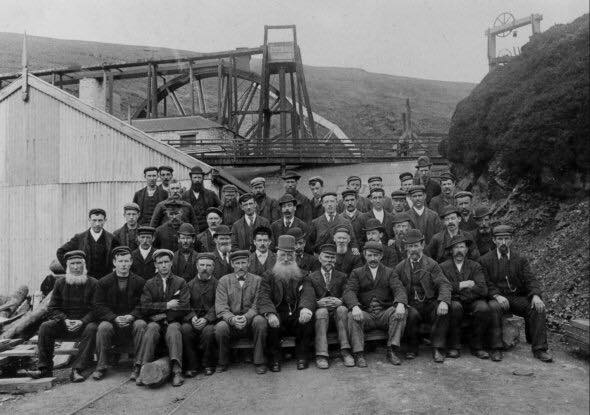
Snaefell Mine, high in the Laxey Valley on the slopes of Snaefell Mountain, was the Isle of Man's third major metal mine after Laxey and Foxdale, worked chiefly for zinc alongside lead and silver. It is remembered above all for the Isle of Man's worst mining disaster, when an underground fire filled the workings with carbon monoxide on 10 May 1897, killing 20 men.
History
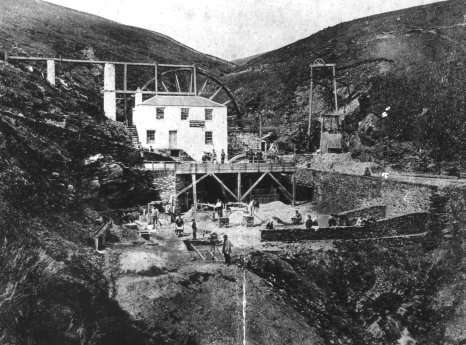
Mining began at Snaefell in 1856 under the Great Laxey Mining Company, on ground separate from but administratively linked to the larger Laxey mine nearby. The Snaefell Mining Company took over in 1864 but ran into financial difficulty and was wound up in 1870; a new concern, the Great Snaefell Mining Company, was formed in March 1871 by James Spittal, Henry Bloom Noble, Thomas Wilson and Alfred Adams, with £25,000 capital, and ran the mine for the rest of its working life. The mine was worked mainly for zinc blende, with lead and silver as by-products, and reached a main shaft depth of 1,188 feet (362 m), with working levels at 25, 40, 50, 60, 70 and 75 fathoms; at the time of the 1897 disaster the deepest level reached was 171 fathoms (1,026 ft).
Geology
Snaefell worked zinc-lead-silver veins on the slopes of Snaefell Mountain — geologically part of the same broad Manx mineralised belt as the larger Laxey and Foxdale mines, though a smaller and less extensively developed deposit than either.
Geological setting: Veins and Lodes (well documented example)
Workings
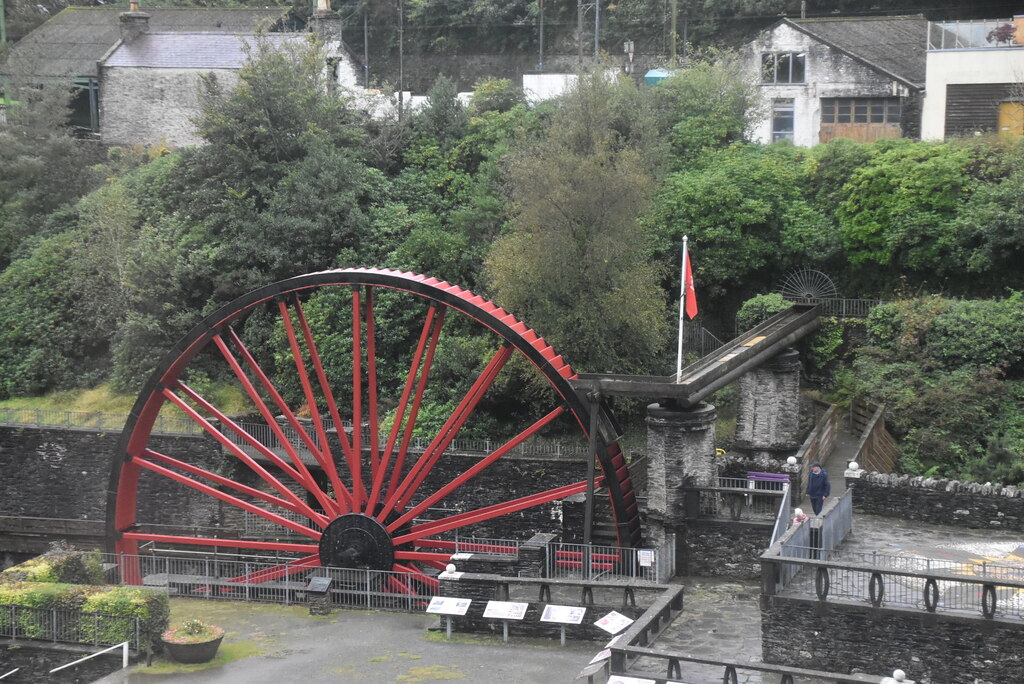
Underground workings were connected by a main engine shaft reaching 1,188 feet, with levels at roughly 10-fathom intervals through the upper workings. On the surface, the Snaefell Mining Company installed a 50-foot-diameter waterwheel, purchased in 1865 and built by Leigh and Gilbert Howell of the Hawarden ironworks in Flintshire, to keep the mine's workings pumped dry.
Closure
The mine closed permanently in 1908, after a substantial underground rockfall made continued clearance uneconomical on top of already declining metal prices. When it closed, the pumping waterwheel was dismantled and shipped to Blisland in Cornwall, where it was rebuilt to pump slurry at a china clay pit. Spoil reprocessing on the surface took place briefly from 1955 to 1958 under Metalliferous Holdings Ltd and then Amanda Mines Ltd, yielding around £60,000 worth of material in 1956 before falling lead prices ended that too.
What remains
Public access to the site has been restricted since April 2025, after a retaining wall collapsed; an engineering inspection found collapsed masonry, unstable walls and eroded footpaths across several historic structures, and the Isle of Man government has not ruled out the closure becoming permanent. An exploration report from July 2009 recorded the mine shaft itself as already sealed behind a locked gate well before this closure, with surface buildings, including the former mine captain's house and a chimney, then still standing and photographable from outside.
Surviving surface structures include washing floors, a complex system of leats following the hillside's contours, two powder houses, and one capped shaft with its associated chimney.
Redevelopment
In a striking reversal of the 1908 move, the pumping waterwheel removed to Cornwall in 1908 was brought back to the Isle of Man in September 2003, and now stands, restored and named Lady Evelyn, at Laxey Glen Gardens rather than back at its original site.
Related mines
- Great Laxey Mine — Both were worked by the Great Laxey Mining Company, and Snaefell was opened in 1856 on ground separate from but administratively linked to the larger Laxey mine down the valley.
Nearby mines
- North Laxey Mine — 2.0 miles (3.2 km) E
- Great Laxey Mine — 2.7 miles (4.4 km) SE
- Elerslie Mine — 5.3 miles (8.5 km) SW
- Beckwith Mine — 7.4 miles (11.9 km) SW
- Cross Vein Mine — 7.5 miles (12.1 km) SW
Straight-line distance, within 9 miles (15 km). Show on the map.
The mine shaft has long been sealed, and the wider site has been closed to public access since 2025 following a structural collapse — this entry describes history and general location only, not a route or access guide.
Disasters & major incidents
-
Snaefell Mine disaster
10 May 1897 · Gas / Asphyxiation · 20 fatalities
Timber left smouldering underground filled the mine's shafts with carbon monoxide; miners descending on the morning shift were overwhelmed before they realised the danger. Sources give the death toll as 19-23.
What's uncertain
Points where sources disagree or the record could not be settled; both accounts are kept. All open questions in the archive.
- An exploration report from July 2009 found the mine shaft already sealed behind a locked gate, with surface buildings including the former mine captain's house and a chimney still standing. (uncertain) 6
- The BGS mine-plans catalogue holds a Mining Remediation Authority abandonment plan titled 'Snaefell' (catalogue OM5521, Lead Ore, dated 1908); the catalogue gives no location and the plan's details do not clearly tie it to this working, so it may belong to another of the same name. (uncertain) 7
Recorded claims
Individual factual claims, each attached to the source(s) that support it below. Where sources disagree, both are kept.
- The mine was worked successively by the Great Laxey Mining Company (from 1856), the Snaefell Mining Company (1864-1870, wound up in financial difficulty), and the Great Snaefell Mining Company (formed 1871 with £25,000 capital), which ran it until closure in 1908. 1,2
- The main shaft reached 1,188 feet (362 m), with the deepest level worked by the time of the 1897 disaster at 171 fathoms (1,026 ft). 1
- A 50-foot-diameter pumping waterwheel, purchased in 1865 and built at the Hawarden ironworks in Flintshire, was dismantled and shipped to Blisland, Cornwall, when the mine closed in 1908, then brought back to the Isle of Man in September 2003 and restored as 'Lady Evelyn' at Laxey Glen Gardens. 3
- The mine closed permanently in 1908 after a substantial rockfall made continued underground clearance uneconomical. 1
- Surface spoil was reprocessed for residual lead and zinc between 1955 and 1958 by Metalliferous Holdings Ltd and then Amanda Mines Ltd, yielding about £60,000 of material in 1956 before falling lead prices ended the operation. 1
- Public access to the site was restricted from April 2025 after a retaining wall collapsed; an inspection found collapsed masonry, unstable walls and eroded footpaths across several historic structures, and permanent closure has not been ruled out. 4,5
- An exploration report from July 2009 found the mine shaft already sealed behind a locked gate, with surface buildings including the former mine captain's house and a chimney still standing. (uncertain) 6
- The BGS mine-plans catalogue holds a Mining Remediation Authority abandonment plan titled 'Snaefell' (catalogue OM5521, Lead Ore, dated 1908); the catalogue gives no location and the plan's details do not clearly tie it to this working, so it may belong to another of the same name. (uncertain) 7
- Located at about 54.263 N, 4.462 W. 1
Photographs & further reading
The government's own announcement of the April 2025 closure, the engineering inspection that found collapsed masonry and unstable walls, and the funding position that still governs whether the site reopens.
View sourceSources
- (secondary) Snaefell Mine — Wikipedia
- (secondary) Great Snaefell Mining Company — Wikipedia
- (secondary) Snaefell Wheel — Wikipedia
- (primary) Snaefell Mines: Public access restricted after structural collapse — Isle of Man Government
- (secondary) Access to Snaefell Mines restricted following wall collapse — Manx Radio
- (observational) Snaefell Mine - Isle of Man - July 2009 — Derelict Places (urban exploration forum)
- (primary) BGS / Mining Remediation Authority mine plans: SNAEFELL — British Geological Survey / Mining Remediation Authority
- (primary) Appendix: 'Investigation of Mine Air', 1905 — Manx Notebook (Isle of Man history archive)
- (secondary) Snaefell Mine — oldminer.co.uk
Record created: 20 August 2026 · Last researched: 9 September 2026