 MineArchive
Great Condurrow Mine
| Also known as | Condurrow United, Higher Condurrow Mine |
|---|---|
| Location | Troon, south of Camborne, Cornwall — 50.2075, -5.2786 (approximate) |
| Commodities | Copper, Tin |
| Type | Metal |
| Worked | By 1815–1914 |
| Maximum depth | 330 fathoms (603 m), Pryce's shaft |
Overview
A copper and tin mine at Troon near Camborne, first recorded in 1815, which gave its name to the mineral condurrite; its last reworking of 1906-14 left Woolf's engine house, among the last ever built in Cornwall.
History
Great Condurrow lies on the edge of Troon, south of Camborne. A Higher Condurrow mine was working as a copper mine by 1815 and closed in 1830; reopened, it raised copper into the 1860s and some tin from the 1850s, producing 30,495 tons of copper ore, 2,030 tons of black tin and some arsenic and pyrite between 1856 and 1865. It turned to tin as copper failed and closed in 1873 when tin prices collapsed. In 1880-81 the sett was reworked as Pendarves United, combined with Tryphena, Wheal Nelson, West Condurrow and Tolcarne. The mineral condurrite is named after the mine.
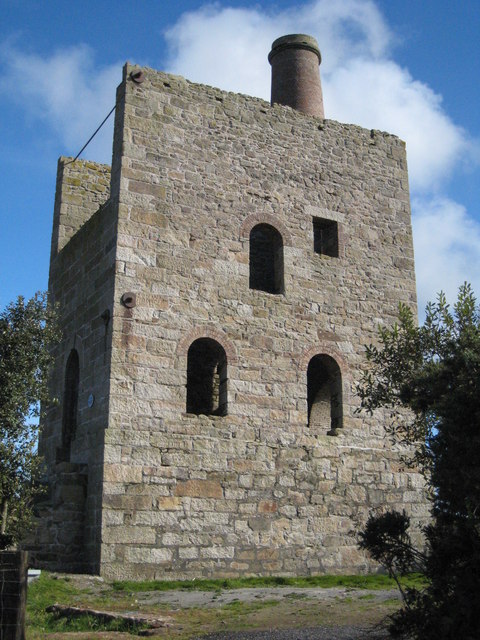
It worked the Main, Llandower, Robert's and South lodes from Pryce's or Engine shaft (330 fathoms), Hope's (290), Woolf's (283), Llandower, Smith's and an adit shaft, with a 36-inch pumping engine on Pryce's by 1850 and whims on Pryce's and Hope's. The final reworking, as Condurrow United from 1906 to 1914, built Woolf's (or Neame's) pumping engine house in 1906 for an 80-inch Harvey engine that had worked at West Chiverton from 1869 to 1882 and at Gwennap United from 1899 to 1905; the house was moved to the south side of the shaft because the ground on the north was unstable. The company could not make Woolf's shaft safe, costs mounted, and the mine closed for good in 1914. The engine house, one of the most recent in Cornwall, has been consolidated, and the Carn Brea Mining Society is restoring the Pryce's and Llandower part of the site.
Geology
Copper and tin from the Main, Llandower, Robert's and South lodes.
Workings
Pryce's (Engine), Hope's, Woolf's, Llandower, Smith's and Adit shafts; a 36-inch pumping engine, whims, and from 1906 an 80-inch pumping engine on Woolf's shaft.
Closure
Closed in 1873 when tin prices collapsed; the 1906-14 reworking as Condurrow United failed to make Woolf's shaft safe and closed in 1914.
What remains
Woolf's engine house has been consolidated; the Pryce's and Llandower area is being restored by the Carn Brea Mining Society.
Woolf's pumping engine house of 1906, remains of a horizontal whim and air compressor, and the Pryce's and Llandower shaft area.
Redevelopment
Unknown.
Related mines
- King Edward Mine (South Condurrow) — Neighbouring Troon mines; King Edward was South Condurrow.
Nearby mines
- Wheal Basset (Basset Mines) — 0.3 miles (0.5 km) NW
- Carn Camborne Mine — 0.4 miles (0.7 km) W
- Wheal Grenville — 0.6 miles (0.9 km) SE
- Cook's Kitchen Mine — 0.7 miles (1.1 km) N
- Dolcoath Mine — 0.7 miles (1.1 km) N
Straight-line distance, within 9 miles (15 km). Show on the map.
Recorded claims
Individual factual claims, each attached to the source(s) that support it below. Where sources disagree, both are kept.
- Great Condurrow is first recorded in 1815, as a copper mine; a Higher Condurrow mine closed in 1830. 1,2
- In 1856-65 it produced 30,495 tons of 6.75% copper ore and 2,030 tons of black tin. 1
- Worked for tin in the 1870s and closed in 1873 when prices collapsed. 1,2
- Woolf's engine house was built in 1906 for a reworking, using an engine salvaged from another mine; the operation could not be made profitable and closed in 1914. 1,2
- The mineral condurrite is named after the Great Condurrow Mine. 3
- A plan and section of the Great Condurrow Mine is held by the British Geological Survey. 4
Sources
- (secondary) Great Condurrow Mine — Explore Cornwall
- (secondary) Great Condurrow Mine — iWalk Cornwall
- (secondary) Troon, Cornwall — Wikipedia
- (primary) BGS plan: Plan and section, Great Condurrow Mine — British Geological Survey
Record created: 17 October 2026 · Last researched: 17 October 2026