 MineArchive
Fishburn Colliery
| Location | Fishburn, near Sedgefield, County Durham — 54.6797, -1.4400 (approximate) |
|---|---|
| Commodity | Coal |
| Type | Coal |
| Worked | 1910–1973 |
| Maximum depth | Unknown. |
| Operators | Henry Stobart & Co. Ltd (1910–1947), National Coal Board (1947–1973) |
Overview
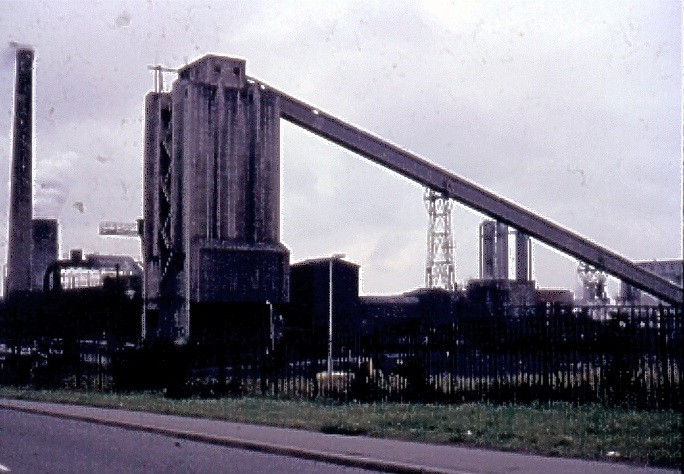
A twentieth-century County Durham colliery near Sedgefield, sunk in 1910 by Henry Stobart & Co. and worked through two shafts until November 1973. It was a coking-coal pit whose workforce grew from 207 men in 1915 to over 1,500 by 1950, and from 1954 it had its own coking plant alongside, making a domestic coke called Sunbrite and piping town gas to a hospital and the national grid.
History
The colliery opened in 1910 under Henry Stobart & Co. Ltd, working the No. 1 (North) and No. 2 (South) pits. It grew steadily and then sharply: 207 men in 1915, 558 by 1921, 613 by 1925, 1,054 by 1930 and 1,522 by 1935. The National Coal Board took it over in 1947, when it employed 1,431 and raised 418,600 tons, and by 1950 the workforce was over 1,500 — its peak.
In 1954 the Fishburn Coking Plant was built alongside the colliery to make high-grade coke for industry and a domestic coke sold as Sunbrite, together with by-products of the coking process: the town gas it produced was supplied directly to the nearby Winterton Hospital and to the national grid.
The colliery's returns show it working coking coal in every year recorded, with gas, household, manufacturing, steam and later industrial coals alongside. It closed on 30 November 1973.
Geology
The colliery worked the Coal Measures of south-east Durham, in ground concealed beneath the Magnesian Limestone. Its coal was of coking quality throughout — the returns name coking coal in every single year recorded from 1921 to 1972 — which is why a coking plant was worth building on the site in 1954 and why the pit's fortunes were tied to the steel trade rather than the household market.
Geological setting: Sedimentary Beds and Seams (well documented example)
Workings
Two shafts, the No. 1 (North) and No. 2 (South) pits. The colliery's output was returned as coking coal in every year recorded, with gas, household, manufacturing and steam coals alongside it and industrial coal from 1965. From 1954 a coking plant stood alongside the colliery, producing metallurgical coke, the domestic coke Sunbrite, and town gas.
Closure
The colliery closed on 30 November 1973.
What remains
The colliery and its coke ovens have been cleared. A Fishburn Colliery Memorial stands in the village.
No colliery or coking-plant structures; a colliery memorial in the village.
Related mines
- Chilton Colliery — Both were Henry Stobart & Co. Ltd pits: the company held Chilton (as H. Stobart & Co. Ltd) in the 1900s and sank Fishburn in 1910, seven miles to the east.
- Thrislington Colliery — Both were worked by Henry Stobart & Co. Ltd, which took Thrislington over in 1932.
Nearby mines
- Bishop Middleham Colliery — 1.9 miles (3.1 km) W
- Trimdon Grange Colliery — 2.5 miles (4.0 km) N
- Trimdon Colliery — 2.6 miles (4.1 km) N
- Raisby Hill Quarry — 2.6 miles (4.2 km) NW
- Deaf Hill Colliery — 3.3 miles (5.3 km) N
Straight-line distance, within 9 miles (15 km). Show on the map.
What's uncertain
Points where sources disagree or the record could not be settled; both accounts are kept. All open questions in the archive.
- The Fishburn Coking Plant was built in 1954 alongside the colliery to produce high-grade coke for industry and a domestic coke called Sunbrite, together with by-products including town gas, which was supplied directly to the nearby Winterton Hospital and to the national grid. (uncertain) 2
Recorded claims
Individual factual claims, each attached to the source(s) that support it below. Where sources disagree, both are kept.
- The colliery opened in 1910 under Henry Stobart & Co. Ltd, working the No. 1 (North) and No. 2 (South) pits. 1
- Employment rose from 207 in 1915 to 558 in 1921, 1,054 in 1930, 1,522 in 1935, 1,431 at nationalisation in 1947 and 1,514 in 1950. 1
- The colliery raised 418,600 tons of coking, gas and manufacturing coal in 1947. 1
- The Fishburn Coking Plant was built in 1954 alongside the colliery to produce high-grade coke for industry and a domestic coke called Sunbrite, together with by-products including town gas, which was supplied directly to the nearby Winterton Hospital and to the national grid. (uncertain) 2
- The Durham Mining Museum records no disaster of five or more killed at Fishburn, though it lists 93 named fatalities across the colliery's working life. 1
- The colliery closed on 30 November 1973. 1,2
- The BGS mine-plans catalogue holds a Mining Remediation Authority abandonment plan titled 'Fishburn' (catalogue D1312, Bottom Busty 'Q2', dated 1973). 3
Photographs & further reading
The colliery's opening and closing dates, its two pits, its owners, and full annual tables of output and of employment split above and below ground from 1915 to the 1970s.
View sourceSources
- (primary) Durham Mining Museum: Fishburn Colliery — Durham Mining Museum
- (secondary) Fishburn — Wikipedia
- (primary) BGS / Mining Remediation Authority mine plans: FISHBURN — British Geological Survey / Mining Remediation Authority
Record created: 3 September 2026 · Last researched: 3 September 2026