 MineArchive
Ferrymoor Colliery
| Location | Grimethorpe, near Barnsley, South Yorkshire — 53.5729, -1.3846 (exact) |
|---|---|
| Commodity | Coal |
| Type | Coal |
| Worked | 1915–16–1988 |
| Maximum depth | 72 yards (the Shafton seam) |
| Operators | Hodroyd Colliery Company (1915–1919), Carlton Main Colliery Co. Ltd (1919–1947), National Coal Board (1947–?) |
Overview
Ferrymoor was the second pit at Grimethorpe, a drift mine started in 1915 some 600 metres from the deep colliery and driven to the shallow Shafton seam at 72 yards. It stayed small for half a century, worked on pillar and stall until 1965 and then wholly mechanised, and was linked underground with Riddings and South Kirkby collieries at the end of the 1960s. The combined Ferrymoor-Riddings-South Kirkby mine was the most productive in Britain at eight tons per man-shift when it was closed in 1988. The subsidence its workings left behind is now the Ferrymoor Flash.
History
Grimethorpe already had a deep colliery, sunk from 1894 and reaching the seven-foot Barnsley seam at 560 yards in 1897, when a second pit was started 600 metres away in 1915. Ferrymoor was a drift mine rather than a shaft, following the coal down at an angle from the surface, and it worked the Shafton seam at 72 yards — shallow enough that the whole undertaking was on a different scale from its neighbour. It was sunk by the Hodroyd Colliery Company and, like Grimethorpe, absorbed into the Carlton Main Colliery Company's operations by 1919. At nationalisation in 1947 Ferrymoor employed 253 people, 211 of them below ground, and raised 99,000 tons of household and manufacturing coal; by 1954 it employed 462 and was still working the Shafton. It operated pillar and stall until 1965, then went over to full mechanisation, and by the time of a National Coal Board leaflet in 1967 had 520 people producing 163,000 tons from the Shafton seam. The pit was merged with Riddings in 1967 and linked to it and to South Kirkby underground in 1969.
Geology
Ferrymoor worked the Shafton seam, high in the Yorkshire Coal Measures sequence and only 72 yards below the surface here — shallow enough to be reached by a drift driven down from the surface rather than by a shaft. The deep pit next door had to go to 560 yards for the Barnsley seam beneath it.
Geological setting: Sedimentary Beds and Seams (well documented example)
Workings
A drift mine, following the coal down at an angle from the surface to the Shafton seam at 72 yards. Pillar and stall working continued until 1965, after which the mine was described as one hundred per cent mechanised. Underground connections were driven to Riddings and South Kirkby collieries in 1969.
Closure
Ferrymoor merged with Riddings in 1967 and the combined mine with South Kirkby in 1985. Ferrymoor-Riddings-South Kirkby Colliery was the top mine for productivity in Britain, at eight tons per man-shift, when it was closed in 1988. Grimethorpe Colliery itself, next door, was accounted economically viable in 1992 and closed in May 1993 after ninety-seven years.
What remains
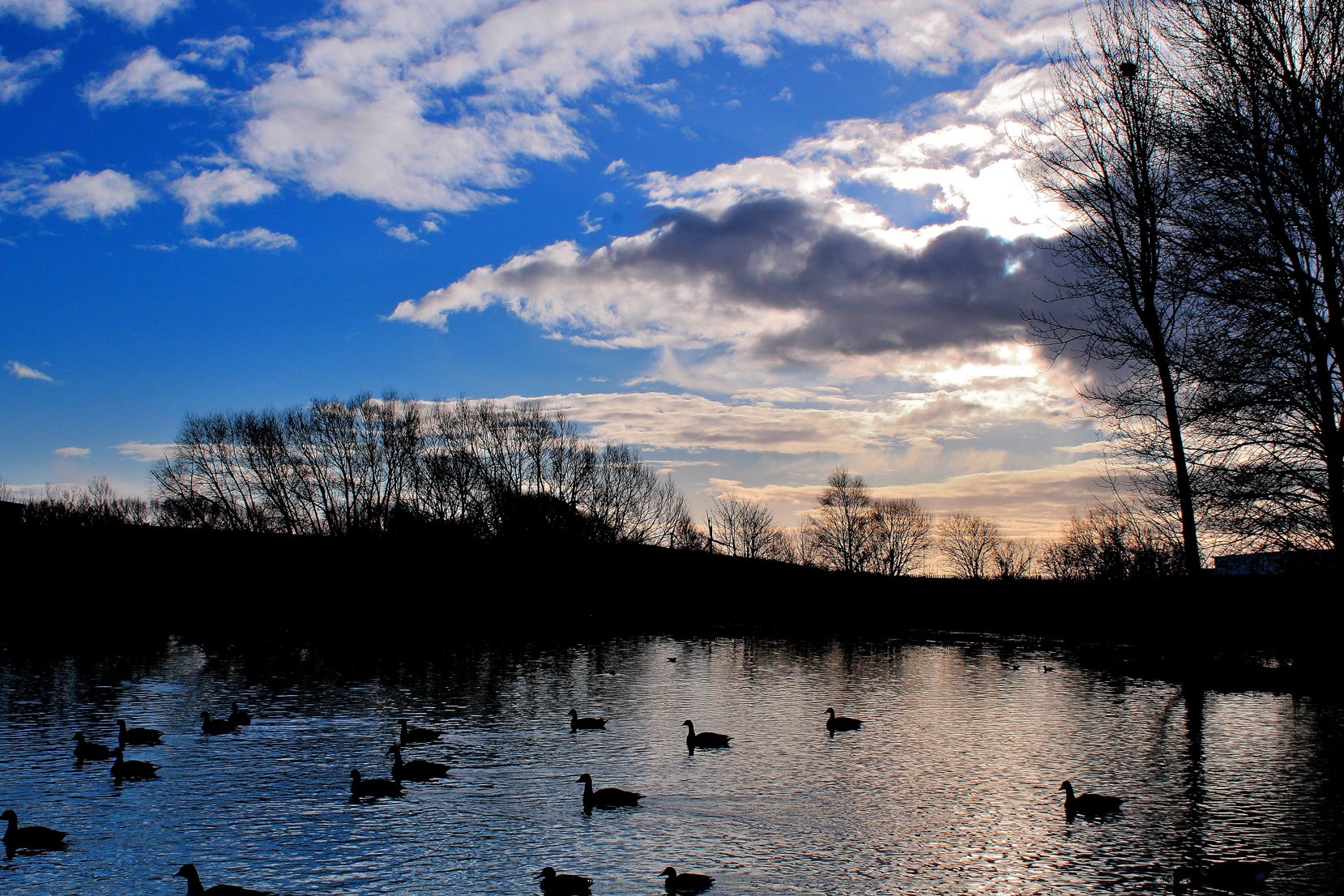
The colliery has gone with the rest of Grimethorpe's mining landscape. Ferrymoor Flash, the sheet of water left where the ground subsided, lies on the site and is now open ground on the edge of the village; Ferrymoor Way and a school house named after the pit keep the name in use.
Nothing of the colliery; Ferrymoor Flash, the subsidence water on the site, is open ground.
Related mines
- Grimethorpe Colliery — Ferrymoor was started in 1915 six hundred metres from Grimethorpe Colliery as the village's second pit, and both were absorbed into the Carlton Main Colliery Company's operations by 1919.
- Hodroyd Colliery — Ferrymoor was sunk by the Hodroyd Colliery Company from 1915.
- South Kirkby Colliery — Ferrymoor was linked underground with South Kirkby in 1969 and the two were merged into Ferrymoor-Riddings-South Kirkby Colliery, which closed in 1988.
Nearby mines
- Hodroyd Colliery — 1.3 miles (2.1 km) N
- Monk Bretton Colliery — 1.3 miles (2.1 km) W
- Grimethorpe Colliery — 1.4 miles (2.2 km) SW
- Dearne Valley Colliery — 1.6 miles (2.6 km) SE
- Houghton Main Colliery — 1.8 miles (2.8 km) S
Straight-line distance, within 9 miles (15 km). Show on the map.
What's uncertain
Points where sources disagree or the record could not be settled; both accounts are kept. All open questions in the archive.
- The BGS mine-plans catalogue holds a Mining Remediation Authority abandonment plan titled 'Ferrymoor Colliery' (catalogue SFE318, Surface Electrical Plan, undated in the catalogue); the catalogue gives no location and the plan's details do not clearly tie it to this working, so it may belong to another of the same name. (uncertain) 3
Recorded claims
Individual factual claims, each attached to the source(s) that support it below. Where sources disagree, both are kept.
- A second pit was started 600 metres from Grimethorpe Colliery in 1915; Ferrymoor was a drift mine, locating coal seams at an angle from the surface. 1
- Ferrymoor was sunk in 1915-16 and is 72 yards deep, working the Shafton seam. 2
- The colliery operated a pillar and stall system until 1965 and was then wholly mechanised, with 520 people producing 163,000 tons from the Shafton seam according to a National Coal Board leaflet of 1967. 2
- Ferrymoor employed 253 people in 1947, 211 of them below ground, raising 99,000 tons; by 1954 it employed 462. 2
- Ferrymoor linked underground with the nearby Riddings and South Kirkby collieries in 1969. 1
- Ferrymoor-Riddings-South Kirkby Colliery, though the top mine for productivity in Britain at eight tons per man-shift, was closed in 1988. 1
- The BGS mine-plans catalogue holds a Mining Remediation Authority abandonment plan titled 'Ferrymoor Colliery' (catalogue SFE318, Surface Electrical Plan, undated in the catalogue); the catalogue gives no location and the plan's details do not clearly tie it to this working, so it may belong to another of the same name. (uncertain) 3
Photographs & further reading
Location, output, employment and seams from the Colliery Year Book and the Guide to the Coalfields, with the National Coal Board’s own 1967 description of the drift.
View sourceA Royal Geographical Society walk narrated by people who worked the Grimethorpe pits, covering Ferrymoor’s sinking, its mergers and the closures of 1988 and 1993.
View sourceSources
- (secondary) Grimethorpe: a self-guided walk — Discovering Britain (Royal Geographical Society)
- (primary) Durham Mining Museum: Ferrymoor Colliery — Durham Mining Museum, from the 1924 Mines Inspectors Report, the 1947 Colliery Year Book and the 1954 Guide to the Coalfields
- (primary) BGS / Mining Remediation Authority mine plans: FERRYMOOR COLLIERY — British Geological Survey / Mining Remediation Authority
- (observational) Ferrymoor Flash, Grimethorpe (photographed 2017) — Geograph Britain and Ireland, Tom Curtis
Record created: 9 September 2026 · Last researched: 9 September 2026