 MineArchive
Fallowfield Mine
| Also known as | Fallowfield Lead Mine, Fallowfield Witherite Mine |
|---|---|
| Location | Acomb, near Hexham, Tyne Valley, Northumberland — 55.0047, -2.1000 (approximate) |
| Commodities | Witherite, Barite, Lead |
| Type | Metal |
| Worked | From 1611–1911 |
| Operators | John Errington (1600–1650), Walton and Cooper (1788–1870) |
Overview
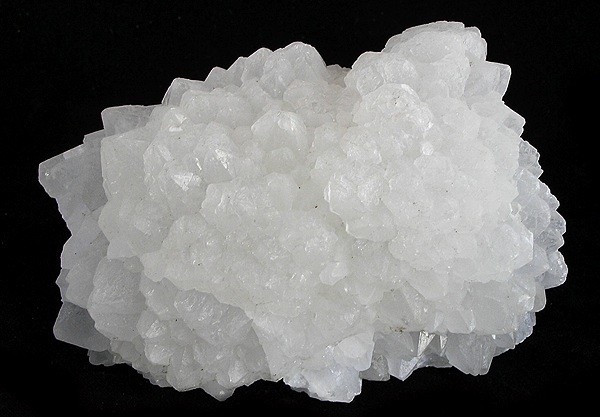
A lead mine near Hadrian's Wall that ran out of lead and found something better in its own waste tips: in 1845 it turned to the witherite it had been throwing away, and became the first commercial witherite mine in the world.
History
Fallowfield lies in St John's Lee parish about two miles north of Hexham, very near the line of Hadrian's Wall, and was probably worked in Roman times. It is thought to have been worked again in the Middle Ages by the monks of Hexham Abbey, who used its lead to roof the abbey. The earliest documentary trace is a petition of 1611 lodged against Sir John Fenwick by the mine's owner, John Errington. In 1788 the Blacketts leased the mines to Jacob Walton and John Cooper, and by the end of the century the richest part of the vein had been taken out in the search for lead. What saved the mine was a change of mind about what counted as ore. In 1845, with lead production falling away, Walton and Cooper began working the vein for the witherite and barite they had until then discarded as waste, and from 1846 Fallowfield was reworked as the world's first commercial witherite mine. It stayed one of only two significant British sources of the mineral until it closed in 1911, probably beaten by competition from Settlingstones a few miles to the west.
Geology
The Fallowfield vein carries galena with barium minerals — barite, witherite and the rarer alstonite and barytocalcite — in the Carboniferous rocks of the Tyne valley, on the northern fringe of the great Northern Pennine orefield. Witherite, barium carbonate, is uncommon anywhere in the world in quantity, and the fact that two of its very few commercial sources lay within a few miles of each other in Northumberland is the reason Britain supplied the mineral to the world. It has made the mine a noted locality for collectors.
Geological setting: Veins and Lodes (well documented example)
Workings
The workings extend for roughly a mile and a half along the vein. The mine's later life is unusually well recorded for a Victorian metal mine: a plan was drawn in April 1942, K. C. Dunham compiled sections of twelve boreholes for a Fallowfield prospect in 1959, and a formal abandonment was registered on 31 March 1960 — nearly half a century after commercial working stopped, the ground was still being re-examined.
Closure
Reworking for witherite ran from 1846 to 1911, when the mine closed, most likely because it could not compete with Settlingstones in what was a very small market. The 1959 prospect and the 1960 abandonment record show the ground being assessed once more in the mid-20th century without work resuming.
What remains
Abandoned. It remains best known as a mineral locality — Fallowfield witherite is held in museum and historic collections around the world.
A level in Fallowfield Dene and associated spoil; nothing on the scale of the Pennine lead mines further south.
Redevelopment
None.
Nearby mines
- Tynedale Colliery — 0.9 miles (1.5 km) S
- Acomb Colliery — 1.2 miles (2.0 km) S
- Brunton Bank Quarry — 1.4 miles (2.3 km) N
- Fourstones Colliery — 3.1 miles (4.9 km) W
- Stagshaw Bank Colliery — 3.1 miles (4.9 km) E
Straight-line distance, within 9 miles (15 km). Show on the map.
What's uncertain
Points where sources disagree or the record could not be settled; both accounts are kept. All open questions in the archive.
- The mine was probably worked in Roman times — it lies very near the line of Hadrian's Wall — and is thought to have been worked in the Middle Ages by the monks of Hexham Abbey, who used the lead to roof the abbey. (uncertain) 1
Recorded claims
Individual factual claims, each attached to the source(s) that support it below. Where sources disagree, both are kept.
- The mine was probably worked in Roman times — it lies very near the line of Hadrian's Wall — and is thought to have been worked in the Middle Ages by the monks of Hexham Abbey, who used the lead to roof the abbey. (uncertain) 1
- The earliest documentary reference is a petition of 1611 lodged against Sir John Fenwick by the mine's owner, John Errington. 1
- In 1788 the Blacketts leased the mines to Jacob Walton and John Cooper; by the end of the 1700s the richest part of the vein had been worked out for lead. 1
- In 1845, with lead production declining, Walton and Cooper began working the vein for witherite and barite that had until then been discarded as waste, establishing the world's first commercial witherite mine. 1
- Reworking for witherite began in 1846 and continued until 1911; Fallowfield remained one of only two main sources of witherite in the British Isles, the other being Settlingstones a few miles to the west. 1
- The mine closed in 1911, possibly because of competition from the nearby Settlingstones mine in a limited market. 1
- The workings extend for roughly a mile and a half. 2
- Besides witherite and barite, the vein has yielded alstonite and barytocalcite, making Fallowfield a noted locality for barium minerals. 2
- A mine plan was drawn in April 1942, K. C. Dunham compiled sections of twelve boreholes for a Fallowfield prospect in 1959, and an abandonment was registered on 31 March 1960. 3
Sources
- (secondary) The Fallowfield mine — Mineralogical Record (via The Free Library)
- (secondary) Fallowfield Mine, Acomb, Northumberland — Mindat
- (primary) Mine plans SP2059, SP2307, SP2308 and OM15186: Fallowfield — British Geological Survey / Mining Remediation Authority mine plans catalogue
Record created: 24 August 2026 · Last researched: 24 August 2026