 MineArchive
Easington Colliery
| Location | Easington Colliery, County Durham — 54.7868, -1.3291 (exact) |
|---|---|
| Commodity | Coal |
| Type | Coal |
| Worked | 1899 (sinking)–1993 |
| Maximum depth | 1,500 feet (Hutton seam) |
| Operators | Easington Coal Company (1899–1947), National Coal Board (1947–1993) |
Overview
Easington Colliery worked coal seams reaching miles out under the North Sea for over eighty years, and was the last pit in the Durham coalfield to close — but it is remembered above all for the explosion that killed 83 men in 1951, one of the worst British mining disasters of the 20th century.
History
Sinking of the colliery began in 1899, but water-bearing strata delayed the start of coal-getting until 1910. Two shafts eventually reached the Hutton seam at depths of around 1,430 and 1,500 feet, and the colliery went on to work five seams in total — the Five Quarter, Seven Quarter, Main Coal, Low Main and Hutton — with workings that by the mid-20th century extended miles out beneath the North Sea. The pit drew a substantial workforce to the new colliery village built around it, reaching a peak of 3,242 men in 1930 and remaining above 2,500 for most of its working life. On 29 May 1951 an explosion in the Fifth (or 'Duckbill') district killed 81 miners outright, with two further rescue workers later dying from the effects of afterdamp, bringing the toll to 83 — one of the worst British colliery disasters since nationalisation. Easington nonetheless continued working for another four decades. As late as 1991 it still employed 1,898 miners, but on 7 May 1993 it became the last colliery in the Durham coalfield to close, with the loss of 1,400 jobs. Until 1947 the colliery belonged to the Easington Coal Company, one of the nine companies of the Furness and Gainsford combine.
Geology
The colliery worked Carboniferous coal seams of the Durham Coalfield, extracting from the Five Quarter, Seven Quarter, Main Coal, Low Main and Hutton seams via two shafts sunk through water-bearing strata to depths of around 1,430 and 1,500 feet; by the mid-20th century its workings extended several miles out under the North Sea.
Geological setting: Sedimentary Beds and Seams (well documented example)
Workings
Two shafts reached the Hutton seam at depths of around 1,430 and 1,500 feet; the colliery worked five seams over its history and, unusually, extended its underground workings several miles out beneath the North Sea.
Closure
Easington closed on 7 May 1993, the last working colliery in the Durham coalfield, with the loss of 1,400 jobs; the pit shaft headgear was demolished the following year.
What remains
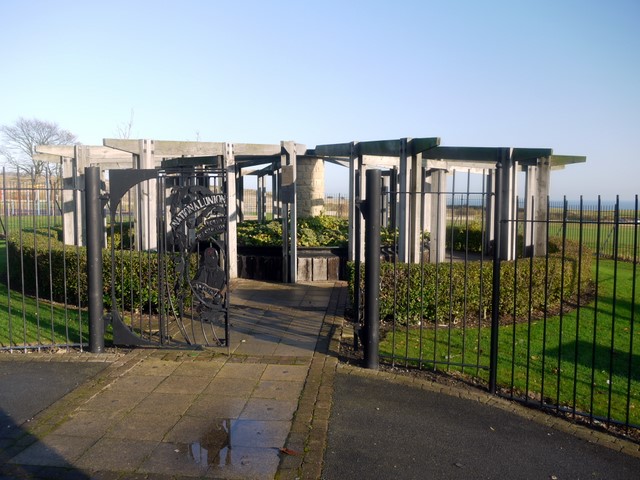
The colliery site has been redeveloped; the former colliery pay office, now housing the Easington Colliery Band, is the last physical structure remaining from the pit itself, on what is now Memorial Gardens.
The former colliery pay office survives as the home of the Easington Colliery Band; Memorial Gardens, opened in 2001 on part of the former colliery site, commemorates all who worked and served at the pit from 1899 to 1993, and specifically the 83 men killed in the 1951 explosion.
Nearby mines
- Horden Colliery — 1.4 miles (2.3 km) SE
- Dawdon Colliery — 2.5 miles (4.1 km) N
- Hawthorn Combined Mine — 2.9 miles (4.6 km) NW
- Murton Colliery — 2.9 miles (4.6 km) NW
- Shotton Colliery — 3.2 miles (5.1 km) SW
Straight-line distance, within 9 miles (15 km). Show on the map.
Disasters & major incidents
-
Easington Colliery explosion, 1951
29 May 1951 · Explosion · 83 fatalities
An underground explosion in the Fifth ('Duckbill') district of Easington Colliery killed 81 miners outright, with two rescue workers later dying from the effects of afterdamp — one of the worst British colliery disasters of the 20th century.
Culture
- Billy Elliot (Screen)
The film's 'Everington' was shot in Easington Colliery village in 1999, six years after the pit closed, with about 400 villagers as extras. - Easington Colliery Band (Music)
The band was Easington Colliery's own from its founding until the pit closed in 1993, and still carries its name.
Recorded claims
Individual factual claims, each attached to the source(s) that support it below. Where sources disagree, both are kept.
- The colliery's two shafts reached the Hutton seam at depths of around 1,430 and 1,500 feet; workforce peaked at 3,242 men in 1930 and remained above 2,500 for most of the pit's working life. 1,2
- Easington closed on 7 May 1993, the last pit in the Durham coalfield to close, with the loss of 1,400 jobs. 1,2
- Easington was owned by the Easington Coal Company, part of the Furness and Gainsford group of nine colliery companies, one of the Durham coalfield's important combines, until nationalisation in 1947. 2
- The Mining Remediation Authority holds abandonment plan D1257 for the Hutton seam at Easington, abandoned on 12 November 1968, the first of a long run of Easington plans in the catalogue. 3
- Located at about 54.787 N, 1.329 W. 1
Photographs & further reading
The university's case study of the pit, its owners, the 1951 explosion and the 1993 closure.
View sourceSources
- (secondary) Easington Colliery — Wikipedia
- (secondary) Easington - Coal and Community case study — University of Wolverhampton
- (primary) EASINGTON (Mine Remediation Authority abandonment plan D1257, BGS mine plans catalogue) — British Geological Survey / Mining Remediation Authority
- (primary) EASINGTON mine plans (Hutton 'L' seam abandonment plans, 1968) — British Geological Survey / The Coal Authority
Record created: 23 August 2026 · Last researched: 24 September 2026