 MineArchive
Colliery Band
| Also known as | Colliery Brass Band, Pit Band, Colliery Silver Band |
|---|---|
| Category | Law & Custom |
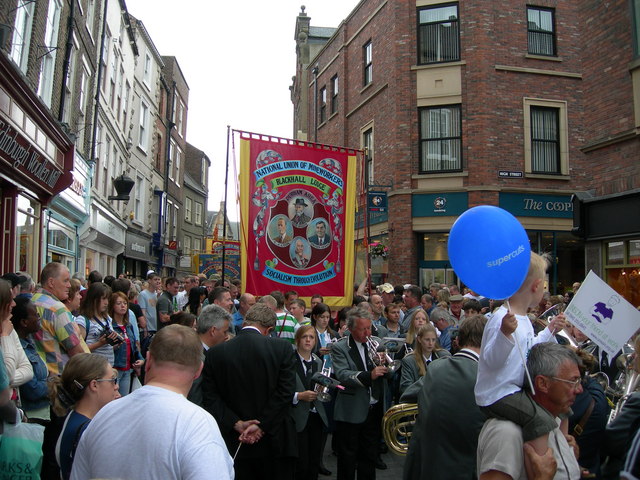
A brass band attached to a colliery or a pit community, sponsored by the owners and later by the National Coal Board or paid for out of the men's wages, that played for the village, marched behind the lodge banner and competed in the contests that are the brass band movement's league.
Historical usage
Brass bands grew out of the village, church and regimental bands of the Napoleonic wars; the first civilian brass bands appeared by the end of the 1820s, and Adolphe Sax's valved instruments from the 1840s made them easy to play. Industrial employers took them up to promote discipline, community spirit and temperance among their workers, and in the coalfields a band became the mark of a colliery: in Britain the brass band is known regionally as the colliery band. John Jennison staged the first British open championship at Belle Vue in Manchester in 1853 before a crowd of over 16,000 and it ran every year until 1981; the Nationals have been held since 1900, and the movement peaked in the 1890s with around 5,000 bands. Backworth Colliery Band dates from 1886. Grimethorpe Colliery Band was formed in 1917 by members of the disbanded Cudworth Colliery Band as a leisure activity for the men, played Belle Vue the next year, was on national radio every month from 1941 to 1951 and in 1974, with Black Dyke, became the first brass band to play at the Proms. On Vesting Day, 5 January 1947, Ollerton's band marched with the NCB flag at Cinder Hill, and the Board found itself owner of an inheritance of colliery and village bands funded by deductions from the men's wages.
How it worked
A band of some twenty-seven to twenty-nine players, cornets, horns, euphoniums, trombones, basses and percussion, rehearsed in a bandroom the colliery provided and drew its players from the pit, the best of whom were offered a job and a seat in the band. Contests run on a league with promotion and relegation; the Daily Herald sponsored them after 1948, including for a time the Nationals, and coalfield galas had their own, like the prize for best marching band that Bestwood Colliery's Black Diamonds took at the Berry Hill gala in 1954. At the Durham Miners' Gala, held since 1871, each lodge banner is marched to the racecourse behind a band.
Why it was used
For the owners a band kept the men from organising in radical groups and gave the village a respectable pride; for the men it was music, status and the voice of the lodge on gala day. With the pits gone, the band is often the one thing that keeps a colliery's name alive.
Risks & limitations
A sponsored band lives at the sponsor's pleasure. The closures of the 1980s and 1990s took away the colliery and the sponsor together, and many bands folded, found new names or drew their players from other trades. Grimethorpe Colliery closed on 13 October 1992 and four days later the band won the National Championship at the Royal Albert Hall with 99 marks out of 100, the story that became the film Brassed Off; it was then sponsored by RJB Mining, UK Coal and Powerfuel in turn.
Regional variation
Silver band and brass band mean the same thing, the silver bands once being those that could afford plated instruments; silver bands are now mostly southern and brass bands northern. Colliery bands belong above all to Yorkshire, the North East, Nottinghamshire and South Wales, where Carlton Main Frickley, Grimethorpe and Backworth carry on under their pits' names.
Related terminology
Miners' Strike, Miners' Welfare Fund, National Union of Mineworkers
Mines associated with this term
5 examples chosen from 11 linked records — the term page is not an index.
- Grimethorpe Colliery — South Yorkshire (well documented example)
Named 3 times in this record, first in the summary: “…industrial town of thousands, home to the world-renowned Grimethorpe Colliery Band, and whose 1993 closure — while still profitable — left the village…” - Maerdy Colliery — Rhondda Cynon Taf (well documented example)
Named in this record’s history: “…to work on 5 March 1985, marching behind their union banners and the colliery band. By the time of closure the workforce had fallen from a 1963 peak…” - Bannockburn Colliery — Stirling (well documented example)
Named in this record’s summary: “…people within thirty years, and gave its name to an award-winning colliery silver band still remembered at Stirling's Smith Art Gallery and Museum today.” - Barrow Colliery, Worsbrough — South Yorkshire (well documented example)
Named in this record’s history: “…1985, the colliery closed because of geological problems. The Barrow Colliery Brass Band, formed in 1906 and renamed for the pit, survives.” - Easington Colliery — County Durham (well documented example)
Named twice in this record, first in the current condition: “…the former colliery pay office, now housing the Easington Colliery Band, is the last physical structure remaining from the pit itself, on…”
Sources
- (secondary) Backworth Colliery Band — Wikipedia
- (secondary) British brass band — Wikipedia
- (secondary) Celebrating our brass band tradition — Nottinghamshire Mining Museum
- (secondary) Durham Miners' Gala — Wikipedia
- (secondary) Grimethorpe Colliery Band — Wikipedia
Record created: 18 October 2026 · Last researched: 18 October 2026