 MineArchive
Craig-y-Mwyn Mine
| Location | Cwm Rhaeadr, Llanrhaeadr-ym-Mochnant, Berwyn Mountains, Powys — 52.8447, -3.3741 (exact) |
|---|---|
| Commodity | Lead |
| Type | Metal |
| Worked | 1692–19th century (exact final date unrecorded) |
| Operators | Powis Estate (1692–?) |
Overview
Craig-y-Mwyn, high in the Berwyn Mountains at the head of Cwm Rhaeadr, was opened in 1692 and went on to earn the Powis Estate an annual revenue of £20,000 — while leaving behind some of the best-preserved hushing remains anywhere in Britain, evidence of lead-streaming techniques that may go back to the Roman period.
History
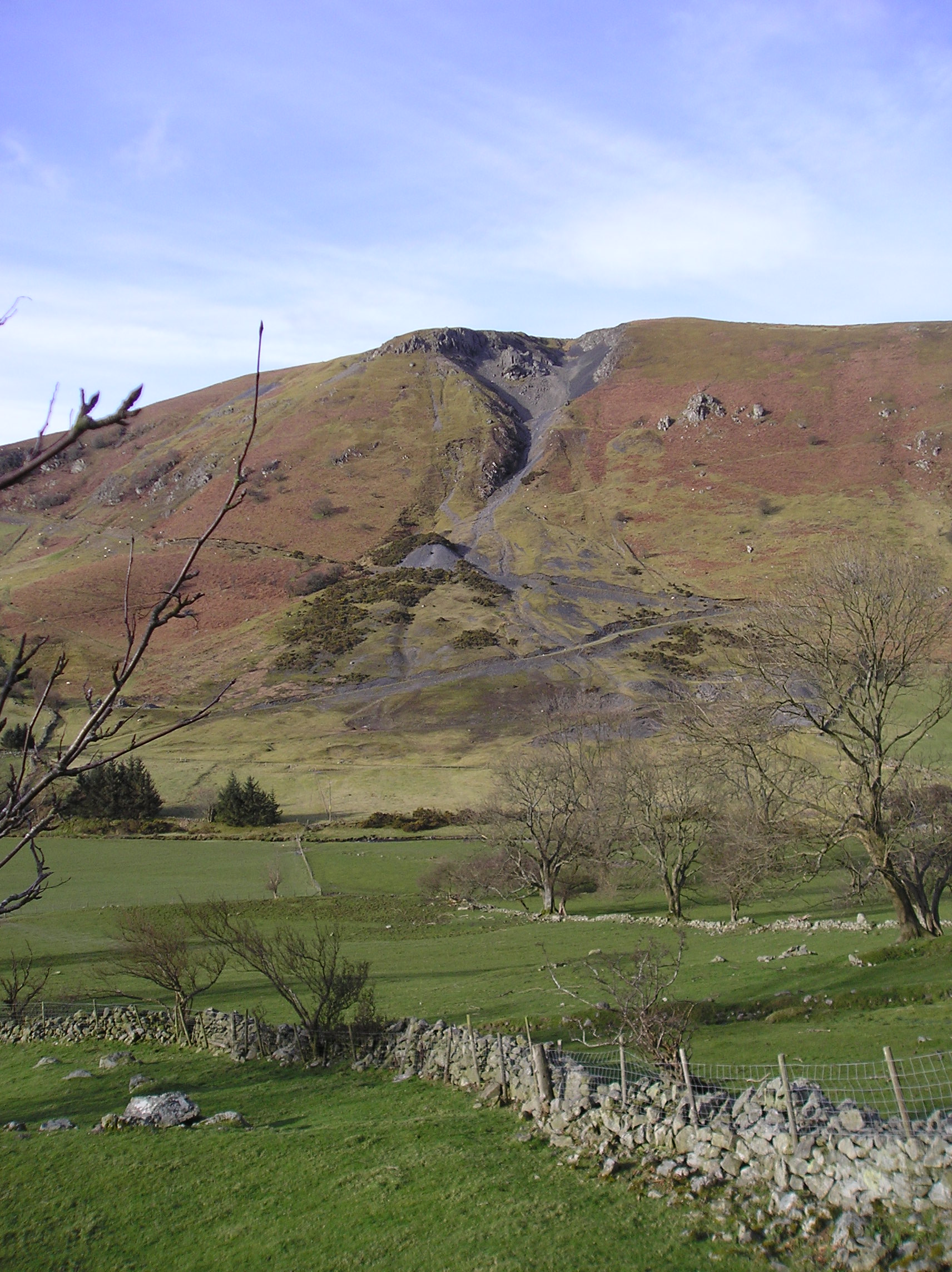
A very rich lead mine was opened at Craig-y-Mwyn in 1692 and worked for many years, yielding the Powis Estate an annual revenue of some £20,000 at its height. The mine continued working into the 19th century, with surviving datable features from as early as the mid-18th century, when the Powis Estate was working it directly; a shaft on the site is dated to 1747. Mining may have taken place at Craig-y-Mwyn and the neighbouring Cwm Orog workings during the Roman period, though the extensive Great Opencast on the site has not itself been securely dated and its origins may be older still. The site preserves an unusually complete hushing system — channels, watercourses and reservoirs built to release a sudden torrent of water and strip away surface material to expose the ore beneath — considered among the best-surviving examples of the technique anywhere in the country.
Geology
The mine worked a lead vein within the Berwyn Mountains, part of the wider Central Wales orefield of hydrothermal, non-magmatic mineralised veins also worked at Grogwynion and Llywernog to the south.
Geological setting: Hydrothermal Deposits (well documented example), Veins and Lodes (well documented example)
Workings
The mine combined a shaft, dated to 1747, and underground levels with an extensive hushing system of channels, watercourses, reservoirs and the Great Opencast, used to strip surface material by controlled flooding and expose the lead vein beneath; building platforms survive alongside the workings.
Closure
The mine continued working into the 19th century, though the closure date is not known.
What remains
The site preserves an unusually complete hushing system — the channels, watercourses and reservoirs built to release a sudden torrent of water down the hillside.
Hushing channels, watercourses, former ponds and reservoirs, spoil tips, the 1747 shaft, levels and building platforms survive at the site, among the best-preserved examples of early hushing technique in Britain.
Nearby mines
- Cynwyd Forest Quarry — 7.3 miles (11.7 km) N, Denbighshire
- Deeside and Moelfferna Quarries — 7.8 miles (12.6 km) N, Denbighshire
- Cambrian Quarry — 9.3 miles (14.9 km) NE, Wrexham
Straight-line distance, within 9 miles (15 km). Show on the map.
Recorded claims
Individual factual claims, each attached to the source(s) that support it below. Where sources disagree, both are kept.
- The mine yielded the Powis Estate an annual revenue of around £20,000 at its height following its 1692 opening. 1,2
- The site preserves an unusually complete hushing system of channels, watercourses and reservoirs alongside a shaft dated to 1747 and the extensive Great Opencast. 1
- Mining may have taken place at Craig-y-Mwyn during the Roman period, though the Great Opencast itself has not been securely dated and could be older still. 2
Sources
- (primary) Craig-y-Mwyn Lead Mine, Llanrhaeadr-ym-Mochnant, Powys — Ancient Monuments (Scheduled Monument record)
- (secondary) Craig y Mwyn — Early Mines Research Group
Record created: 22 August 2026 · Last researched: 22 August 2026