 MineArchive
Cleasby Mines
| Also known as | Stang and Cleasby Mines, Sloate Hole Mine, Nuthole Mine |
|---|---|
| Location | Faggergill, Arkengarthdale, North Yorkshire — 54.4650, -2.0730 (approximate) |
| Commodity | Lead |
| Type | Metal |
| Worked | 1907–1914 |
| Maximum depth | Unknown. These were levels driven into swallow holes near the top of the Main Limestone, not shaft workings. |
| Operators | Stang and Cleasby Mines (1908–1914) |
Overview
The last lead-mining venture in Arkengarthdale. Stang & Cleasby Lead Mines Ltd worked the Sloate Hole and Nuthole workings at Faggergill from 1907, driving levels into two swallow holes in the top of the Main Limestone and connecting to the older Faggergill levels. It raised 505 tons of concentrates between 1907 and 1912, was sold on that year, and made a small profit until the First World War. Its winding up in 1914 ended about eight hundred years of lead mining in the dale.
History
Lead mining in Yorkshire declined rapidly after 1872 and was moribund by 1900. The Arkengarthdale Mines closed in 1902 and Faggergill, which had produced handsome profits until 1887, was in steady decline. What followed was a last attempt on ground the older company had not taken.
In 1908 new strikes were made at Slot Hole and Nut Hole, found by driving levels into two swallow holes in the top part of the Main Limestone; the Nuthole working connected through to the Faggergill levels, whose total length has been calculated at around fifteen miles. Stang & Cleasby Lead Mines Ltd, formed in 1908, raised 505 tons of concentrates from its Sloate Hole Mine at Faggergill between 1907 and 1912. The mine was sold on in 1912 and continued to make a small profit until the war. With the price of lead falling and the cost of drilling rising, the company was wound up in 1914 — the end of about eight hundred years of lead mining in Arkengarthdale, and among the last workings anywhere in the Yorkshire orefield, Old Gang in Swaledale having closed in 1906.
Geology
The Yorkshire Pennine orefield, lead in the Carboniferous limestones and cherts of the dale sides. The older Faggergill working had followed the Old Vein, found in the chert beds above the Main Limestone before the nineteenth century. What Stang & Cleasby found was different in kind: ore reached by driving into two swallow holes in the top part of the Main Limestone, natural solution cavities rather than a vein standing on edge.
Geological setting: Veins and Lodes (well documented example)
Workings
Levels driven into the Sloate Hole and Nut Hole swallow holes, the Nuthole working connecting through into the Faggergill levels, of which there are four with multiple shafts and something like fifteen miles of tunnelling in total, most of it accomplished between 1840 and 1881. The Stang & Cleasby work was small: 505 tons of concentrates in five years, against the 1,777 tons a year the Old Gang mines had raised in the 1870s.
Closure
The company was wound up in 1914 with the lead price falling and drilling costs rising. It was the last lead-mining enterprise in Arkengarthdale, and its end closed a working history in the dale reckoned at about eight hundred years.
What remains
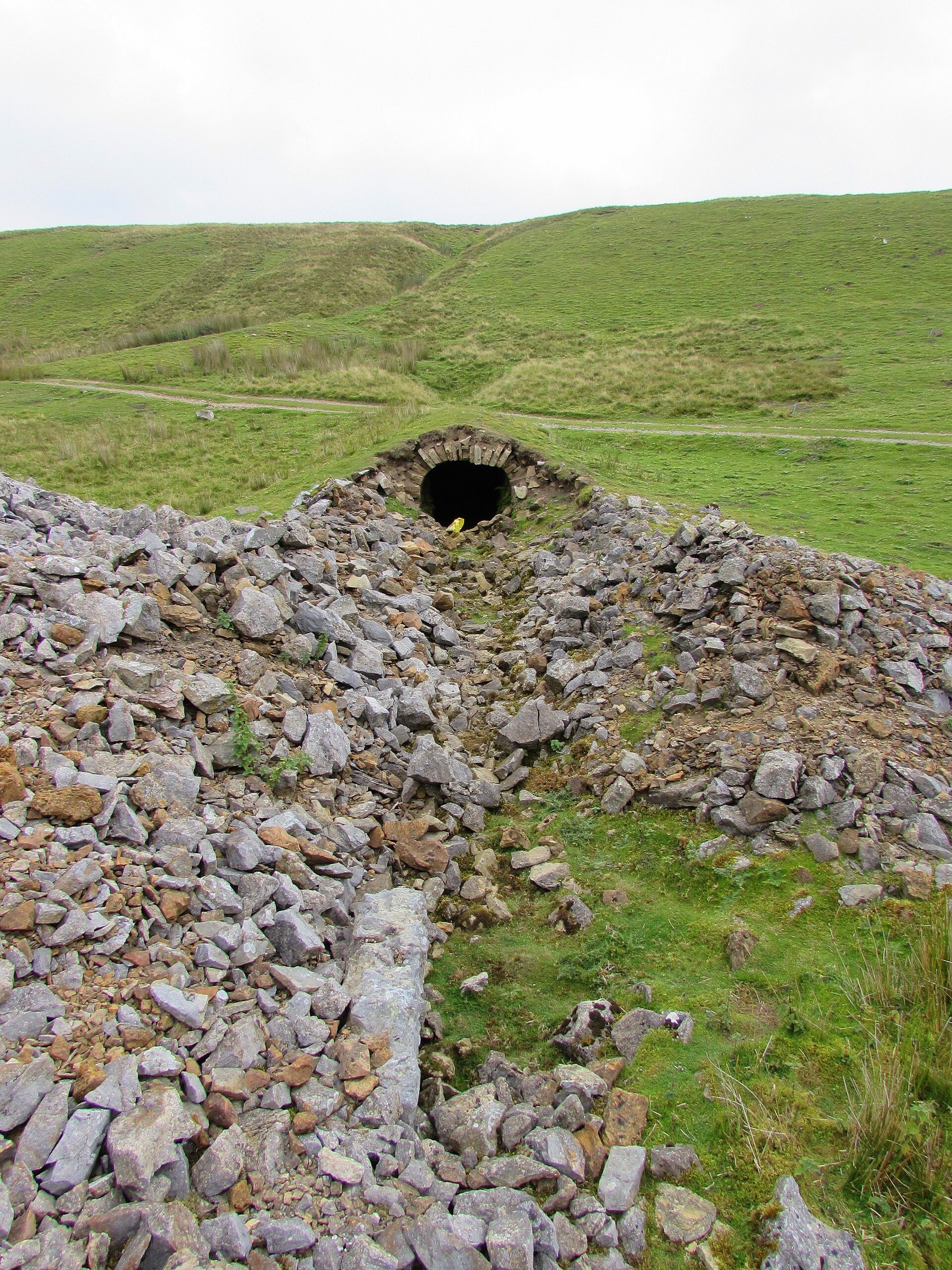
The Faggergill workings survive on the moor above Whaw as level mouths, shaft tops and spoil, one of four levels being visible in a 2015 photograph. The ground is open moor and the remains are unconsolidated.
Level mouths, shaft tops and spoil on the open moor above Whaw, unconsolidated.
Related mines
- Faggergill Mine — Stang & Cleasby worked the Sloate Hole and Nuthole ground at Faggergill itself, the Nuthole level connecting through into the older Faggergill workings; Cleasby is named on the Faggergill record.
Nearby mines
- Faggergill Mine — 1.9 miles (3.0 km) SE
- William Gill Colliery — 2.8 miles (4.5 km) SW
- Shaw Beck Gill Mine — 3.4 miles (5.5 km) SE
- Moulds Side Mine — 3.6 miles (5.7 km) SE
- Tan Hill Colliery — 3.6 miles (5.8 km) W
Straight-line distance, within 9 miles (15 km). Show on the map.
Recorded claims
Individual factual claims, each attached to the source(s) that support it below. Where sources disagree, both are kept.
- Stang & Cleasby Lead Mines Ltd raised 505 tons of concentrates from its Sloate Hole Mine at Faggergill between 1907 and 1912. 1
- New strikes were made at Slot Hole and Nut Hole in 1908, found by driving levels into two swallow holes in the top part of the Main Limestone. 2
- With the lead price falling and drilling costs rising the company was wound up in 1914, ending about eight hundred years of lead mining in Arkengarthdale. 2
- The Arkengarthdale Mines had closed in 1902 and Old Gang in Swaledale in 1906; against the 1,777 tons a year Old Gang raised in the 1870s, the Stang & Cleasby output of 505 tons over five years shows how little was left. 1
- BGS holds land survey plans at Murchison House of the Sloat Hole workings of Faggergill Mine (SP2136) and of Faggergill Mine (SP2135), Arkengarthdale; they are undated in the catalogue. 3
Photographs & further reading
A photograph of one of the four Faggergill levels, with an account of the mine's development, the 1870 strike that emptied families out of the dale, and the 1908 swallow-hole strikes that Stang & Cleasby worked.
View sourceSources
- (secondary) British Mining No. 55: lead mining in Yorkshire after 1872 — Northern Mine Research Society
- (observational) Faggergill Lead Mine — Geograph Britain and Ireland (Matthew Hatton)
- (primary) BGS / Mining Remediation Authority mine plans: PLAN OF SLOAT HOLE WORKINGS, FAGGERGILL MINE, ARKENGARTHDALE — British Geological Survey / Mining Remediation Authority
Record created: 9 September 2026 · Last researched: 9 September 2026