 MineArchive
Blantyre Colliery
| Location | High Blantyre, South Lanarkshire — 55.7961, -4.0964 (approximate) |
|---|---|
| Commodity | Coal |
| Type | Coal |
| Worked | 19th century–1957 |
| Maximum depth | Unknown. |
| Operators | William Dixon Ltd (1877–1957) |
Overview
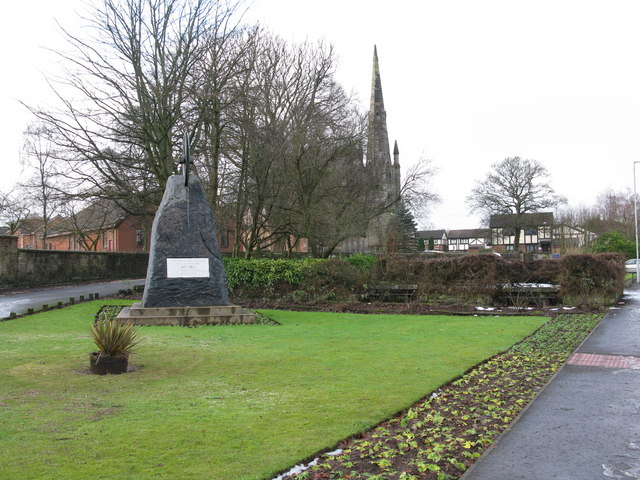
William Dixon's colliery at High Blantyre, worked through several numbered pits into the 20th century, and the site of Scotland's worst-ever mining disaster -- an 1877 firedamp explosion that killed 207 men and boys, followed by two further fatal accidents at the same group of pits within the next two years (see Disasters, below).
History
Dixon's operated three main pits at High Blantyre -- No. 1 on the site later occupied by Priestfield Cemetery, No. 2 on what is now part of Hamilton Technology Park, and No. 3 near the present Priestfield Industrial Estate -- with a fourth pit at Larkfield producing coal by 1878. On 22 October 1877 an explosion tore through Pits No. 2 and No. 3, killing 207 men and boys, the worst mining disaster in Scottish history (see Disasters, below); further fatal accidents followed at the same colliery group on 5 March 1878, when a winding accident at No. 3 pit killed six men, and on 2 July 1879, when a second firedamp explosion at No. 1 pit killed 28. Coal production at Blantyre finally came to a standstill in the first week of August 1957, when the shaft of No. 1 pit partially collapsed; the damage was judged irreparable and the colliery was closed for good. The Humph seam was given up in 1953, its abandonment plan passing to the Mining Remediation Authority with the colliery's others.
Geology
Coal of the Lanarkshire field; the seams worked are not recorded.
Workings
Worked through several numbered pits, with a fourth pit at Larkfield producing coal by 1878.
Closure
Ended in August 1957 after the shaft of No. 1 pit partially collapsed and was found to be beyond economic repair.
What remains
The colliery ground lies around what is now the Priestfield Industrial Estate.
Related mines
- Earnock Colliery — Neighbours in the same Hamilton and Blantyre coalfield, and Blantyre men worked at Earnock.
Nearby mines
- Auchinraith Colliery — 0.7 miles (1.1 km) SE
- Bardykes Colliery — 0.9 miles (1.5 km) NW
- Bothwell Castle Colliery — 1.1 miles (1.8 km) NE
- Greenfield Colliery — 1.5 miles (2.4 km) SE
- Dechmont Colliery — 1.6 miles (2.5 km) NW
Straight-line distance, within 9 miles (15 km). Show on the map.
Disasters & major incidents
-
Blantyre Mining Disaster
22 October 1877 · Explosion · 207 fatalities
A firedamp explosion tore through Pits No. 2 and No. 3 of William Dixon's colliery at High Blantyre on the morning of 22 October 1877, killing 207 men and boys -- the worst mining disaster in Scottish history. -
Blantyre Colliery No. 3 Pit overwinding, 1878
1878 · Winding / Shaft Accident · 6 fatalities
At 3.25 p.m. on 5 March 1878, four months after the great Blantyre explosion, the cage bringing seven men up No. 3 pit at William Dixon's Blantyre Colliery was wound past the landing into the cross beams. Six fell back down the shaft and were killed; one clung on and survived. -
Blantyre Colliery Explosion, 1879
2 July 1879 · Explosion · 28 fatalities
A second firedamp explosion at Dixon's Blantyre No. 1 pit, less than two years after the catastrophic 1877 disaster at the same colliery group, killed 28 men and boys.
Recorded claims
Individual factual claims, each attached to the source(s) that support it below. Where sources disagree, both are kept.
- Dixon's worked three main pits at High Blantyre (Nos. 1, 2 and 3) plus a fourth pit at Larkfield, producing coal there by 1878. 1
- Coal production at Blantyre ended in the first week of August 1957 after the shaft of No. 1 pit partially collapsed and was found impossible to repair. 1
- The Mining Remediation Authority holds abandonment plan S188 for the Humph seam at Blantyre, abandoned in 1953, four years before the colliery closed. 2
Photographs & further reading
A detailed local-history account of coal mining at Blantyre, including the Dixon's pits and their history.
View sourceSources
- (secondary) Blantyre Pit Disaster — Blantyre Project
- (primary) BLANTYRE (Mine Remediation Authority abandonment plan S188, BGS mine plans catalogue) — British Geological Survey / Mining Remediation Authority
- (secondary) Blantyre Colliery Explosion - Blantyre - 1879 — Northern Mine Research Society
- (secondary) Blantyre Colliery Explosion - High Blantyre - 1877 — Northern Mine Research Society
- (secondary) Blantyre mining disaster — Wikipedia
Record created: 30 August 2026 · Last researched: 24 September 2026