 MineArchive
Blantyre Mining Disaster
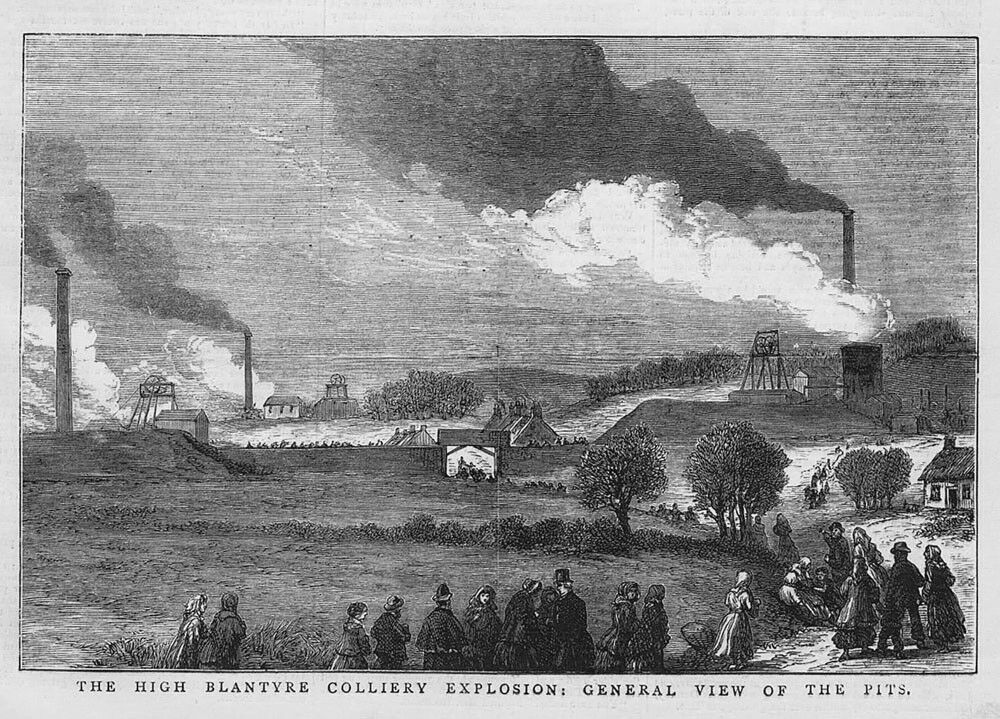
A firedamp explosion tore through Pits No. 2 and No. 3 of William Dixon's colliery at High Blantyre on the morning of 22 October 1877, killing 207 men and boys -- the worst mining disaster in Scottish history.
| Date | 22 October 1877 |
|---|---|
| Mine | Blantyre Colliery |
| Region | South Lanarkshire |
| Primary type | Explosion |
| Associated types | Gas / Asphyxiation |
| Fatalities | 207 (Contemporary and later sources give figures ranging from 207 to 215; 207 is the figure most consistently cited, including by the mines inspector's own contemporary tally of 101 dead in No. 2 pit and 106 in No. 3, with two more listed missing.) |
| Context | During active mining |
Cause
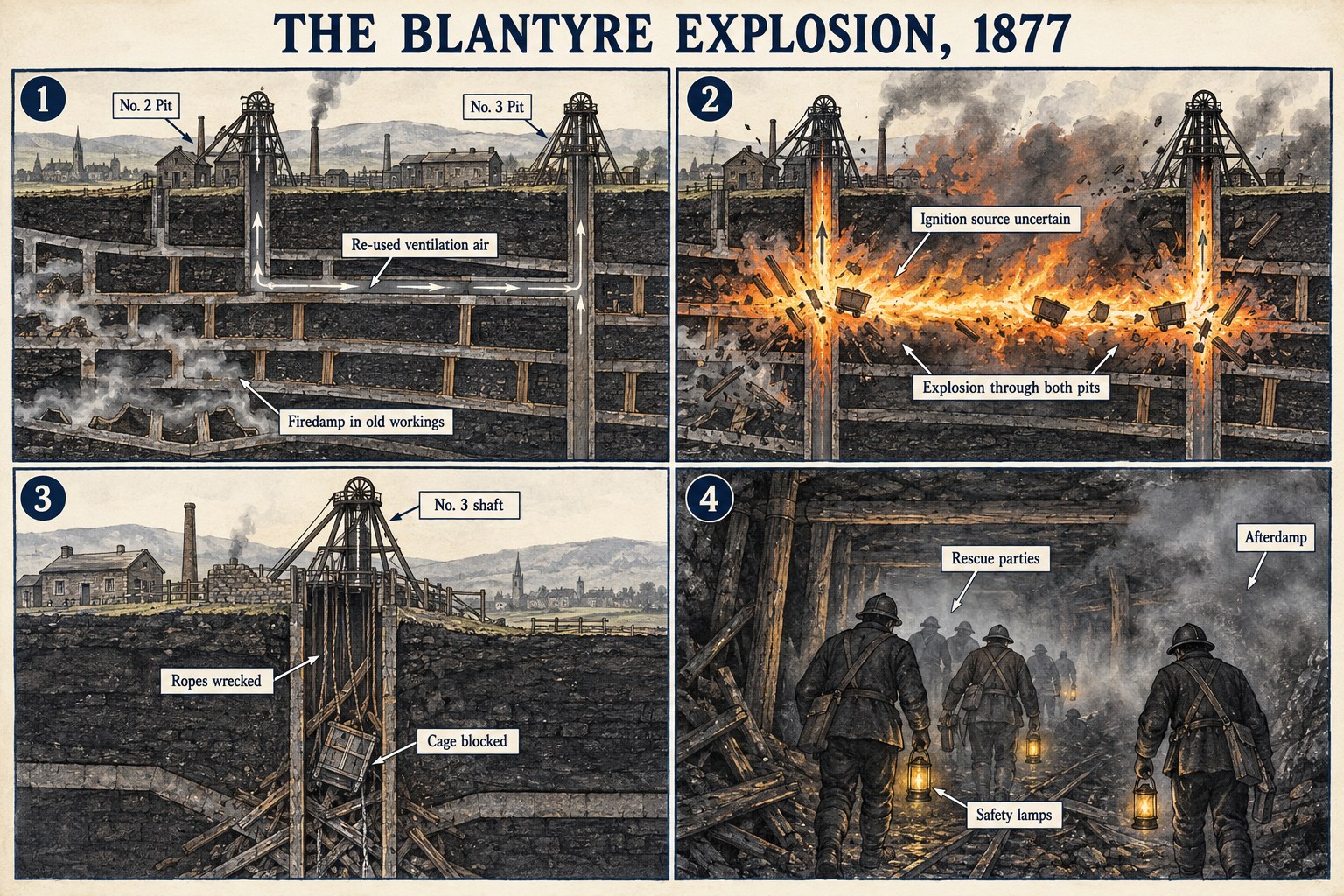
A firedamp (methane) explosion, most likely ignited by an open flame after gas accumulated in old pillar workings.
Contributing factors
The official inquiry identified inadequate ventilation -- including the practice of using air already drawn through No. 3 pit to ventilate No. 2 -- prohibited shot-firing that had nonetheless taken place in the pillar workings, and generally poor safety discipline.
What happened
The explosion struck at around 9am, tearing through both pits simultaneously. Twenty-three men escaped from the northern side of No. 2 pit, but the blast wrecked cages and ropes in No. 3 pit and blocked it with debris, trapping the men below. The youngest victim was just 11 years old; the disaster left 92 widows and 250 fatherless children.
Rescue & recovery
Rescue parties worked through the immediate aftermath and over the following days to recover bodies from both shafts. Four men found alive in the initial search all died of their injuries within the month. Afterdamp and fire risk hampered recovery; the mine was not declared gas-free until 1 November, more than a week after the explosion, with seventeen bodies eventually recovered from No. 3 pit alone.
Investigation & inquiry
A public inquiry examined 48 witnesses. It could not conclusively establish the exact source of ignition, but found multiple contributing failures -- poor ventilation practice, breaches of the shot-firing prohibition, and inadequate record-keeping of gas checks -- and recommended banning naked lights underground, requiring locked safety lamps, and improving the ventilation of old workings.
Legal & regulatory aftermath
Widows of the dead men found little mercy from the colliery that had employed their husbands: on 28 May 1878, six months after the disaster, Dixon's evicted 34 widows from tied cottages they had continued to occupy. A public relief fund, the Dixon's Widows' Fund, was raised to provide the bereaved families with some support. The disaster fed into the wider Victorian debate over mine safety regulation, though comprehensive legislative reform followed only gradually over subsequent decades.
Related terminology
Mining terms this disaster is structurally linked to, with the nature of the relationship.
- Afterdamp (contextual relationship)
Named in this record’s rescue and recovery: “…in the initial search all died of their injuries within the month. Afterdamp and fire risk hampered recovery; the mine was not declared gas-free…” - Cage (contextual relationship)
Named in this record’s narrative: “…escaped from the northern side of No. 2 pit, but the blast wrecked cages and ropes in No. 3 pit and blocked it with debris, trapping the men…” - Naked Light (contextual relationship)
Named in this record’s investigation: “…inadequate record-keeping of gas checks -- and recommended banning naked lights underground, requiring locked safety lamps, and improving the…” - Safety Lamp (contextual relationship)
Named in this record’s investigation: “…and recommended banning naked lights underground, requiring locked safety lamps, and improving the ventilation of old workings.” - Shot-firing (contextual relationship)
Named twice in this record, first in the contributing factors: “…air already drawn through No. 3 pit to ventilate No. 2 -- prohibited shot-firing that had nonetheless taken place in the pillar workings, and…”
Sources
- (secondary) Blantyre Colliery Explosion - High Blantyre - 1877 — Northern Mine Research Society
- (secondary) Blantyre Pit Disaster — Blantyre Project
- (secondary) Blantyre mining disaster — Wikipedia
Record created: 30 August 2026 · Last researched: 30 August 2026