 MineArchive
Allenheads Mines
| Also known as | Beaumont Mine |
|---|---|
| Location | Allenheads, Allen Valley, Northumberland — 54.8031, -2.2178 (approximate) |
| Commodities | Lead, Fluorspar |
| Type | Metal |
| Worked | 1684–1896 |
| Operators | Blackett-Beaumont family (1684–1896), British Steel Corporation (1969–1983) |
Overview
Allenheads, in the Pennines north of Weardale in Northumberland, was by the early 19th century the most important lead-mining centre in Britain — the flagship mine of the Blackett-Beaumont family — before closing in 1896.
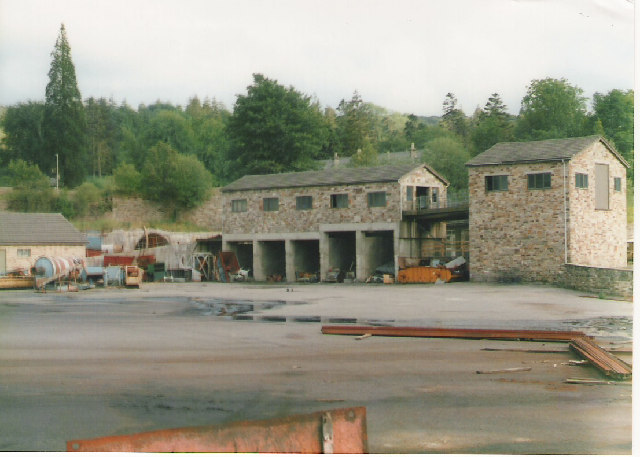
History
Lead mining in the Allen valleys is recorded from around 1684 under the Blackett family of Newcastle; through marriage, their mining interests and estates passed to the Wentworth Blackett Beaumont line, who by the 19th century were the dominant name in the Allendale lead trade, working the mine's Poverty, Sun, Diana and Blackett veins. Fawside Level, a horse level on the firestone side, was begun in Sir William Blackett's time and completed in 1776; the Gin Hill shaft was sunk by 1793. By the early 19th century Allenheads had become the most important lead-mining centre in Britain. All lead-working activity at the site ceased in 1896. The workings were briefly revisited in the 1970s, when the British Steel Corporation reopened part of the site as Beaumont Mine to explore for fluorspar, but it proved cheaper to source fluorite elsewhere, and by 1983 pumping had stopped and the venture was abandoned. Between 1729 and its 1896 closure the mine produced over 250,000 tons of lead ore ready for smelting -- for a time reputedly the largest silver-lead mine in the world. Allenheads itself grew up as a planned industrial village built by the Blackett-Beaumont enterprise for its workers and staff, and the mine's 1896 closure -- driven by cheap lead imports undercutting home production -- was a devastating blow to the community it had created.
Geology
The lead-bearing veins at Allenheads formed around 290 million years ago, when mineral-rich fluids, heated by the buried Weardale Granite, flowed through cracks in the surrounding rock and cooled to deposit lead ore, fluorite and other minerals.
Workings
Fawside Level (completed 1776) and the Gin Hill shaft (sunk by 1793) gave access to the Poverty, Sun, Diana and Blackett veins. The mine's sawmill housed an Armstrong Whitworth hydraulic engine, one of several hydraulic engines installed on site, whose drawings survive. Underground infrastructure by 1896 included four waterwheel-powered engines and seven whimseys (one underground), alongside a large crushing machine; the Fawside horse level, begun in Sir William Blackett's time in 1776, and the Gin Hill shaft, sunk by 1793, were among the mine's key workings.
Closure
All lead working at the site ceased in 1896; part of the ground was briefly reopened as Beaumont Mine in the 1970s to explore for fluorspar.
What remains
The old washing floor, mine shafts and surface buildings survive around the village, including listed Beaumont Mine tunnel entrances; the local economy today rests on agriculture and tourism, with an industrial heritage centre chronicling the mining industry.
Related mines
- Blackett Level — The Blackett Level was driven to unwater the deep workings at Allenheads, which is how its listing describes its purpose; it never reached them.
- Swinhope Mine — Swinhope's site was used to tip waste from the reopened Allenheads mine, and Gold Fields explored towards the Allenheads veins.
Nearby mines
- Frazer's Hush Mine — 1.5 miles (2.5 km) E, County Durham
- High Sedling Mine — 2.1 miles (3.3 km) S, County Durham
- Swinhope Mine — 2.3 miles (3.7 km) W
- Groverake Mine — 2.5 miles (4.0 km) E, County Durham
- Killhope Lead Mine — 2.6 miles (4.2 km) SW, County Durham
Straight-line distance, within 9 miles (15 km). Show on the map.
Recorded claims
Individual factual claims, each attached to the source(s) that support it below. Where sources disagree, both are kept.
- By the early 19th century, Allenheads was recognised as the most productive lead mine in the North Pennines and the most important lead-mining centre in Britain. 1
- Fawside Level, a horse level begun in Sir William Blackett's time, was completed in 1776; the Gin Hill shaft was sunk by 1793. 1
- All lead-working activity at Allenheads ceased in 1896, a closure that devastated the local community. 2
- The mine was briefly reopened by the British Steel Corporation in the 1970s as Beaumont Mine to explore for fluorspar, but the venture failed as it proved cheaper to source fluorite elsewhere; the site preserves an Armstrong Whitworth hydraulic engine, one of several installed in the mine's sawmill. 2
- Between 1729 and its 1896 closure, Allenheads produced over 250,000 tons of lead ore ready for smelting, and was for a time reputedly the largest silver-lead mine in the world. 3
- By 1896 the mine had four waterwheel-powered engines and seven whimseys underground; the Fawside horse level was begun in 1776 and the Gin Hill shaft sunk by 1793. 4,3
Sources
- (secondary) Allenheads Lead Mining District — Geological Society of London
- (secondary) Allenheads — Wikipedia
- (secondary) Allenheads lead ore works, Allendale, Northumberland — Ancient Monuments
- (secondary) Business structure of the Blackett and Beaumonts lead businesses — Dukesfield Smelters and Carriers Project
Record created: 20 August 2026 · Last researched: 1 September 2026