 MineArchive
Ashlar
| Also known as | Ashlar Masonry, Small Ashlar (Blocks shorter than about 30 centimetres.) |
|---|---|
| Category | Ore Processing |
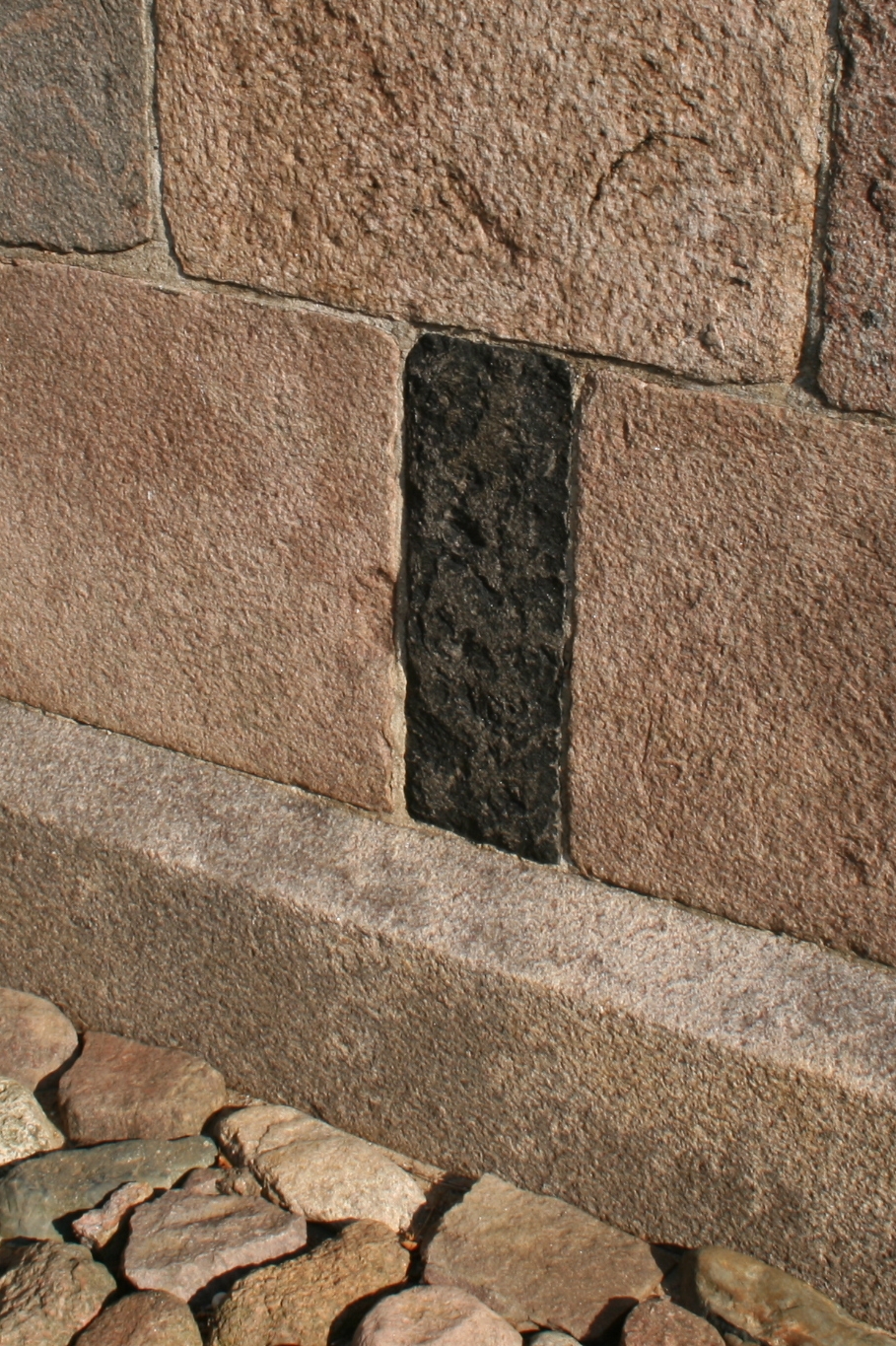
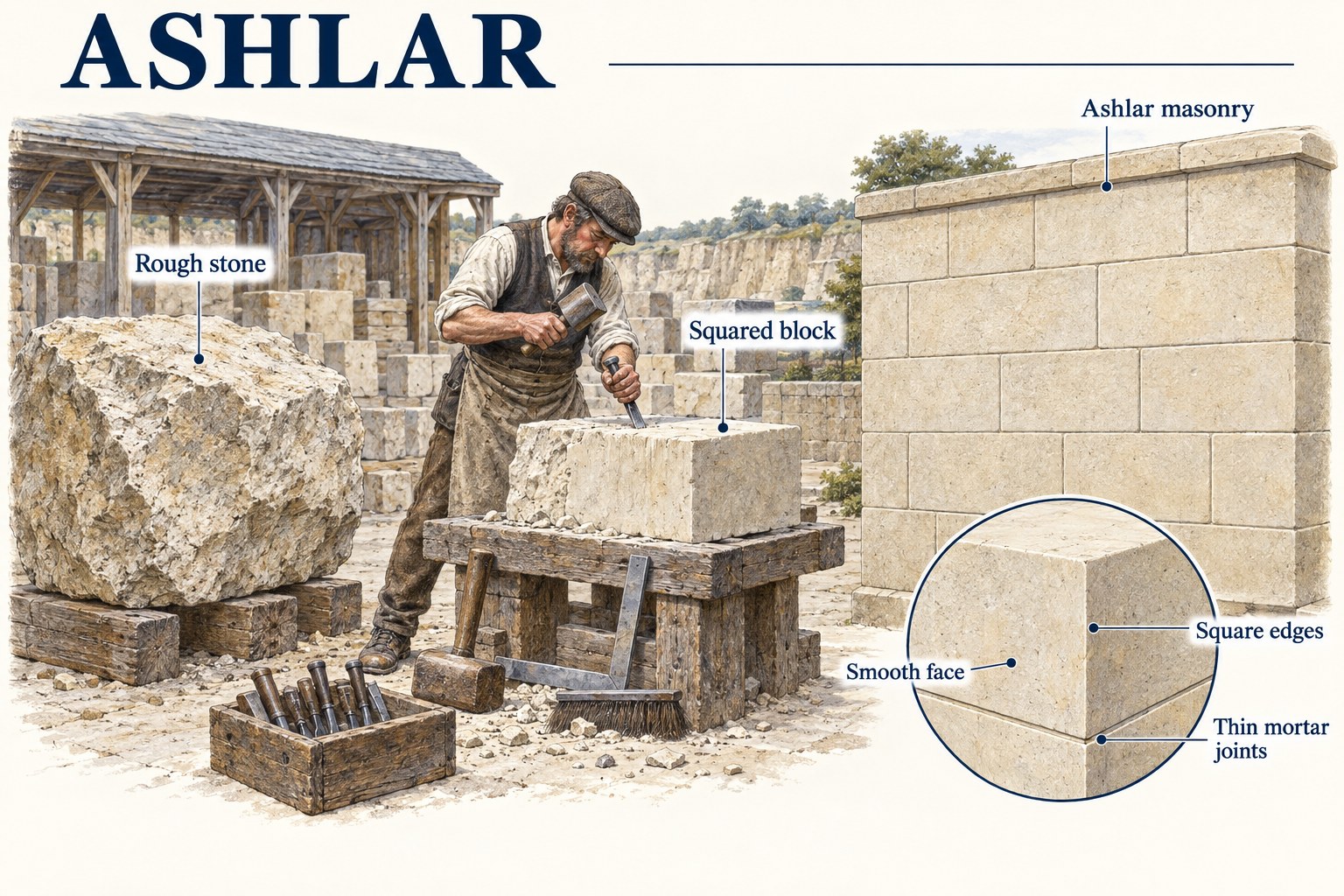
Building stone cut and dressed to true rectangular blocks with square edges and smooth faces, so that it can be laid with very thin mortar joints. Also the masonry built from it.
Historical usage
Ashlar is what a freestone quarry existed to supply. It is the most exacting and best-paid use of building stone, and the quarries that could produce it — Bath, Portland, Clipsham, Ancaster — built their reputations on it. Stone that could not be cut cleanly in every direction went instead to rubble walling: Barnack’s coarse shelly rag could be dressed into ashlar or used as rubble, but a finer oolite was reserved alongside it for the detailed carving.
How it worked
Blocks are worked true on all the faces that meet other stones, so the joints can be made thin. Faces are dressed smooth or polished, and can be decorated with fine parallel grooves drawn with a metal comb, a finish known as mason’s drag. Dressing rough stone by hand to a square or rectangular shape is sometimes called scabbling; blocks under about 30 centimetres high are called small ashlar.
Why it was used
Thin joints mean the stone carries the load rather than the mortar, which makes ashlar the strongest form of stone walling and the one used for monumental work. It is also the most expensive, which is why so many buildings are ashlar-faced over rubble or brick behind — including colliery buildings: Wynnstay’s winding engine house of about 1855 is ashlar-faced sandstone and is listed Grade II* today.
Risks & limitations
It demands stone that is both sound and freely workable in every direction, and it demands skilled banker masons to cut it. A quarry whose beds are shelly, shattered or strongly bedded can sell aggregate, walling or roadstone but not ashlar, and the difference between those markets is the difference between a local pit and a national one.
Regional variation
Masonry using irregular stone is rubble masonry; snecked masonry falls between the two. In Scotland the distinction between polished ashlar, droved ashlar and rubble is drawn finely in building descriptions.
Related terminology
Mines associated with this term
5 examples chosen from 10 linked records — the term page is not an index.
- Corncockle Quarry — Dumfries and Galloway (well documented example)
Named in this record’s workings: “…worked in benches, taking dimension stone in blocks large enough for ashlar building work rather than crushed aggregate. At its height it was…” - Ham Hill Quarries — Somerset (well documented example)
Named in this record’s geology: “…sawn, split and dressed, which is what makes it useful for blocks, ashlar and door and window surrounds.” - Aislaby Quarry — North Yorkshire (well documented example)
Named in this record’s geology: “…of the northern moors, and were quarried locally for freestone and ashlar wherever they came out. The building-stone study notes that…” - Ancaster Stone Quarries — Lincolnshire (well documented example)
Named in this record’s geology: “…Freestone, less coarsely fossiliferous and historically prized for ashlar and carved church stonework, with the Hard White and Freestone beds…” - Barnack Quarries — Cambridgeshire (well documented example)
Named in this record’s geology: “…a hard, coarse, richly shelly limestone that could be dressed into ashlar or used as rubble walling but does not cut cleanly in every…”
Sources
- (secondary) Ashlar — Wikipedia
- (secondary) Glossary of Building Terms — Black Mountain Quarries
Record created: 8 September 2026 · Last researched: 8 September 2026