 MineArchive
Corncockle Quarry
| Also known as | Dunhouse Quarry, Corncockle Muir Quarry |
|---|---|
| Location | Corncockle Muir, near Templand, Annandale, Dumfries and Galloway — 55.1695, -3.4354 (exact) |
| Commodity | Sandstone |
| Type | Stone |
| Worked | Early 19th century–Still active |
| Maximum depth | Surface quarrying; no depth figure applies. |
| Operators | Dunhouse Quarry Company |
Overview
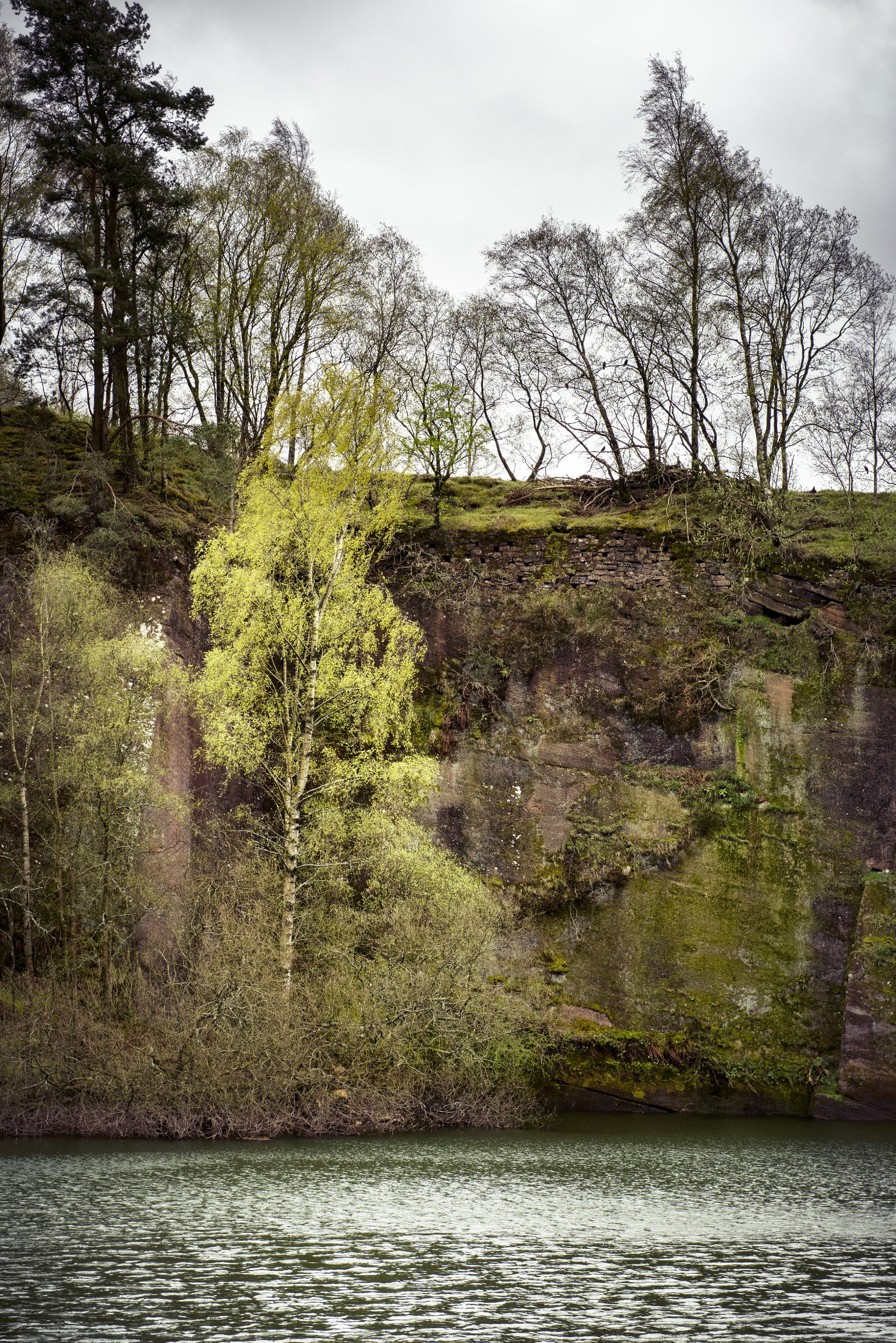
A large Permian sandstone quarry near Templand in Annandale, still worked today, whose stone built tenements in Edinburgh and Glasgow and brownstones in New York. Its greater claim is scientific: the fossil reptile trackways uncovered here in the 1820s were the first anywhere to be described scientifically, and the study of them gave the discipline of ichnology its name.
History
Corncockle Muir lay within the ancestral estate of the Jardine family. Quarrying exposed bedding planes carrying fossil footprints, which were described scientifically in 1828 by J. Grierson and by the Reverend Henry Duncan — the first such description anywhere. Duncan published his own account in the Transactions of the Royal Society of Edinburgh in 1831, and corresponded with William Buckland, who then described the prints himself. Sir William Jardine, whose estate it was, published The Ichnology of Annandale in 1853 on the Corncockle trackways, and it was Jardine who coined the word 'ichnology' for the study of fossil footprints and trace marks.
Commercially the quarry came into its own later. In the late Victorian period its stone was going into tenement building in Edinburgh and Glasgow and, across the Atlantic, into New York brownstones. At its peak the quarry had its own mineral railway connecting it to the Caledonian Main Line. It is worked today by Dunhouse, under the name Dunhouse Quarry.
Geology
The quarry works the Corncockle Sandstone Formation, a red aeolian and fluvial sandstone of Cisuralian (Early Permian) age, laid down between roughly 299 and 272 million years ago. Its bedding planes preserve the trackways for which the quarry is known. These are frequently and wrongly called dinosaur footprints: dinosaurs did not exist when this sand was laid down. They were made instead by other extinct reptiles, among them therapsids — the group from which mammals eventually descend.
Geological setting: Sedimentary Beds and Seams (well documented example)
Workings
An open sandstone quarry worked in benches, taking dimension stone in blocks large enough for ashlar building work rather than crushed aggregate. At its height it was served by its own mineral railway running to the Caledonian Main Line, which is what put Edinburgh, Glasgow and the export trade within reach.
Closure
Never closed. The quarry is worked today by Dunhouse under the name Dunhouse Quarry, supplying sandstone largely for conservation and restoration work on the buildings its stone originally built.
What remains
A working quarry on private land. The fossil trackways recovered from it are on display at Dumfries Museum and at the National Museum of Scotland in Edinburgh rather than in situ.
Not applicable — the quarry is in production.
Related mines
- Corsehill Quarry — Both reopened quarries are worked by Onyx Contractors on an intermittent basis for specific projects, according to the British Geological Survey.
Nearby mines
- Locharbriggs Quarry — 7.1 miles (11.4 km) SW
Straight-line distance, within 9 miles (15 km). Show on the map.
Recorded claims
Individual factual claims, each attached to the source(s) that support it below. Where sources disagree, both are kept.
- The fossil footprints from Corncockle were the first ever described scientifically, by J. Grierson and the Reverend Henry Duncan in 1828; Duncan published his own paper on them in 1831. 1
- Sir William Jardine, on whose ancestral estate the quarry lay, wrote The Ichnology of Annandale (1853) about the Corncockle trackways, and coined the term 'ichnology' for the study of fossil footprints and trace marks. 1
- The trackways are often wrongly called dinosaur footprints; dinosaurs did not exist when the Corncockle sandstone was deposited, and the prints were made by other extinct reptiles including therapsids. 1
- The Corncockle Sandstone Formation dates from the Cisuralian, the Lower Permian, between about 298.9 and 272.3 million years ago. 1,2
- Stone from the quarry was used in the late Victorian era for tenement building in Edinburgh and Glasgow and for New York brownstones. 1
- At its peak the quarry was connected to the Caledonian Main Line by its own mineral railway. 1
- The quarry is still extracted today by Dunhouse, under the name Dunhouse Quarry. 1
- The Corncockle trackway fossils are displayed at Dumfries Museum and at the National Museum of Scotland in Edinburgh. 1
Photographs & further reading
The national record entry for the quarry, with its location, classification and associated archive images.
View sourceA short account of the quarry with full citations to the nineteenth-century papers — Grierson 1828, Duncan 1831, Jardine 1853 — in which the trackways were first described.
View sourceSources
- (secondary) Corncockle Quarry — Wikipedia
- (secondary) Corncockle Sandstone Formation — Wikipedia
- (primary) Corncockle Quarry (Canmore / NRHE 81434) — Historic Environment Scotland
Record created: 3 September 2026 · Last researched: 3 September 2026