 MineArchive
Woodsmith Mine
| Also known as | York Potash Mine |
|---|---|
| Location | Sneatonthorpe, near Whitby, North Yorkshire — 54.4319, -0.6250 (exact) |
| Commodity | Polyhalite |
| Type | Mineral |
| Worked | from From 2017 |
| Maximum depth | c. 1,600 m (twin shafts) |
| Operators | Sirius Minerals plc (2011–2020), Anglo American plc (2020–?) |
Overview
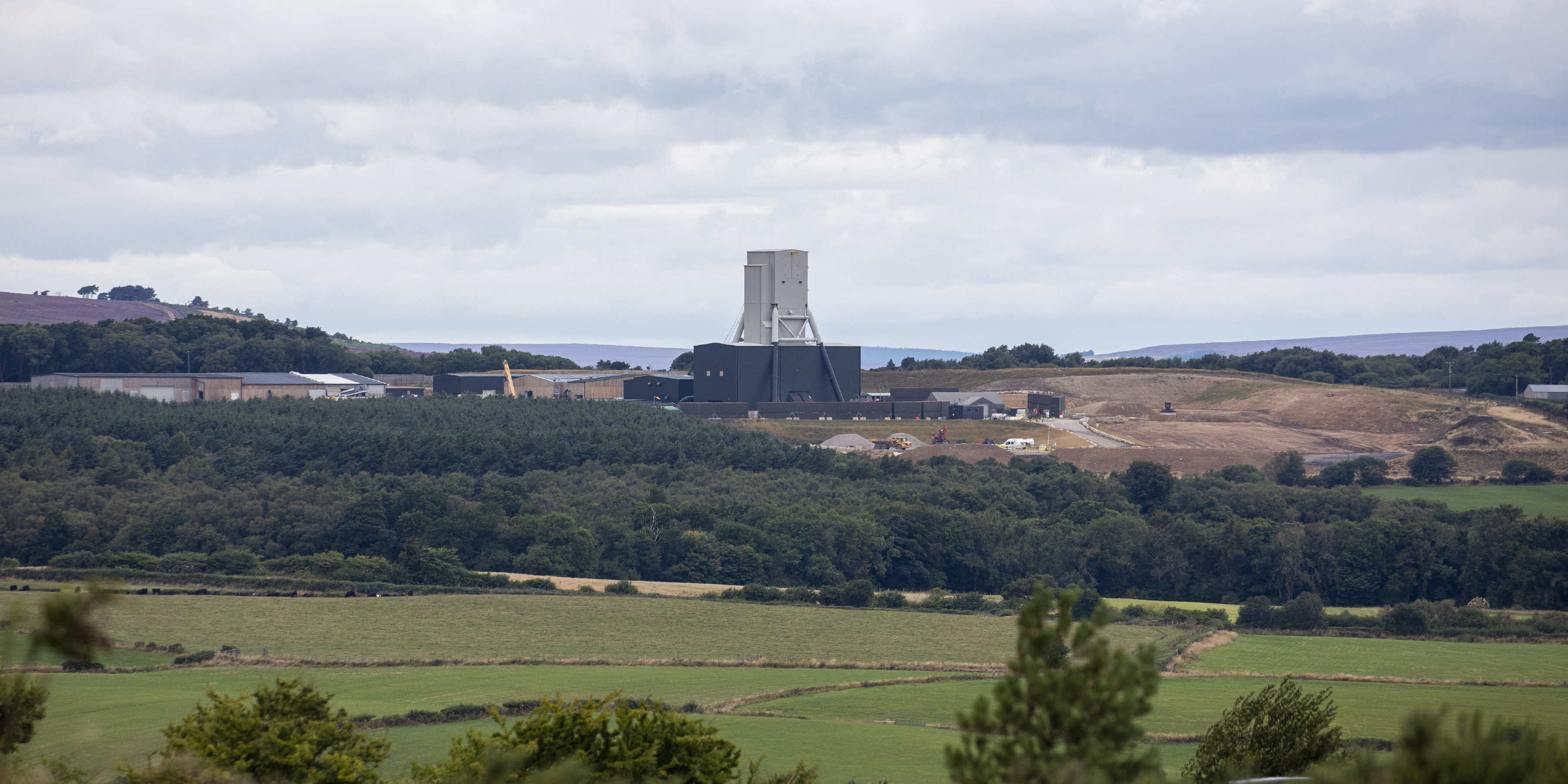
Woodsmith Mine, near Whitby, is being developed to work the world's largest known deposit of polyhalite through what will be the deepest shafts in Europe -- a project first proposed in 2011 and, as of the mid-2020s, still under construction.
History
Woodsmith Mine is being developed near the hamlet of Sneatonthorpe, close to Whitby in North Yorkshire, to work polyhalite, a natural mineral fertiliser containing potassium, sulphur, magnesium and calcium, marketed as 'POLY4'. The project was first proposed in 2011 by York Potash Ltd, later Sirius Minerals plc, and granted planning permission by the North York Moors National Park Authority on 30 June 2015; the Ministry of Defence initially objected over the mine's proximity, 6.4 km, to RAF Fylingdales, before withdrawing its objection. Sirius Minerals struggled to raise the finance needed to complete the project, and in March 2020 Anglo American plc acquired the company for £400 million, taking over development. The mine is designed around twin shafts -- for service and production -- each 7.5 metres in diameter and reaching around 1,600 metres deep, which will be the deepest commercial mineshafts in Britain and the deepest mine shafts in Europe, alongside a separate, shallower shaft for the Mineral Transport System. Ore will be carried to a processing plant on Teesside through a 37 km underground conveyor tunnel, bored by a Herrenknecht tunnel-boring machine named 'Stella Rose', which set a world record for a single tunnel-boring drive of 25.9 km on 28 October 2023. As of November 2023, shaft sinking stood at 631 metres (service shaft), 386 metres (production shaft) and around 354 metres (Mineral Transport System shaft), with the project's first-production date repeatedly delayed, from an original target of 2021 to 2027 and, by 2024, to 2030.
Geology
A polyhalite seam 25 metres thick beneath the North York Moors, to be worked room-and-pillar by continuous miners.
Workings
Designed around twin 7.5-metre-diameter service and production shafts around 1,600 metres deep -- the deepest commercial mineshafts in Britain -- plus a separate Mineral Transport System shaft, connected by a 37 km underground conveyor tunnel to a processing plant on Teesside; mining is planned by continuous miners working room-and-pillar in a 25-metre-thick polyhalite seam.
Closure
Unknown.
What remains
Under active construction; as of November 2023 the service, production and Mineral Transport System shafts had reached 631 m, 386 m and around 354 m respectively, with first production repeatedly delayed and, as of 2024, targeted for 2030.
Related mines
- Boulby Mine — Both work the same North Yorkshire polyhalite deposit: Boulby is the only mine producing polyhalite from it today, and Woodsmith is being sunk on the same bed a few miles to the south-east.
Nearby mines
- Aislaby Quarry — 3.5 miles (5.7 km) NW
- Sil Howe Whinstone Mine — 3.5 miles (5.7 km) W
- Whitby Jet Workings — 3.7 miles (6.0 km) N
- Saltwick Nab Alum Quarries — 4.2 miles (6.7 km) N
- Egton Quarry — 5.3 miles (8.5 km) W
Straight-line distance, within 9 miles (15 km). Show on the map.
Recorded claims
Individual factual claims, each attached to the source(s) that support it below. Where sources disagree, both are kept.
- The mine is designed around twin 7.5-metre-diameter service and production shafts reaching around 1,600 metres deep -- the deepest commercial mineshafts in Britain and the deepest in Europe -- linked by a 37 km underground conveyor tunnel to a Teesside processing plant. 1
- The tunnel-boring machine 'Stella Rose' set a world record for a single tunnel-boring drive of 25.9 km on 28 October 2023; as of that November, the service, production and Mineral Transport System shafts had reached 631 m, 386 m and around 354 m respectively. 2
- The project was first proposed in 2011 by York Potash Ltd (later Sirius Minerals plc) and granted planning permission in June 2015; unable to raise the finance to complete it, Sirius was acquired by Anglo American plc for £400 million in March 2020, which has continued development with a first-production date that has slipped from an original 2021 target to 2027 and then, by 2024, to 2030. 1
Photographs & further reading
The current operator's own project page, with up-to-date construction and investment detail.
View sourceSources
- (secondary) Woodsmith Mine — Wikipedia
- (secondary) Anglo American Woodsmith project's final few years to production — International Mining
Record created: 2 September 2026 · Last researched: 2 September 2026