 MineArchive
Wollaton Colliery
| Location | Wollaton, west of Nottingham, Nottinghamshire — 52.9445, -1.3035 (approximate) |
|---|---|
| Commodity | Coal |
| Type | Coal |
| Worked | 1873-74–1963–1966 |
| Maximum depth | The upcast west shaft was sunk 500 yards and bored about a hundred yards further, roughly 600 yards explored; the two winding shafts were 210 yards deep. |
| Operators | Huntingdon Beaumont (1601–1620), Wollaton Colliery Company (1873–1947), National Coal Board (1947–?) |
Overview
The deep colliery sunk west of Nottingham in 1873-74 by the Wollaton Colliery Company on Lord Middleton's minerals, working the Deep Hard and Deep Soft seams under about 3,000 acres with a workforce that passed a thousand men. It stood on ground the Willoughbys of Wollaton had worked for coal since the fifteenth century, and where in 1603-04 Huntingdon Beaumont laid the Wollaton Wagonway, the earliest railway in Britain for which documentary evidence survives. The pit closed in the 1960s and its site is now the Torvill and Dean housing estate.
History
Coal was worked around Wollaton from the late fifteenth century by the Willoughby family, lords of the manor, whose profits were sufficient to fund Wollaton Hall: Sir Francis Willoughby paid for it partly by selling coal into Lincolnshire in return for the Ancaster stone the hall is faced with. Drainage was the limit on those early pits, and successive Willoughbys drove soughs across Lenton Priory land to keep them dry. In 1601 the family leased their Wollaton pits to Huntingdon and Nicholas Beaumont on a twenty-one-year lease, and two years later Huntingdon Beaumont also took the Strelley pits nearby. Between October 1603 and 1604, in partnership with Sir Percival Willoughby, Beaumont laid a line of wooden rails about two miles long from the Strelley pits to Wollaton Lane End, from where the coal went by road to Trent Bridge and downstream by barge; the renewal indenture of 1 October 1604 confirms his right to carry coal 'alonge the passage now laide with railes', and is the earliest known document recording a railway in Britain. It cost £172. Beaumont undertook in 1604 to deliver 7,000 loads of coal a year to Nottingham and could not manage it; the Strelley workings were exhausted by about 1620, the wagonway was abandoned, and Beaumont, who went on to build wagonways near Blyth in Northumberland, died in 1624 imprisoned for debt.
Deep mining came much later. The Nottingham Canal, opened in 1796, let the Wollaton, Strelley and Bilborough pits compete in the Nottingham market, and an early nineteenth-century tramway ran down to it from Trowell. The Wollaton Colliery Company was formed about 1873 to acquire and work the minerals leased from Lord Middleton of Wollaton Park, some 3,000 acres of coalfield, its board in 1898 chaired by Sir James Reckitt with William Dawson as managing director. Sinking of the two larger shafts began in June 1873 and finished in August 1874. The east (No. 1) and middle shafts were downcasts, each fourteen feet across and 210 yards deep, forty yards apart; the west shaft was the upcast, twelve feet across and sunk 500 yards, then bored a further hundred to prove the Kilburn and other seams. The shafts passed through the whole series from the Top Hard, the Barnsley bed, down to the Piper coal at about 208 yards, but working was confined to the Deep Soft, two feet ten inches thick, and the Deep Hard, four feet six, lying fourteen yards apart. Winding engines supplied by Manlove, Alliott and Co. of Nottingham could raise 1,200 tons a day. The pit employed 1,066 men in 1894 and 1,126 in 1900, and remained above a thousand until the First World War. Decline was long and steady: 904 in 1923, 700 in 1933, 380 in 1940 and, at nationalisation in 1947, 220 men raising 56,136 tons. The colliery closed in the mid-1960s.
Geology
The shafts were sunk wholly through the Middle Coal Measures, one of them continuing into the Lower Coal Measures, and passed the full local series of workable seams from the Top Hard, the Barnsley bed, down to the Piper coal at about 208 yards. Only the Deep Soft and Deep Hard were worked, two seams fourteen yards apart giving house coal and steam coal respectively; the deep boring in the west shaft was made to prove the Kilburn seam being worked elsewhere in the district.
Geological setting: Sedimentary Beds and Seams (well documented example)
Workings
Three shafts: the east and middle downcasts, each fourteen feet in diameter and forty yards apart, and the twelve-foot upcast seventy yards west of the middle. Duplicate winding engines by Manlove, Alliott and Co. of Nottingham served Nos. 1 and 2; the No. 2 engine had two horizontal cylinders thirty inches by five and a half feet with double-beat valves and link motion, a fourteen-foot cast-iron drum braked on both sides, and at 45 lb of steam could raise 1,200 tons in an eight-and-a-half-hour day, winding two sixteen-hundredweight tubs on a single-deck cage. Winding ropes were inch-and-a-quarter crucible steel and the cages ran on wire-rope conductors, three to a cage. Self-acting inclines carried tubs underground, and the colliery had its own connections to the Nottingham Canal and the railway.
Closure
No source gives the closing date outright and they disagree. The Nottingham Canal's history records that Wollaton Colliery went on discharging water from its bathhouse into the canal 'until its closure in late 1963', after which the section up to lock 19 was drained and culverted in 1966; healeyhero's fatality register heads the pit '1873-1966'; and a widely repeated 1965 could not be traced to a readable source. By 1947 the pit was down to 220 men and 56,136 tons, so it closed as a small and long-declining colliery whichever year is right.
What remains
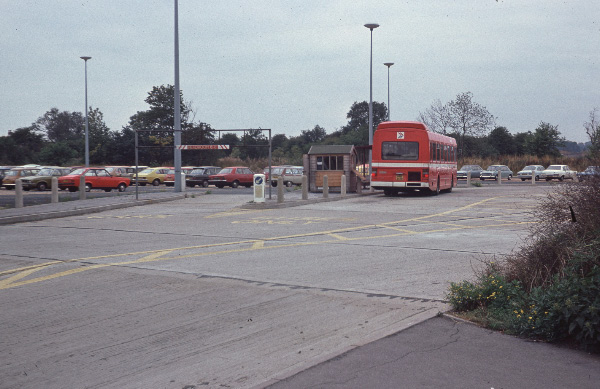
Nothing survives. The colliery and the adjoining stretch of the Nottingham Canal were cleared and built over; the Torvill and Dean housing estate, its streets named for the Nottingham skaters, now covers the site. In September 1977 part of the ground was in use as a park and ride.
None known. The early nineteenth-century tramway from Trowell to the canal survived as a path and a scatter of stone sleeper blocks into the 1960s, but the Historic Environment Record notes that the Balloon Woods development destroyed what was left.
Redevelopment
Housing (the Torvill and Dean estate); part of the site was a park and ride in the 1970s.
Related mines
- Strelley Colliery — The two ends of the same story: the Strelleys' and Willoughbys' pits were the largest and most productive outside Tyneside by 1600, their rivalry generating the litigation that documents both, and Huntingdon Beaumont's wagonway of 1603-04 ran from these pits to Wollaton Lane End.
Nearby mines
- Oakwell Colliery — 1.6 miles (2.5 km) N, Derbyshire
- Manners Colliery — 2.3 miles (3.6 km) N, Derbyshire
- Trowell Moor Colliery — 2.3 miles (3.8 km) NE
- Cossall Colliery — 2.5 miles (4.0 km) N
- Rutland Colliery — 2.5 miles (4.0 km) N, Derbyshire
Straight-line distance, within 9 miles (15 km). Show on the map.
What's uncertain
Points where sources disagree or the record could not be settled; both accounts are kept. All open questions in the archive.
- Wollaton Colliery discharged water from its bathhouse into the Nottingham Canal until its closure in late 1963. (disputed) 6
- healeyhero's register of deaths at the pit covers 1873 to 1966, implying working into the mid-1960s. (disputed) 7
- The BGS mine-plans catalogue holds a Mining Remediation Authority abandonment plan titled 'Wollaton' (catalogue EM1265OC, Coombe, dated 1985); the catalogue gives no location and the plan's details do not clearly tie it to this working, so it may belong to another of the same name. (uncertain) 10
Recorded claims
Individual factual claims, each attached to the source(s) that support it below. Where sources disagree, both are kept.
- Between October 1603 and 1604 Huntingdon Beaumont, in partnership with Sir Percival Willoughby, laid about two miles of wooden rails from the Strelley pits to Wollaton Lane End at a cost of £172; the lease renewal of 1 October 1604 confirming his right to carry coal 'alonge the passage now laide with railes' is the earliest document known to record a railway in Britain. 1,2
- The Strelley mines were worked only until about 1620, by which time the readily recoverable coal was gone, and the wagonway was then abandoned. 1
- The Willoughbys leased their Wollaton pits to Huntingdon and Nicholas Beaumont on a twenty-one-year lease in 1601, and in 1604 Beaumont undertook to deliver 7,000 loads of coal a year to Nottingham, a target he could not meet. 3
- Sir Francis Willoughby helped finance the building of Wollaton Hall by selling coal into Lincolnshire, partly in return for the Ancaster stone with which the hall is faced. 3
- The Wollaton Colliery Company was formed about 1873 to work minerals leased from Lord Middleton of Wollaton Park, giving about 3,000 acres of coalfield; its 1898 board was chaired by Sir James Reckitt, with William Dawson as managing director. 4
- Sinking of the two larger shafts began in June 1873 and was completed in August 1874; the east and middle downcasts were each 14 feet across and 210 yards deep, and the west upcast was 12 feet across, sunk 500 yards and bored about 100 yards further. 4
- The shafts passed through the series from the Top Hard or Barnsley bed down to the Piper coal at about 208 yards, but extraction was confined to the Deep Soft, 2 feet 10 inches thick, and the Deep Hard, 4 feet 6 inches, lying 14 yards apart. 4
- The No. 2 winding engine, by Manlove, Alliott and Co. of Nottingham, could raise 1,200 tons of coal in a day of eight and a half hours at 45 lb of steam. 4
- The colliery employed 1,066 men in 1894, 1,126 in 1900, 904 in 1923, 700 in 1933 and 220 in 1947, when it raised 56,136 tons. 5
- Wollaton Colliery discharged water from its bathhouse into the Nottingham Canal until its closure in late 1963. (disputed) 6
- healeyhero's register of deaths at the pit covers 1873 to 1966, implying working into the mid-1960s. (disputed) 7
- The Torvill and Dean housing estate, whose streets are named after the Nottingham ice skaters, stands on the former site of Wollaton Colliery and the canal. 8
- An early nineteenth-century tramway ran from near Shaws Plantation down to the Nottingham Canal; its stone sleeper blocks, some with holes for the spikes that held the rails, survived into the 1960s before the Balloon Woods development destroyed them. 9
- The BGS mine-plans catalogue holds a Mining Remediation Authority abandonment plan titled 'Wollaton' (catalogue EM1265OC, Coombe, dated 1985); the catalogue gives no location and the plan's details do not clearly tie it to this working, so it may belong to another of the same name. (uncertain) 10
Photographs & further reading
The company's own account of the colliery at its height, with engravings of the pit from the canal and the railway and a full description of the shafts and winding plant.
View sourceEvery recorded death at the pit and its earlier workings, with inquest dates and places.
View sourceSources
- (secondary) Wollaton Wagonway (Wikipedia) — Wikipedia
- (secondary) Wagon Way: Huntingdon Beaumont and the Wollaton Waggonway (healeyhero.co.uk) — healeyhero.co.uk
- (secondary) The coal industry in Nottinghamshire: overview (Nottinghamshire Heritage Gateway) — Nottinghamshire Heritage Gateway
- (primary) The Wollaton Colliery Co., Limited (Nottingham & Notts Illustrated, 1898) — Robinson, Son & Co. / Nottinghamshire History
- (primary) Durham Mining Museum: Wollaton Colliery — Durham Mining Museum
- (secondary) Nottingham Canal (Wikipedia) — Wikipedia
- (secondary) Wollaton Colliery fatalities 1873-1966 (healeyhero.co.uk) — healeyhero.co.uk
- (secondary) Wollaton (Wikipedia) — Wikipedia
- (primary) Nottinghamshire HER monument M523: tramway, Trowell to Wollaton — Nottinghamshire Historic Environment Record
- (primary) BGS / Mining Remediation Authority mine plans: WOLLATON — British Geological Survey / Mining Remediation Authority
Record created: 9 September 2026 · Last researched: 9 September 2026