 MineArchive
Wilsontown Ironworks
| Location | Wilsontown, near Forth, South Lanarkshire — 55.7766, -3.6679 (exact) |
|---|---|
| Commodities | Iron, Coal |
| Type | Iron |
| Worked | 1779–1842 |
Overview
Scotland's second coke-fired ironworks and the first in Lanarkshire, founded by three Wilson brothers in remote moorland and never commercially successful, but technologically important as the site where raw pit coal was first proven to fuel a blast furnace in Scotland — and where the 'spiral tuyere' was developed, a key step toward the hot blast process that later transformed the industry.
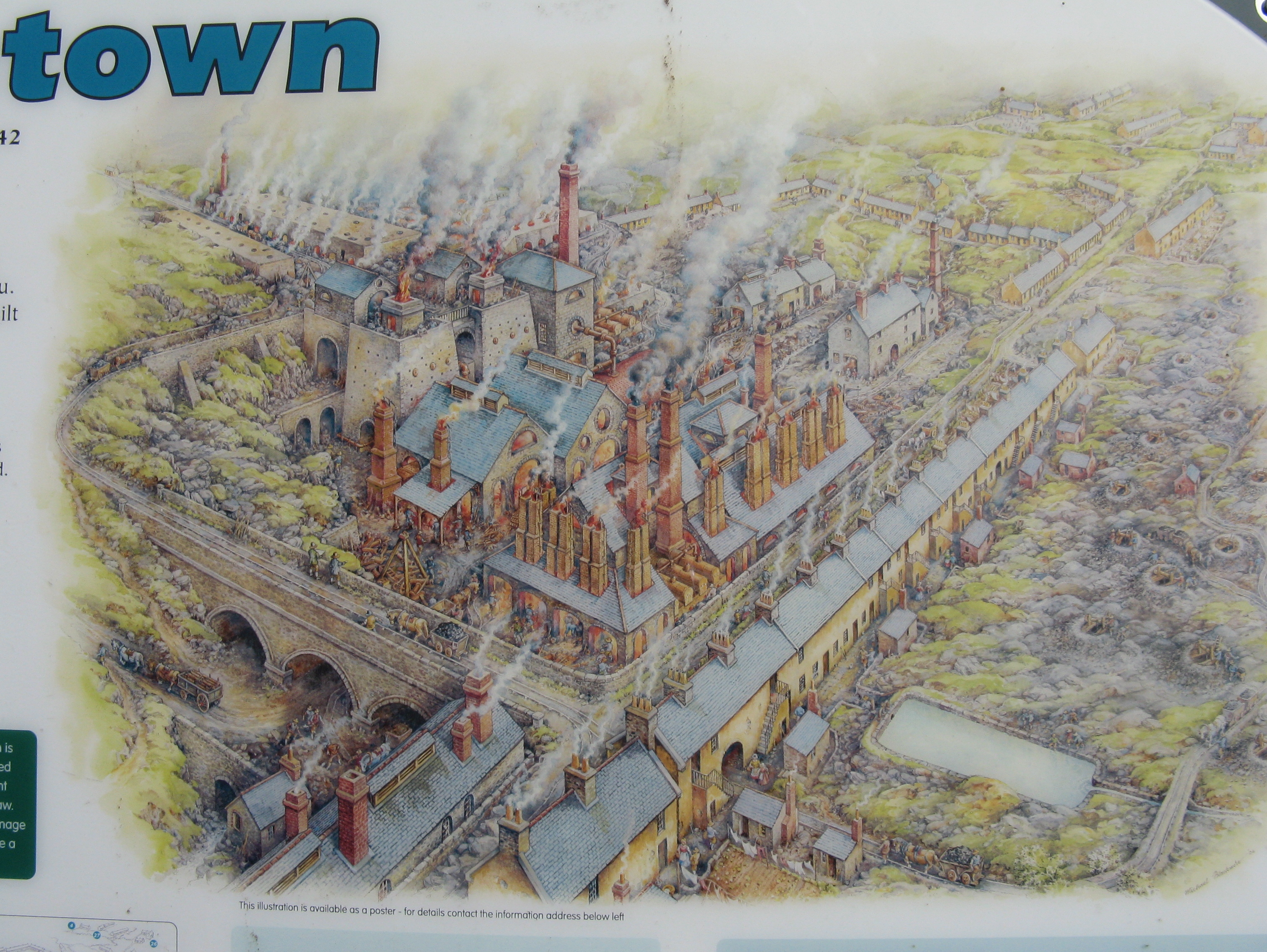
History
Wilsontown Ironworks was founded in 1779 near Forth, South Lanarkshire, by three brothers — Robert, John and William Wilson — on remote moorland chosen for its coal and ironstone rather than for any advantage of location. The works began with two blast furnaces and expanded through the 1790s to include a forge and rolling mill. By 1807 the settlement built up around the works was, by contemporary account, 'bustling with thousands of workers and families', with around 450 houses built for the workforce and a population approaching 2,000 by 1812 — drawing skilled workers from as far afield as Shropshire.
Despite this scale, Wilsontown was never a commercial success. Its remote inland location meant high transport costs to move iron to market, the works never secured an adequate supply of good coking coal, and the Wilson family ran the business without sufficient capital reserves, a problem compounded by internal family disputes and litigation. By 1812 both furnaces had been extinguished, and the works lay idle until 1821, when they were sold to William Dixon, an established ironmaster who already operated the Govan Colliery and Calder Ironworks.
Even under Dixon's more experienced management the works remained unprofitable, but Wilsontown's technical legacy proved more durable than its balance sheet: it was here that raw pit coal was successfully used to fuel a blast furnace for the first time in Scotland, a development later described as pivotal to 'the making of the iron trade in Scotland'. Dixon's manager, John Condie, developed the 'spiral tuyere' at Wilsontown, an innovation that fed directly into James Beaumont Neilson's hot blast process — one of the most important advances in the whole history of ironmaking, since it drastically cut the fuel needed to smelt iron. Despite this, the works finally closed in 1842, hampered to the end by its lack of a rail connection; ironically the Wilsontown, Morningside and Coltness Railway, which would have solved exactly this problem, was already under construction when the works shut, opening too late in 1845 to save it. Coal mining continued in the area until 1955.
Geology
Iron and coal of the Lanarkshire field, worked together on remote moorland ground near Forth.
Workings
Two blast furnaces at the outset, expanded through the 1790s with a forge and rolling mill; the works pioneered the use of raw pit coal to fuel a blast furnace in Scotland and developed the 'spiral tuyere', a forerunner to Neilson's hot blast process.
Closure
The works finally closed in 1842, hampered to the end by its lack of a rail connection.
What remains
A scheduled monument since 1968; though most standing buildings were demolished in 1974, visible remains still include the blast furnace base, coke kilns, a number of bell-pit mine workings, and traces of the railway embankment and village.
Nearby mines
- Knowes Colliery — 3.2 miles (5.2 km) NW, West Lothian
- Southfield Colliery — 3.4 miles (5.4 km) NW, North Lanarkshire
- Fauldhouse Colliery — 3.6 miles (5.8 km) NW, West Lothian
- Woodmuir Colliery — 3.8 miles (6.1 km) N, West Lothian
- Crofthead Colliery — 4.2 miles (6.8 km) N, West Lothian
Straight-line distance, within 9 miles (15 km). Show on the map.
Recorded claims
Individual factual claims, each attached to the source(s) that support it below. Where sources disagree, both are kept.
- The ironworks was founded in 1779 near Forth, South Lanarkshire, by brothers Robert, John and William Wilson, Scotland's second coke-fired ironworks and the first in Lanarkshire. 1,2
- By 1808 the works had grown to include around 450 workers' houses, with the settlement's population approaching 2,000 by 1812. 1
- Both furnaces were extinguished by 1812 owing to inadequate capital, transport costs and coking-coal supply problems; the works lay idle until sold to William Dixon in 1821. 1
- Wilsontown was the site of the first successful use of raw pit coal to fuel a blast furnace in Scotland, and Dixon's manager John Condie developed the 'spiral tuyere' there, a forerunner to Neilson's hot blast process. 1
- The works closed permanently in 1842, hampered by the lack of a rail connection; the Wilsontown, Morningside and Coltness Railway that would have solved this opened too late, in 1845. 1
- Located at about 55.777 N, 3.668 W. 1
Sources
- (secondary) Wilsontown Ironworks — Wikipedia
- (secondary) Wilsontown's history — Forestry and Land Scotland
Record created: 26 August 2026 · Last researched: 26 August 2026