 MineArchive
Knowes Colliery
| Also known as | Fauldhouse No. 1 Pit, The Knowes |
|---|---|
| Location | Southern edge of Fauldhouse, West Lothian — 55.8188, -3.7029 (approximate) |
| Commodity | Coal |
| Type | Coal |
| Worked | 1890s–13 April 1946 |
| Maximum depth | Unknown. |
| Operators | Barr & Thornton Ltd (?–1946) |
Overview
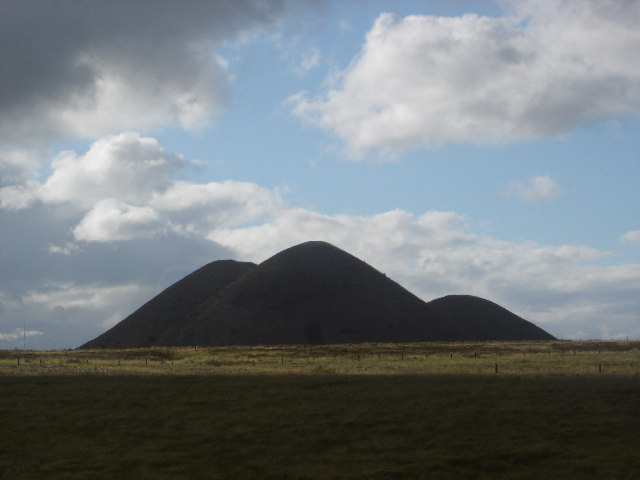
Fauldhouse No. 1 Pit, known as the Knowes, on the southern edge of the West Lothian mining village of Fauldhouse. Owned by Barr & Thornton Ltd, it began yielding coal in the 1890s and worked until 1946 — when it was closed not by exhaustion or by economics alone but by ministerial order. After nine unofficial stoppages in six months and an explicit warning posted at the pit, Emanuel Shinwell, Minister of Fuel and Power, let the closure stand and all 370 men were given notice ending on 13 April 1946. Asked in July 1947 whether it might reopen, he said the National Coal Board did not intend to: the coal could be more easily worked from neighbouring collieries. The site is now Knowes Colliery Woodland.
History
Fauldhouse lay towards the south-eastern edge of a coalfield running under North Lanarkshire and beyond, and coal supplanted ironstone there in the later nineteenth century; mining began from the mid 1800s in pits sunk west and north of the village and carried on into the 1950s and early 1960s, with some twenty pits in the district and the last of them closing in 1974. The Knowes, Fauldhouse No. 1 Pit, was owned by Barr & Thornton Ltd and started yielding coal in the 1890s. Its end is unusually well recorded because it was argued out in the House of Commons. In the six months to April 1946 there were 285 unofficial stoppages in Lanarkshire and the adjacent part of West Lothian, against 194 in the rest of Scotland and 288 in the whole of England and Wales. At the Minister’s request the Scottish Area of the National Union of Mineworkers issued a general warning in January 1946 that continued unofficial stoppages risked closure. Nine stoppages had taken place at Fauldhouse in those six months, involving between six and 180 men; after one on 25 and 26 February, Shinwell had his Regional Controller post a notice at the colliery that any further stoppage after 1 March would close it without further warning. A stoppage of eighteen men followed on 3 April, and all the men employed were given notice terminating on 13 April. George Mathers, the local member, asked the Minister to withdraw the notice: ninety-seven per cent of the men had pledged to prevent another stoppage and had greatly increased production, and the dispute had been between a few youths and the management. He argued that dismissing the nine men who caused the stoppage would have been better than scattering 370 others across the coalfield. Shinwell would not move: he could see no extenuating circumstances, the machinery of conciliation and arbitration was at stake, and over 100,000 tons of coal had been lost in the area in six months. He added the economics — output at Fauldhouse ran between 12 and 17 hundredweight per manshift against 25 and over at the collieries the men would be moved to, and keeping the pit in production had cost the Coal Charges Fund £190,000 since 1942. Mathers asked again in July 1947 what the prospects were of production restarting, so that men living in Fauldhouse would not have to travel long distances to other pits. Shinwell answered that the National Coal Board did not intend to reopen the Knowes, because its reserves could be more easily worked from neighbouring collieries.
Geology
Coal Measures at the south-eastern edge of the coalfield that extends west under North Lanarkshire. The ground east of Fauldhouse belongs instead to the West Lothian oil-shale field, where a works was built a mile south-east of the village in the later nineteenth century to process locally mined shale — two quite different industries meeting at the same village.
Workings
A shaft pit on the rising ground south of the village. Output per manshift ran at 12 to 17 hundredweight in the 1940s, against 25 hundredweight and over at the collieries around it — the figure the Minister used to justify letting the closure stand. The shaft and the bing were still standing decades after abandonment.
Closure
The men’s contracts were terminated with effect from 13 April 1946 after the Minister of Fuel and Power declined to withdraw a closure notice posted at the pit on 27 February. The National Coal Board confirmed in July 1947 that it did not intend to reopen the colliery, the reserves being more easily worked from neighbouring pits. Every effort was said to have been made to find the displaced men work at other collieries in the vicinity.
What remains
Knowes Colliery Woodland, an 18-hectare conifer wood on the southern edge of Fauldhouse owned by West Lothian Council, with a 1.2 km circular surfaced footpath, benches, signage and interpretation boards and access from Cemetery Road and Shotts Road. The land lay abandoned for decades with the mineshaft and the bing intact, was remediated in the 1970s for industrial development that never came, and was planted as a conifer plantation in the early 1980s. The wood became overgrown and hard to get into; the council and the Central Scotland Forest Trust restructured it with £176,884 of funding, completing the work in September 2013.
None of the colliery buildings. The bing and shaft survived into the 1970s and were removed in the reclamation; other old coal bings remain in the ground around Fauldhouse.
Redevelopment
Knowes Colliery Woodland, a public amenity woodland owned by West Lothian Council.
Related mines
- Crofthead Colliery — Neighbouring Fauldhouse pits.
- Fauldhouse Colliery — The Knowes was Fauldhouse No. 1 pit under Barr and Thornton, the successor to the Thornton colliery returned beside Dixon's in 1880; the Durham Mining Museum lists both under one Fauldhouse Colliery heading.
Nearby mines
- Fauldhouse Colliery — 0.6 miles (0.9 km) W
- Southfield Colliery — 0.9 miles (1.5 km) SW, North Lanarkshire
- Braehead Colliery — 1.2 miles (2.0 km) NW
- Muldron Ironstone Pits — 1.2 miles (2.0 km) S
- Crofthead Colliery — 1.4 miles (2.2 km) NE
Straight-line distance, within 9 miles (15 km). Show on the map.
Recorded claims
Individual factual claims, each attached to the source(s) that support it below. Where sources disagree, both are kept.
- Knowes Colliery Woodland takes its name from Fauldhouse No. 1 Pit, referred to as the Knowes, which was owned by Barr & Thornton Ltd, started yielding coal in the 1890s and remained active until its closure in 1946. 1
- After a stoppage on 25 and 26 February 1946 the Minister of Fuel and Power authorised his Regional Controller to post a notice at the colliery that if any further stoppage took place after 1 March the colliery would be closed without further warning; the notice was posted on 27 February, a further stoppage of eighteen men took place on 3 April, and all the men employed were given notice terminating their contracts with effect from 13 April. 2
- George Mathers MP told the House that ninety-seven per cent of the men had given a firm pledge to prevent another stoppage and had greatly increased production, that the last stoppage arose from a dispute between a few youths and the management, and that dealing with the nine men who caused it would have been better than scattering 370 others over the whole coalfield. 2
- Output at Fauldhouse varied from 12 to 17 hundredweight per manshift against 25 hundredweight and over at the collieries where the displaced men were expected to be re-engaged, and maintaining the colliery in production had cost the Coal Charges Fund £190,000 since 1942. 2
- Asked in July 1947 about the prospects of production restarting, the Minister said he was informed by the National Coal Board that it did not intend to reopen the Knowes Colliery, because the reserves of coal there could be more easily worked from neighbouring collieries. 3
- Mining at Fauldhouse began from the mid 1800s in pits sunk west and north of the village and continued into the 1950s and early 1960s; some twenty pits operated in the local area and the last closed in 1974. 4
Photographs & further reading
The Commons exchange in which the closure was defended and challenged, with the stoppage figures, the posted notice, the output per manshift and the cost to the Coal Charges Fund.
View sourceWhat the council has made of the site: the pit it is named after, the 1970s remediation, the 1980s planting and the 2013 restructuring with its circular footpath.
View sourceSources
- (observational) Knowes Colliery Woodland — West Lothian Council
- (primary) Knowes Colliery, Fauldhouse — HC Deb 16 April 1946, vol 421 cc2494-8 — Hansard, House of Commons
- (primary) Knowes Colliery, Fauldhouse — HC Deb 24 July 1947, vol 440 cc1571-2 — Hansard, House of Commons
- (secondary) Fauldhouse — Undiscovered Scotland
Record created: 6 September 2026 · Last researched: 6 September 2026